

By Felix Ikpotor
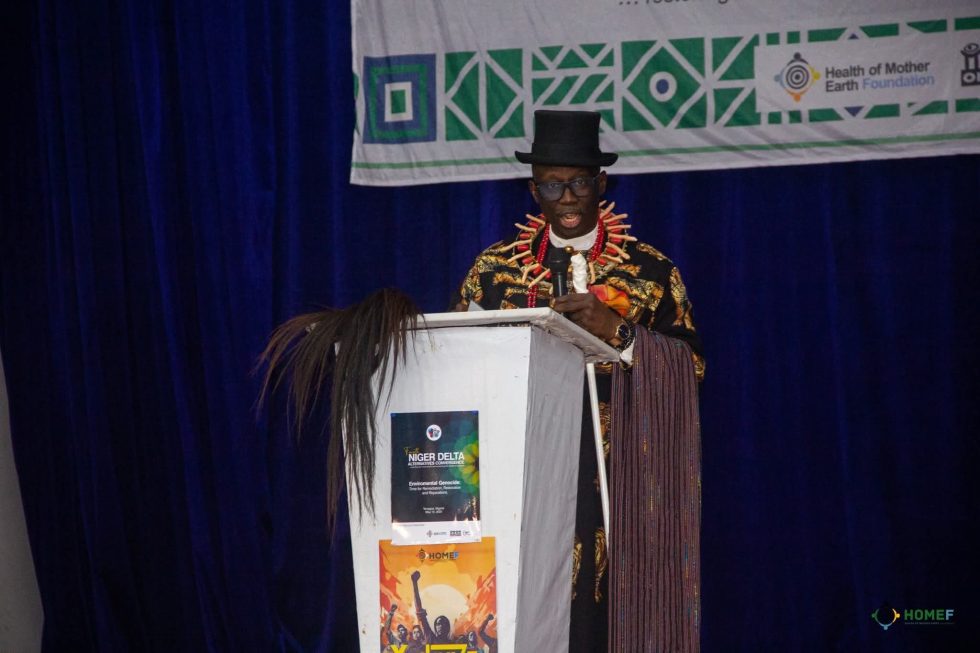
A coalition of civil society organisations, including Social Action Nigeria, Health of Mother Earth Foundation (HOMEF), the International Working Group on Petroleum Pollution and the Just Transition in the Niger Delta (IWG), has declared firm solidarity with His Royal Majesty, King Bubaraye Dakolo, Agada IV of Ekpetiama Kingdom and Chair of the Bayelsa State Council of Traditional Rulers, over a lawsuit filed against Shell Petroleum Development Company, now Renaissance Energy Africa, the Minister of Petroleum Resources, the Nigerian Upstream Petroleum Regulatory Commission (NUPRC), and the Attorney General of the Federation at the Federal High Court, Yenagoa.
Also supporting the suit are the Bayelsa State Non-Governmental Organisations Forum (BANGOF), HEDA Resource Centre, Kebetkache Women Development and Resource Centre, among others.
The suit challenges Shell’s attempt to divest its onshore oil assets and exit the Niger Delta without decommissioning obsolete infrastructure, remediating environmental damage, or compensating the Ekpetiama people for decades of environmental harm. It raises critical concerns about the constitutional and environmental rights of indigenous communities, Shell’s corporate responsibility, and the Nigerian government’s obligation to protect its citizens.
In his statement of claim, King Dakolo outlined how Shell’s operations in the Gbarain oil fields, located within the Ekpetiama Kingdom in Yenagoa Local Government Area of Bayelsa State, have led to massive oil spills, gas flaring, and the destruction of traditional fishing and farming livelihoods. The community’s rivers, forests, and farmlands have become toxic and uninhabitable.
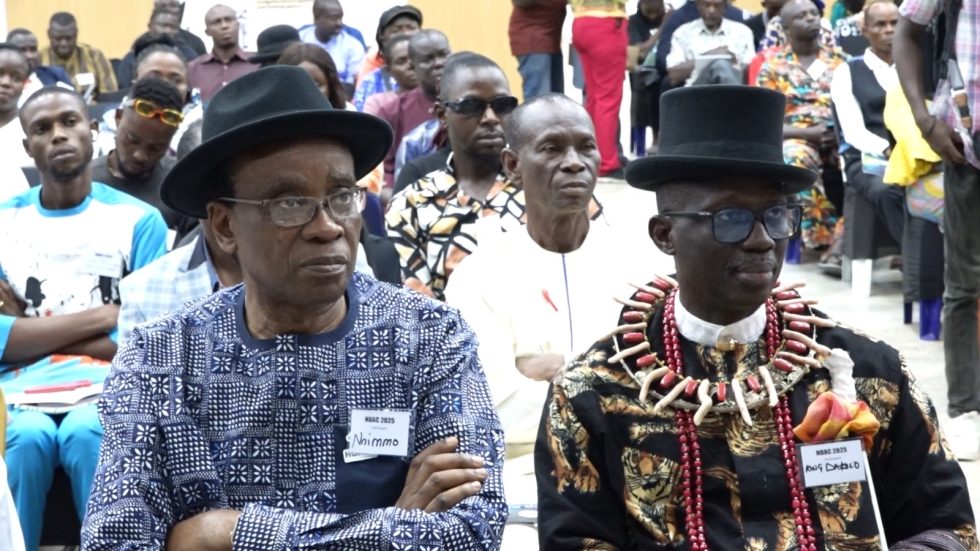
The plaintiffs argue that Shell’s planned divestment without fulfilling its environmental obligations under Nigerian law is both illegal and unjust. They further claim that the Nigerian government, through the Ministry of Petroleum Resources, NUPRC, and the Attorney General, has failed in its duty to prevent Shell from evading responsibility.
The plaintiffs are seeking a court order to halt Shell’s divestment until it has fully accounted for environmental destruction, remediated polluted sites, decommissioned aging infrastructure, and compensated affected host communities. They are also asking the court to declare that divesting without environmental remediation and decommissioning is unlawful, and to compel federal authorities to fulfill their constitutional duties to protect citizens and uphold community rights.
Lead counsel for the plaintiffs, Barrister Chuks Uguru, stated that the action targets Shell and its associates over an unlawful divestment process that violates the Ekpetiama people’s constitutional right to a healthy environment, as guaranteed by the Nigerian Constitution and the African Charter on Human and Peoples’ Rights.
The case is supported by evidence from the Bayelsa State Oil and Environmental Commission (BSOEC), which includes findings by experts from Europe, North America, and Africa. The Commission revealed that Bayelsa suffers some of the worst oil pollution in the world, with over 1.5 million people affected. Communities face exposure to cancer-causing chemicals like chromium and benzene, while nearly all freshwater sources have been contaminated, forcing residents to use visibly polluted creeks and ponds.
Soil samples reportedly show alarmingly high levels of Total Petroleum Hydrocarbons (TPH), rendering land useless for farming. Air quality near Shell facilities exceeds health limits, fish stocks have declined by over 70 percent in some areas, and derelict infrastructure continues to pollute. Shell, as the largest operator, was named a primary culprit.
“This divestment is a crude attempt by Shell to run away from the disaster it created,” said King Bubaraye Dakolo. “We demand justice, not abandonment. Shell must clean up, compensate, and decommission. Only then can it leave.”
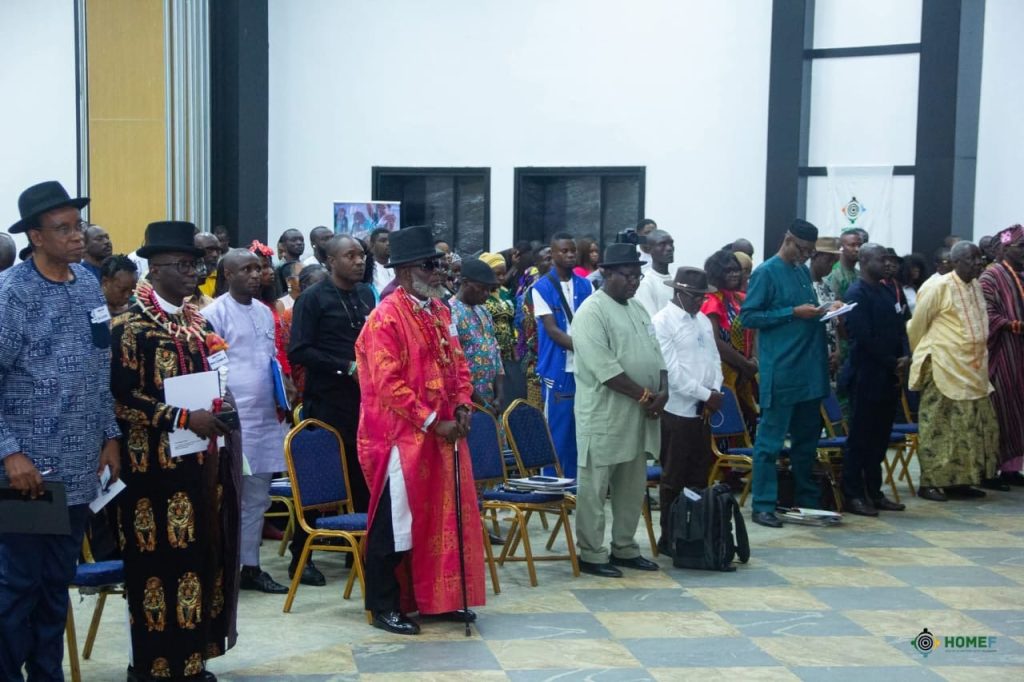
The lawsuit, seen as a test case for corporate accountability, has drawn support from national and international civil society groups advocating for environmental justice and a fair energy transition.
“Shell wants to exit with profit, leaving behind toxic air, poisoned water, and broken communities,” said Dr. Isaac Asume Osuoka, Director of Social Action Nigeria. “We are here to say: no more. Onshore asset selloffs by transnational oil firms must not be a license to escape accountability.”
Reverend Nnimmo Bassey, Executive Director of HOMEF, added, “The Niger Delta cannot be a sacrificial zone for fossil fuel greed. We stand in solidarity with King Dakolo and the people of Ekpetiama in demanding that Shell pay for the damage it has done.”
Dr. Kathryn Nwajiaku‑Dahou, Director of the Politics and Governance Programme at ODI Global and co-convener of the IWG, stated, “The evidence is clear. Seventy years of fossil fuel production in the Niger Delta has devastated ecosystems and communities. If a just transition is to mean anything, cleanup, restoration, and reparations must be mandatory before any oil firm can divest.”
Professor Engobo Emeseh, Head of the School of Law at the University of Bradford, United Kingdom, added that the case sets a precedent for Nigeria, the Gulf of Guinea, and beyond. Speaking for the Legal and Justice Committee of the IWG, he said, “It affirms that there can be no just energy transition without corporate accountability, environmental restoration, and community consent.”
The groups urged the Federal High Court to restrain Shell and its partners from concluding any asset sale or divestment until they meet environmental and human rights obligations. They called on regulators such as NUPRC to enforce the Petroleum Industry Act and protect host communities while affirming the rights of indigenous peoples to a clean environment and full consultation.
“This is a crucial moment in Nigeria’s environmental and legal history,” said Olanrewaju Suraju, Director of HEDA Resource Centre. “The court has a unique opportunity to uphold justice, protect the rule of law, and prove that no corporation is above accountability in Nigeria.”