

By Emamuzo Iboma
The Minister of Women Affairs, Imaan Sulaiman-Ibrahim, has said that empowering women politically and economically is the most effective path out of Nigeria’s current economic downturn.
Speaking at the Gender Equality and Women Empowerment Coordination Mechanism and Institutional Strengthening Meeting held on Tuesday in Abuja, jointly organized by UN Women Nigeria and the Federal Ministry of Women Affairs, Sulaiman-Ibrahim emphasized that women across the world have proven to be trustworthy and deeply committed to the wellbeing of their families and communities—qualities that make them excellent administrators and resource managers.
She stated, “I tell you, if we put money in women’s hands, 90 percent of our problems in Nigeria will vanish. When we have money in women’s hands, children will go to school.” She added that when women control the family’s economic resources, children are better cared for, and incidents of child abuse, criminality, and insecurity are significantly reduced—paving the way for national development.
The minister, however, lamented that women in Nigeria remain marginalized in many sectors, a reality she said is negatively affecting the country’s economy and stalling its future growth. She called for urgent action to reverse the trend.
Country Representative to UN Women Nigeria and ECOWAS, Ms. Beatrice Eyong, in her opening remarks, traced the GEWE Zonal Coordination Initiative to 2023. She said the initiative was launched when UN Women, the then Minister of Women Affairs, Dame Pauline Tallen, and the Director General of the Maryam Babangida Centre for Women Development sought a catalytic intervention to fast-track progress on gender equality following a UN report warning that full gender equality may take nearly 300 years if current progress continues.
Eyong noted that despite the proliferation of gender-focused programmes and projects, change remained slow due to the isolated nature of interventions, lack of sustainable structures, and insufficient coordination among networks and advocacy groups. She said there were many gender-focused coalitions across states, but they were not interfacing, jointly planning, or executing advocacy in a cohesive way. This, coupled with limited understanding of normative standards and a lack of reliable gender statistics, hampered progress.
She emphasized that the broad scope and issue-driven focus of these networks gave them potential for wide reach and impact, but that they required institutional and technical support to scale their efforts. This realization, she explained, led to the establishment of the GEWE Zonal Coordination Mechanism.
Eyong further highlighted that while the initiative has achieved notable success in the past two years, it now faces fresh challenges due to global funding cuts, which have severely impacted GEWE programmes. She stressed the importance of stakeholders working together by leveraging existing platforms, technical expertise, and domestic funding sources to preserve past gains and sustain progress for women and girls.
She called on government institutions, the private sector, and philanthropic organizations to invest in coordination activities that support women, girls, men, and boys, stressing that such investments hold the potential to scale up gender equality outcomes. “To those of us on the frontlines who are championing change by demanding accountability, let us not relent, but keep hope alive for better GEWE days ahead,” she said.
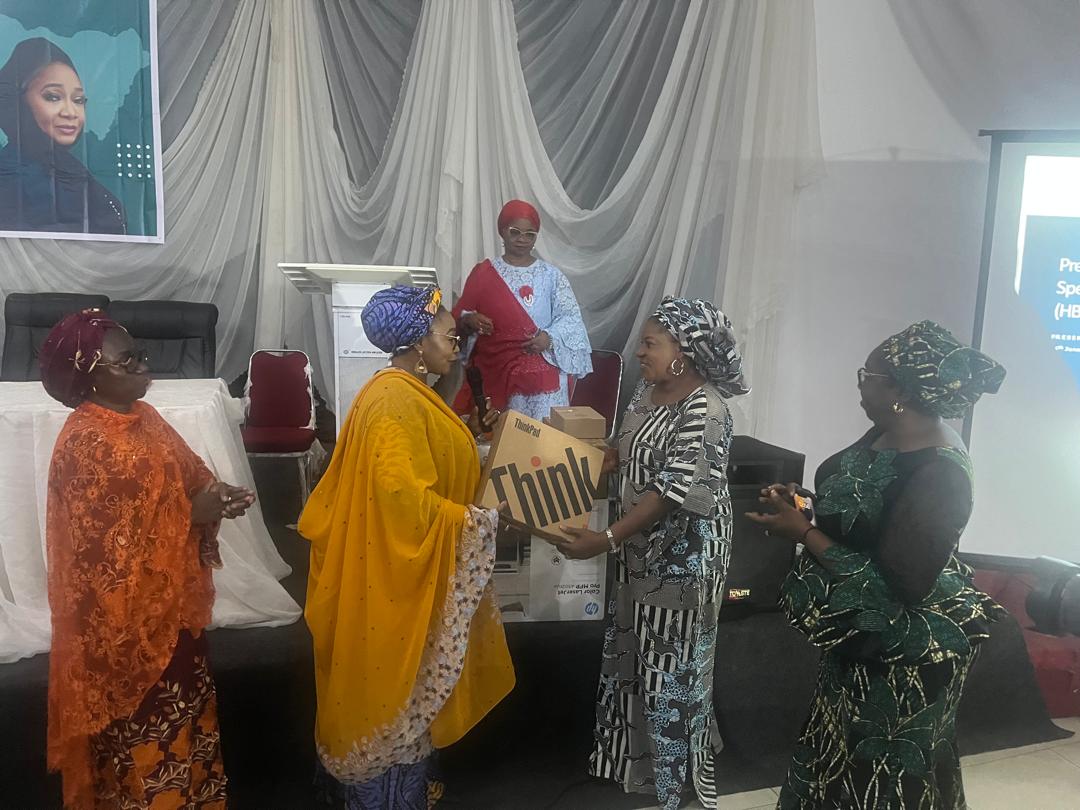
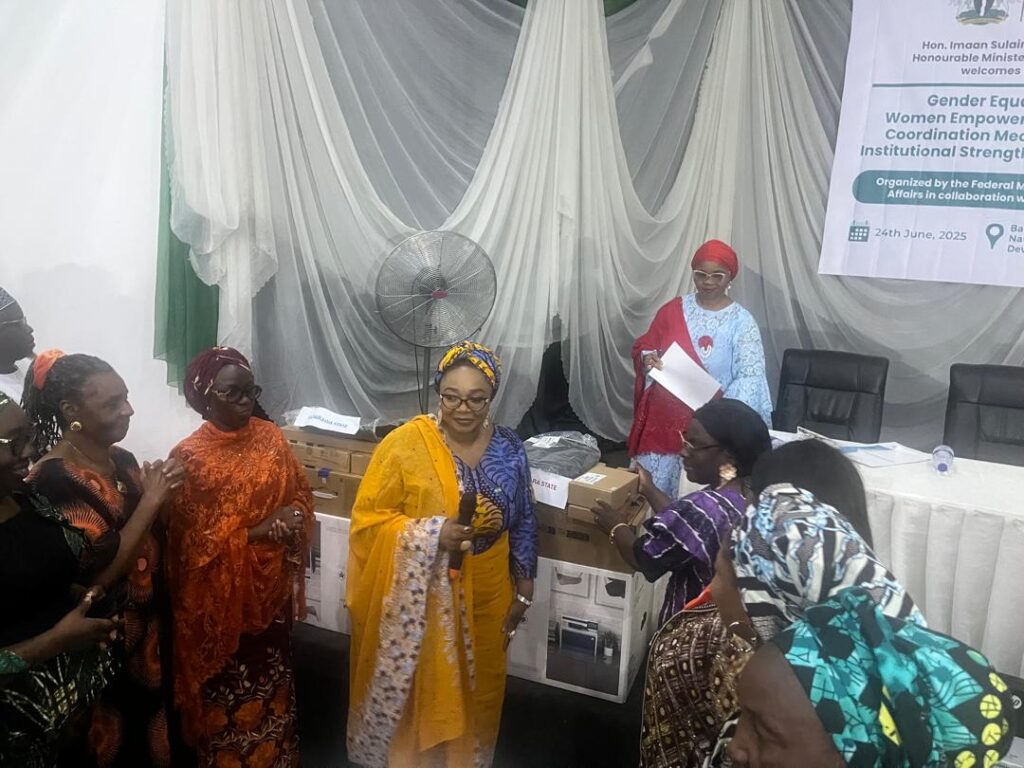
A key highlight of the event was the donation of ICT equipment to the Ministry of Women Affairs offices in the 36 states of the federation and the Federal Capital Territory.