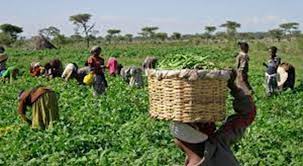
Stakeholders in Nigeria’s agricultural sector have called on the Federal Government to develop policies that address the underlying challenges hindering food productivity, while also promoting environmental sustainability, public health, and the economic well-being of smallholder farmers.
The call was made during the National Stakeholders’ Conference on Agroecology, held in Abuja under the theme, “Advancing Agroecology Principles and Practice for Food Sovereignty in Nigeria.” The event brought together farmers, researchers, civil society organisations, youth and women’s groups, policy advocates, and media professionals for a day of dialogue, knowledge-sharing, and strategic planning.
In a communiqué released after the conference, participants acknowledged that agricultural systems around the world are under pressure to meet increasing food demands. In Nigeria, this pressure is particularly acute due to population growth, climate change, declining soil fertility, inadequate farmer support, and widespread insecurity.
They warned that any effective intervention must go beyond merely increasing yields and must instead address the deeper structural and environmental barriers that impede sustainable food systems. They highlighted agroecology as a promising solution that fosters ecological balance, biodiversity, farmer empowerment, and food sovereignty.
The participants noted that momentum around agroecology and organic agriculture is growing in Nigeria, driven by civil society, public sector support, and grassroots initiatives. However, they emphasized the need for coordinated efforts, policy support, and targeted research to scale these practices effectively across the country.
The conference provided a platform to assess the current landscape of agroecological and organic farming in Nigeria. It facilitated collaboration among various stakeholders, identified policy gaps, and proposed pathways to expand these practices. The dialogue also challenged the credibility of industrial agricultural approaches and other “false solutions” to food and climate crises.
Stakeholders stressed that the goal must extend beyond achieving food security to securing food sovereignty—where communities not only have access to sufficient food but also maintain control over how that food is produced, distributed, and consumed. Agroecological practices, they noted, play a vital role in achieving this by promoting healthier diets, enhancing crop diversity, enriching soil microbiology, reducing emissions, and strengthening local resilience to climate shocks.
Several international examples were cited to illustrate agroecology’s transformative potential. In Ghana, drought-resistant orange-fleshed sweet potatoes have improved nutrition in arid regions. In Kenya, the Participatory Ecological Land Use Management (PELUM) Network has revived the use of traditional African leafy vegetables, boosting local livelihoods and agricultural sustainability. In Malawi, the “Never Ending Food” initiative has used permaculture to convert degraded land into productive farms, ensuring year-round nutrition. Nigeria’s own “Be the Help Foundation” was also spotlighted for demonstrating how agroforestry-based agroecology can support farmer incomes while protecting the environment.
Despite these promising developments, participants identified several obstacles to agroecological expansion in Nigeria. These include limited public awareness, restricted access to land and credit, poor extension services, and overdependence on synthetic agrochemicals. They also warned that the spread of genetically modified organisms (GMOs) poses a serious threat to food sovereignty, by fostering dependence on multinational seed companies and degrading soil through herbicide use.
They argued that achieving real food security requires more than just increasing food supply—it demands giving communities authority over their seeds, farming practices, and food systems. This, they said, is the essence of food sovereignty.
As part of their resolutions, the stakeholders pledged to promote agroecological practices across farming communities in Nigeria and to push for a national shift from food security policies toward food sovereignty frameworks. They committed to supporting research initiatives that are grounded in Nigeria’s local contexts and to strengthening collaboration between academic researchers and grassroots farming communities.
They further called for stronger protections of farmers’ rights to essential resources such as land, water, and traditional seed varieties. Closing the knowledge gap around agroecology’s relevance to national development was also identified as a critical priority. Participants advocated for the preservation of indigenous food systems and cultural practices, which they described as vital to achieving resilient local economies.
To ensure the effectiveness of these efforts, they emphasized the need for increased government funding for agroecological research and extension services. They also called for improved communication channels and knowledge-sharing networks between farmers, researchers, communities, and policymakers to expand the reach and impact of agroecological methods. Finally, the stakeholders committed to working closely with the Federal Ministry of Agriculture and Food Security to ensure that agroecology is fully integrated into national agricultural policies, following its inclusion in Nigeria’s latest climate commitments under the Nationally Determined Contributions (NDC 3.0).