


…Experts Advocate Reduced Salt Intake to Save Lives
By Katherine Abayomi
The recent report by the United Nations (UN) Global Health Report 2025, which names Nigeria as having the lowest life expectancy in the world has sparked deep concerns among health experts in the country, who are calling for urgent public awareness and stronger regulatory interventions to address Nigeria’s rising salt consumption crisis.
The report indicated that the country’s average life expectancy at 54.9 years, far below the global average of 74.7 years.
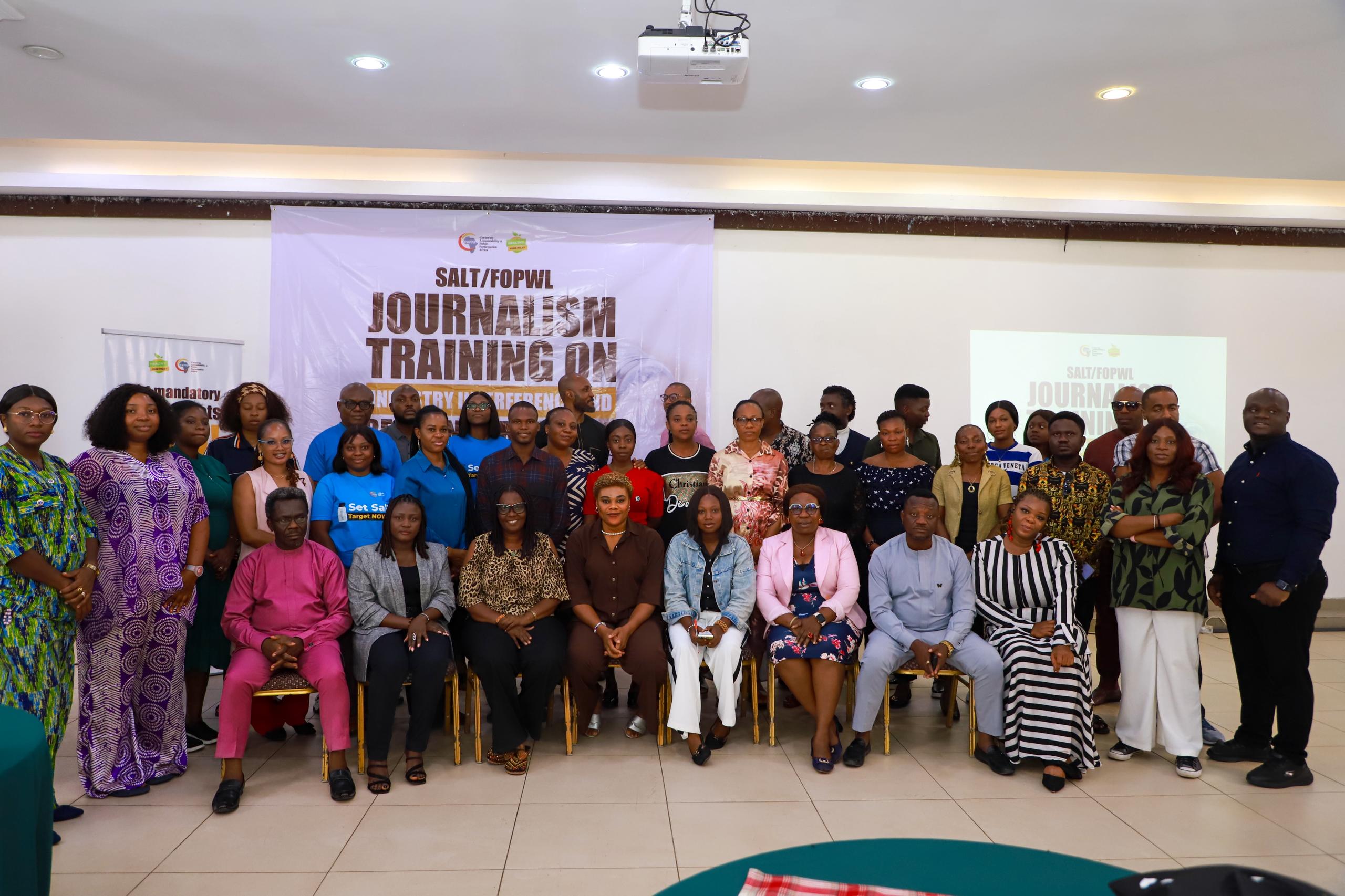
Speaking at a two-day Salt and Front-of-Pack Warning Label (FOPWL) Journalism Training on Industry Interference and Response Building in Port Harcourt, the Executive Director of the Corporate Accountability and Public Participation Africa (CAPPA), Mr. Akinbode Oluwafemi, represented by CAPPA’s Assistant Executive Director, Ms. Zikora Ibeh, urged Nigerians to drastically reduce their salt intake, describing it as a major contributor to the country’s poor health outcomes and low life expectancy.
Akinbode noted that Nigeria’s life expectancy – currently 54.9 years – is among the lowest globally, a situation largely attributed to poor dietary habits, especially excessive sodium consumption.
He stated that the World Health Organization (WHO) recommends no more than five grams of salt daily, yet the average Nigerian consumes far more. Most of this salt, he said, is hidden in snacks, instant noodles, seasoning cubes, and other pre-packaged foods that dominate urban diets.
He warned that excessive salt consumption raises blood pressure and significantly increases the risk of hypertension, heart attacks, and strokes – diseases that are now affecting younger populations in Nigeria.
Akinbode also linked the growing incidence of sudden deaths, often described as “slump and die,” to poor dietary patterns and the country’s limited nutritional awareness.
He explained that Nigeria’s high sodium intake forms part of a global health concern that can be mitigated through mandatory salt reduction targets for food manufacturers and the adoption of Front-of-Pack Warning Labels (FOPWL) on processed foods. According to him, FOPWLs-simple, visible symbols placed on food packaging-help consumers quickly identify products high in salt, sugar, or fat, enabling them to make informed dietary choices regardless of their literacy level.
Akinbode also emphasised the critical role of journalists in driving advocacy, combating misinformation, and holding corporations accountable.
He said journalists must expose industry interference and ensure that public discourse prioritises citizens’ health over corporate profit. He maintained that the media’s watchdog function is vital to building transparency, protecting public health, and influencing government policy.
Also speaking, Bukola Odele, CAPPA’s Programme Officer for Cardiovascular Health, described Front-of-Pack Warning Labels and mandatory salt targets as cost-effective public health interventions capable of reducing sodium intake and preventing cardiovascular diseases.
She called for stricter regulation and enforcement of sodium limits in processed foods, alongside nationwide media campaigns to raise awareness about the dangers of excessive salt consumption.
A Public Health Consultant, Dr. Joseph Ekiyor, also expressed concern that high sodium diets are fueling cases of hypertension and sudden death among young Nigerians.
He urged journalists to intensify education on healthy eating habits and highlight the health risks associated with processed foods.
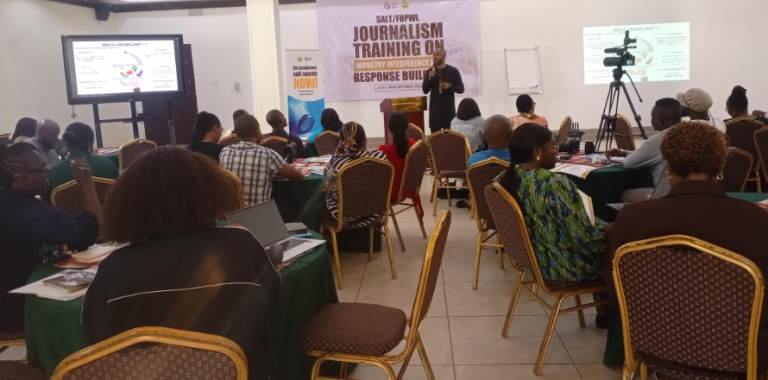
In his presentation titled “Media Accountability as a Tool for Industry Monitoring and Public Interest Reporting,” Mr. Robert Egbe, Media Officer at CAPPA, reiterated the indispensable role of the media as both a watchdog and a catalyst for social change.
He explained that media accountability involves journalists and news organisations upholding professional standards such as accuracy, fairness, and transparency, while also holding powerful actors like food corporations and policymakers accountable through rigorous, evidence-based reporting.
Egbe cautioned that the food and beverage industry may attempt to resist public health initiatives through lobbying, sponsoring misleading research, or deploying public relations campaigns designed to undermine reforms.
He said accountable journalism must investigate and expose such tactics, monitor company compliance, and educate the public on why sodium reduction is critical to saving lives.
He further highlighted that Front-of-Pack Warning Labels are designed to make nutritional information clear and accessible to consumers. However, some corporations, he said, prefer voluntary labelling systems that often confuse the public. He urged journalists to scrutinise such corporate interference and uphold citizens’ right to accurate and transparent product information.
Egbe encouraged journalists to pursue investigative stories that expose deceptive advertising targeting children, policy manipulation by corporations seeking to delay health regulations, and the use of misleading corporate social responsibility (CSR) initiatives to polish the image of companies selling unhealthy products.
He said when the media is proactive and accountable, public awareness increases, policy implementation improves, and corporate behaviour becomes more transparent and aligned with public health goals.
Participants at the two-day workshop described the training as insightful, impactful, and enlightening. They noted that it deepened their understanding of how journalism can be used as a tool for promoting public health and ensuring corporate accountability.
The training was organised by the Corporate Accountability and Public Participation Africa (CAPPA), with support from the Global Health Advocacy Incubator (GHAI). It brought together journalists and health advocates to strengthen evidence-based reporting on nutrition policy, corporate influence, and the prevention of non-communicable diseases in Nigeria.