

…Call for Greater Inclusion of Women and Persons With Disabilities
By Katherine Abayomi
A coalition of civil society groups, government officials, traditional rulers and development partners has renewed the call for stronger ecofeminist policies and deeper inclusion of women in natural resource governance across the Niger Delta.
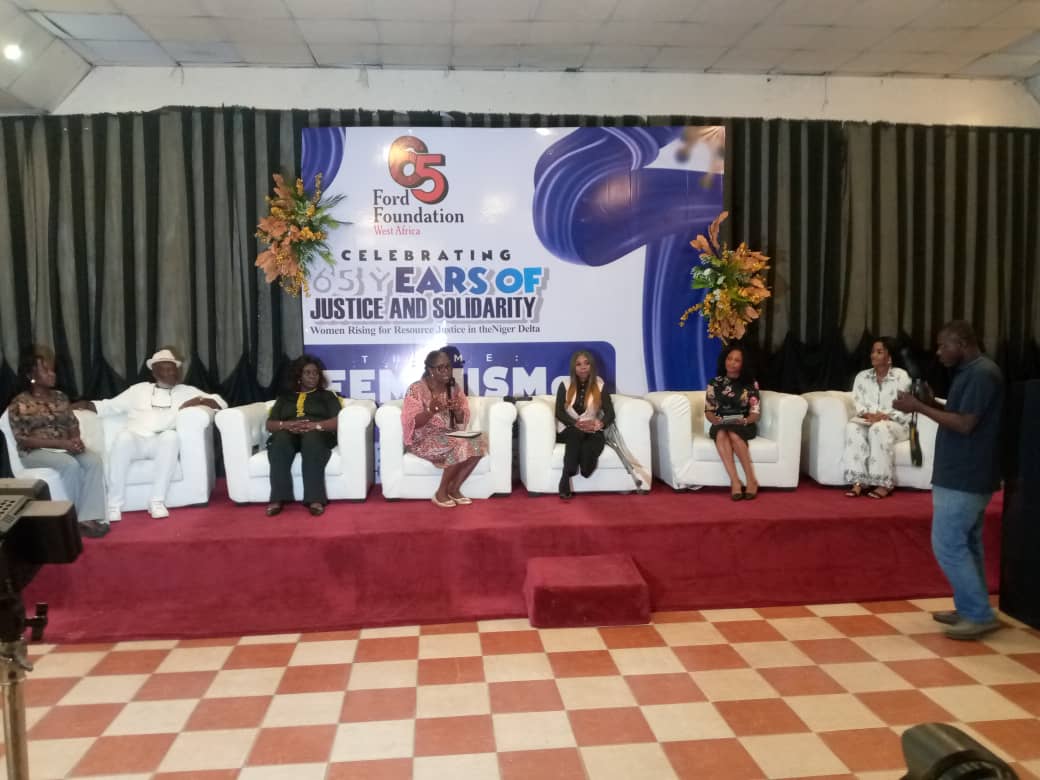
The call was made at a symposium held to mark Ford’s 65-year in West Africa. The event focused on social justice, good governance, peace and security, women’s rights, and the growing demand for female leadership in environmental and resource governance.
Presenting the keynote, Executive Director of Kebetkache, Emem Okon, said the organisation’s work has helped restore the dignity and rights of women in the Niger Delta who have long suffered exclusion and environmental injustice. She stressed that women remain disproportionately affected by pollution and degradation, yet are rarely given a seat at the table where decisions about natural resources are made.
Okon added that inclusion must go beyond tokenism. “We are promoting women’s issues in the Niger Delta because women are more impacted. But women are not seen in the picture, not just women but also those with disabilities,” she said. She called for intentional policies that prioritise women’s voices in resource governance and leadership.
Publisher of Amazon Magazine, Chief Constance Meju, echoed the sentiment, noting that women should be placed at the forefront of compensation and environmental remediation efforts. According to her, “Based on the environmental issues women have suffered, they should be given first consideration. Women deserve centre stage.”
Also speaking, Blessing Chinemerem, Executive Director of BornGreat Blessing Chinemerem Foundation, urged stakeholders to design systems that guarantee equal access for all women, including persons with disabilities. She emphasised the need for facilities, institutions and public spaces to become fully accessible.
The symposium also highlighted the broader gap in women’s economic value. Statistics presented at the event showed women account for only 38 percent of human capital wealth, partly due to unpaid care work and structural barriers that keep them economically disadvantaged.
Speakers collectively stressed that meeting women’s needs and promoting ecofeminism are essential for sustainable development. They clarified misconceptions around feminism, noting that it is not anti-family, anti-men or anti-society, but simply a call for gender equality and fairness.
The gathering ended with a renewed commitment from partners to push for stronger policies, improved visibility for women in environmental governance and broader participation of women in building sustainable communities.