

….prepares policies for accessible, affordable and sustainable water for all communities
…..pushes for the public public partnership
By Tracy Ohovwore
Concerns over the recognition of water as a commodity rather than as a fundamental human right have prompted the Ecumenical Water Network to organize a Stakeholders’ Awareness Camp, scheduled for Thursday, February 12, 2026, at the premises of the Christian Council of Nigeria, Institute of Church and Society, Ibadan.
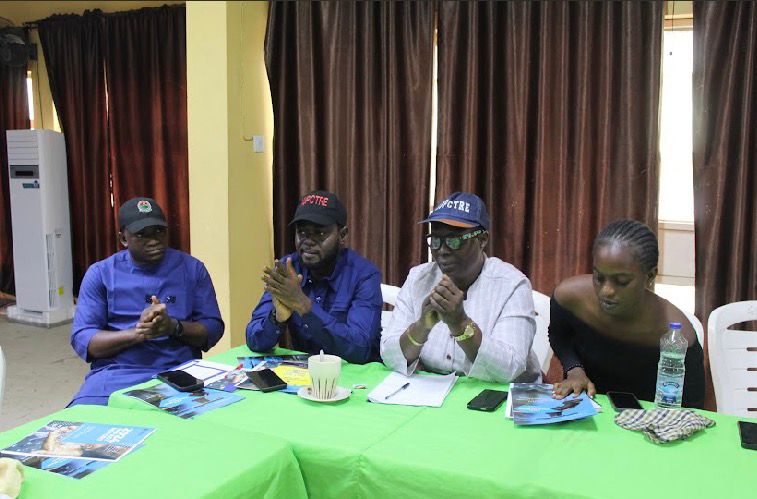
The event had representatives of Civil Society and trade unions from Oyo, Ekiti, and Lagos states under the umbrella of Voices for Water Justice.
During the session, stakeholders and representatives from organizations including Amalgamated Union of Public Corporations, Civil Service, Technical and Recreational Services (AUPCTRE), the Oyo State Community Development Agency, Ecumenism for Development and Peace Initiative, the Help Initiative for Social Justice, and media practitioners, alongside Hon. Femi Akindele, Chairman of the House Committee on Public Utilities, Ekiti State House of Assembly, contributed to discussions on “Voices for Water Justice.”
The discussions underscored the urgent need to make water available, affordable, and accessible to all, with speakers emphasizing that water must be treated as a public priority. Participants also advocated for public–public partnerships aimed at expanding access and delivering impact, rather than privatization models driven by profit at the expense of underserved rural communities.
Speakers highlighted that water unavailability and inaccessibility continue to have far-reaching consequences in many communities, including economic hardship, increased vulnerability of women and children, threats to food security, and broader social and public health challenges.
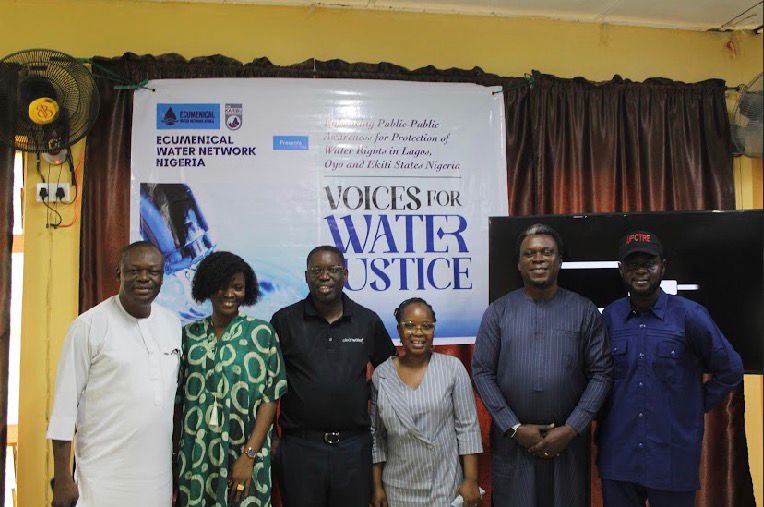
Rev. Kolade Fadahunsi, Director of the Christian Council of Nigeria, Institute of Church and Society, and Africa Regional Coordinator of the World Council of Churches’ Ecumenical Water Network, emphasized the central role of water in human development and in our world.
He noted that the meeting would address water disparities across communities and support the development of a bill expected to undergo legislative consideration in Ekiti, Oyo, and Lagos states.
Speaking on the proposed Public-Public partnership, Barrister. Aderonke Ige, Lead, Help Initiative for Social Justice, Chairperson, Steering Committee of the Africa Water Justice Network, explained that water justice can be made possible through “Advancing Public-Public Partnerships which will prioritize reform, accountability and public regards on issues relating to water.
According to her, “Water is not a commodity. It should be accessible. The most important question we should ask ourselves is how affordable is water? Many people Nigerians face water crisis. They either use unimproved sources or lack water close to their homes.
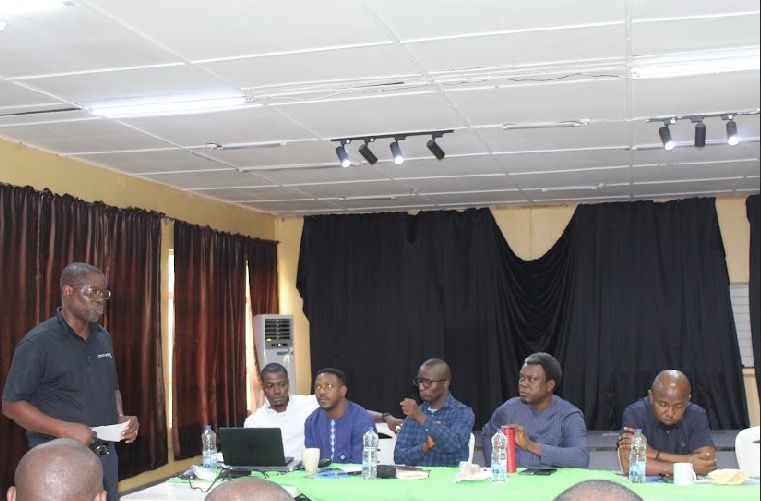
“It is no longer a hidden truth that private corporations rather prioritize their profits than the people’s interests.” Barr. Ige mentioned.
Barr. Ige further added that while government bears responsibility for ensuring accessible, affordable, and reliable water supply, citizens also have a duty to promote responsible water management and behaviors that uphold water justice.
She further called for stronger synergy among the public, government authorities, and workers in the water sector to achieve sustainable outcomes.
Shedding more light on the issue, Philip Jakpor an environmental and human rights activist and lead at Renevlyn Development Initiative said Public–Public Partnerships would strengthen public sector capacity by prioritizing technical skills, shared expertise, and resource pooling, while safeguarding public interest and long-term sustainability.
In his remarks, Abiodun Bakare, Secretary of AUPCTRE, reaffirmed that access to safe and clean water is a fundamental human right, clarifying that the goal is not entirely free water but equitable access that bridges the gap between served populations and marginalized communities.
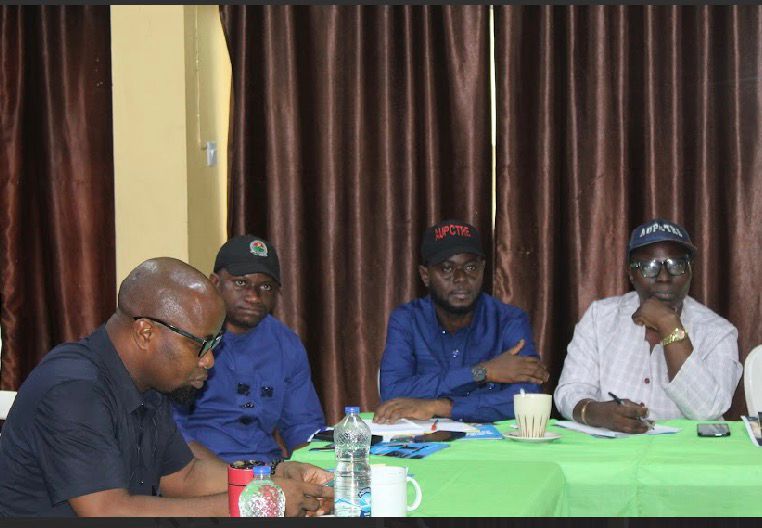
Also speaking, Hon. Femi Akindele, Chairman of the House Committee on Public Utilities, Ekiti State House of Assembly, said water goes beyond being a commodity, describing it as essential to life itself.
He emphasized that water is a fundamental human right and warned that fragmented access impacts all aspects of social and economic life, calling for its prioritization.
Participants at the stakeholders’ briefing also proposed policy actions aimed at ensuring fair, affordable, safe, and accessible water, while reaffirming their commitment to advancing water justice.