

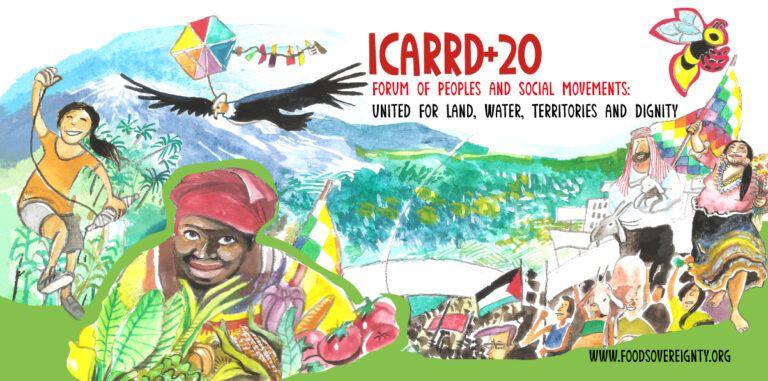
As global leaders converge on Cartagena, Colombia, for the International Conference on Agrarian Reform and Rural Development (ICARRD+20) scheduled for February 24 to 26, the Stop Financing Factory Farming (S3F) Campaign has called for an immediate end to public financing of industrial livestock production.
The coalition is urging governments and multilateral development banks to redirect development funds toward agroecology and equitable food systems, arguing that public money should serve communities rather than corporate agribusiness interests.
Speaking ahead of the conference, S3F Africa Regional Coordinator, Mariann Bassey-Olsson, said development finance continues to fuel environmental destruction and rural inequality instead of addressing them.
“Public and multilateral development bank financing of industrial livestock is driving deforestation, land conversion for feed production, and land concentration,” she said. “These investments undermine climate goals, biodiversity protection, and the broader vision of sustainable rural development.”
ICARRD+20, which comes twenty years after the first global conference on agrarian reform, is expected to focus on land inequality, rural poverty, and sustainable agricultural development. However, S3F maintains that existing financing models are worsening the crisis by supporting factory farming systems.
According to the campaign, industrial livestock production relies heavily on monoculture crops such as corn and wheat for animal feed. This system, it argues, accelerates forest destruction, increases greenhouse gas emissions, and consolidates corporate control over land and food systems.
The group also questioned claims by multilateral banks that factory farming improves food security. Citing recent findings, S3F noted that if grains currently used for livestock feed were redirected for human consumption, an additional two billion people could be fed annually.
S3F Youth, Policy and Campaigns Lead, Opeyemi Elujulo, warned that factory farming deepens rural inequality.
“Factory farming concentrates ownership and decision-making power in the hands of large agribusiness corporations, displacing small-scale producers and Indigenous landowners,” he said. “Women, youth, and marginalized communities bear the heaviest burden. This is not rural development; it is rural dispossession.”
Across Africa and Latin America, including Colombia, host of the conference, communities have continued to resist what they describe as land grabbing and ecological degradation linked to industrial agriculture expansion.
S3F Latin America Regional Coordinator, Claudia Escorza, described ICARRD+20 as a critical opportunity to realign development finance with its stated goals.
“Shifting public finance away from factory farming toward agroecological and diversified food systems supports more equitable land use and resilient rural livelihoods,” she said. “Public money must serve the public good, not corporate concentration.”
The campaign emphasized that agroecological systems have shown potential to improve soil health, strengthen biodiversity, reduce input costs, and enhance income stability for smallholder farmers. It added that such systems promote food sovereignty, gender equity, and long-term rural sustainability.
S3F is calling on governments and development banks participating in ICARRD+20 to end public financing for industrial livestock projects, review existing agricultural investment portfolios, redirect funding toward community-led food systems, align investments with climate and human rights commitments, and ensure meaningful participation of grassroots movements, women, youth, and Indigenous Peoples in financing decisions.
The coalition insists that agrarian reform cannot succeed without restructuring development finance.
“ICARRD+20 must mark a turning point,” the group stated. “The future of rural development depends on where public money flows.”
The Stop Financing Factory Farming Campaign is a global coalition advocating an end to public and multilateral financing of industrial livestock production, while promoting agroecology and climate-resilient food systems across Africa, Latin America, Europe, and other regions.