Raising Climate Justice Advocate, Group Builds Capacity
Barikui Felix- Port Harcourt
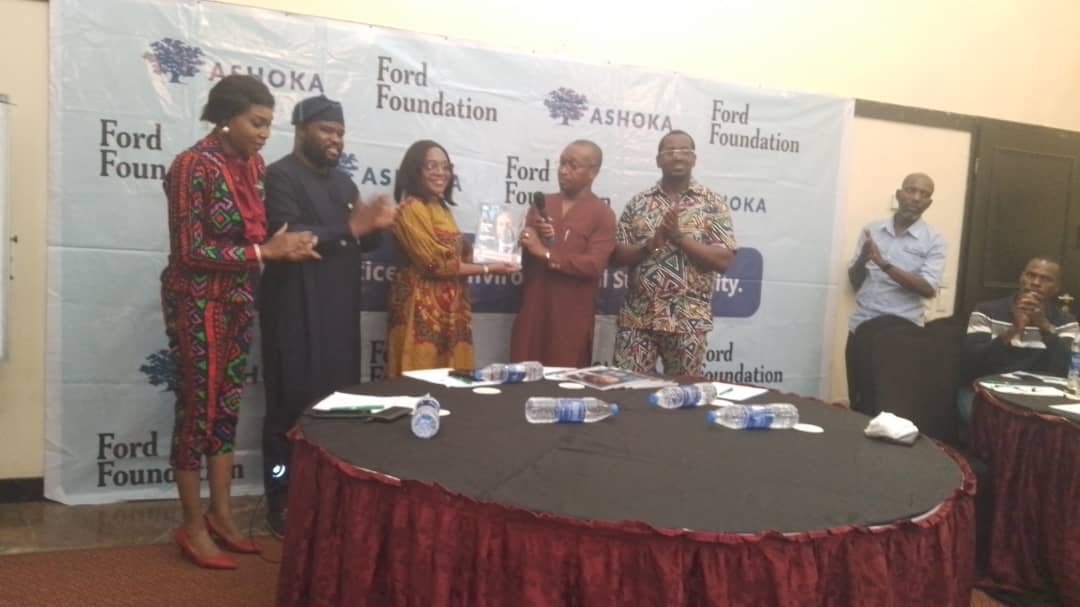
A non-governmental organisation, Ashoka Africa, has organised a capacity-building workshop for women and youths from Alode Community in Eleme and other environmentally impacted communities in Rivers State. The workshop focuses on demanding climate justice from the polluters of their environment.
The training was part of a Stakeholder Engagement Session for the Climate Justice Community of Parties (CJCoP) held in Port Harcourt, River State.
According to Ashoka, the CJCoP initiative aims to foster collaborative solutions to address pressing environmental challenges in the Niger Delta, bringing together diverse stakeholders to co-create strategies that promote climate justice, resilience, and sustainable development.
Josephine Nzerem, the Regional Director of Ashoka West Africa, addressed journalists shortly after the event. She said the engagement aims to empower a community of people who can stand up and demand their rights from the powers degrading their environment. She said the era of community people standing aloof and expecting strangers to push for environmental justice was no longer tenable, calling on the communities to own up to the challenges facing their communities and be the advocates for whatever intervention they need.
She added that one way of ensuring that community members are able to demand climate justice is to boost their awareness and capacity through such engagement.
She said: “We have to, first of all, build the power of the community members to understand and own the problem for them to be advocates of the community because if you don’t do that, they will always be at the other end expecting an outsider to come and do it and give them dividends because it is their climate that’s being destroyed. But we are now putting their power into their hands, telling them, you are the ones that know where the problem is, an outsider does not know. So, any intervention must be designed by the community.
“We want to stop people throwing their hands in the air and pointing fingers, and nothing gets done, so what’s the purpose? We want everyone to own this problem, our voices to be heard, and we want all of us to collaboratively come to a solution and begin to implement that solution”.
She expressed the hope that the engagement and training would lead to an empowered community that can demand access to resources to improve their living standards and also improve their health, saying, “This will improve the economy and health because part of the problem that the women identified is how all the environmental degradations have affected their health, especially respiratory challenges.”
Meanwhile, Rivers State has expressed its readiness to partner with Ashoka Africa and other relevant agencies to address environmental issues in the state.
The State Commissioner for Environment, Sydney Gbara, who stated the state’s readiness at the engagement meeting, said the Rivers State Government led by Sir Siminialayi Fubara is concerned about the environment because whatever affects the environment affects everybody in the state.
He said, ” As a government, we pledge our commitment to ensuring that we partner with all relevant stakeholders, non-governmental organisations, institutions, and individuals, including the international oil companies polluting our environment. We want to partner with everyone of you so that we can know what you have to offer us.”
“We feel happy to see individuals and organisations coming out voluntarily to bear some of our burdens because what you are doing here are some of our works, and so our doors are open as a government and as a ministry to work with you. Whatever thing you want us to do, tell us we are ready to give you that support,” Gbara added.
For her part, Dr. Mina Ogbanga, one of the programme’s partners, said it is important to train community women and youths on how to speak up and engage because they are the most impacted by climate change and environmental degradation.
She emphasized that the training would help them tackle most of the challenges associated with environmental degradation, including improving their coping skills.