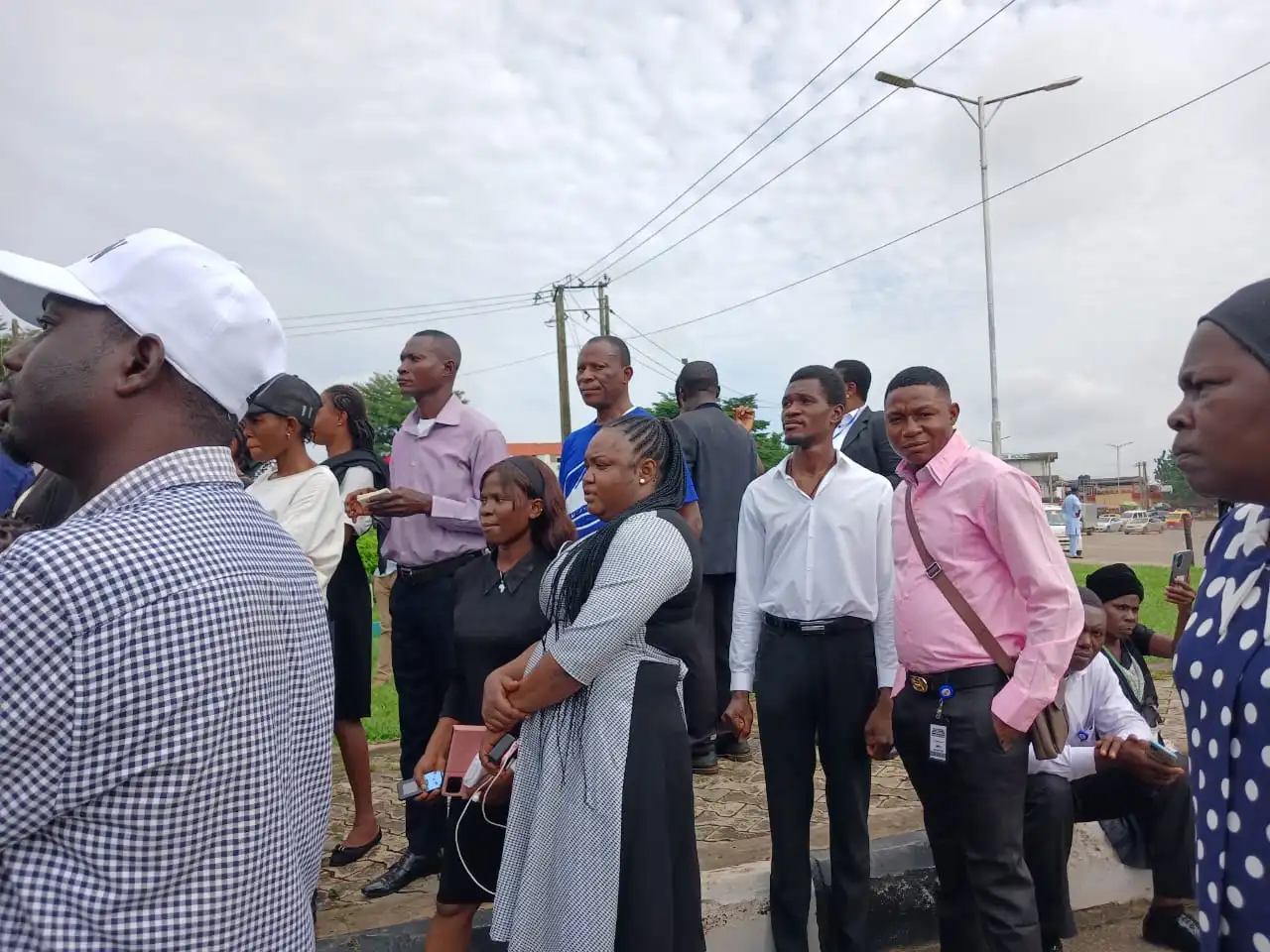
Lagos Court Reserves Judgment in BRT Driver’s Rape and Murder Case
The Lagos State High Court, sitting at the Tafawa Balewa Square (TBS) annex, has reserved judgment in the trial of a Bus Rapid Transport (BRT) driver, Andrew Nice Ominikoron, who is accused of killing a fashion designer, Oluwabamise Ayanwola, for May 2.
Andrew Nice is facing four counts of alleged rape, conspiracy with others at large and the murder of the twenty-year-old on the Lekki-Ajah Conservation expressway on February 26, 2022.
Justice Sherifat Sonaike fixed May 2, 2025, for the judgment after the defense and prosecution adopted their final written addresses.
Defense counsel, Abayomi Omotubora, argued that the prosecution failed to provide sufficient material evidence to prove Nice’s guilt. He maintained that none of the testimonies from the nine prosecution witnesses directly linked the defendant’s actions to Ayanwola’s death.
Omotubora also dismissed a voice note reportedly sent by the deceased to her friend as inadmissible hearsay, stating that the prosecution failed to call the friend as a witness.
Challenging the prosecution’s reliance on the “last-seen” doctrine, the defense counsel insisted that mere suspicion is insufficient for a conviction without strong circumstantial evidence. He also argued that the testimony of a prosecution witness, who alleged she was a previous rape victim of the defendant, required corroboration.
Lagos State’s Director of Public Prosecutions, Babajide Martins, urged the court to find the defendant guilty based on the testimonies of prosecution witnesses 3, 7, and 8.
Martins emphasised that corroboration is not required in rape cases under Nigerian law. He pointed out that the defendant was last seen with Ayanwola and fled to Ososa, Sagamu, Ogun State, instead of reporting to the police—an action he described as suspicious. Nice was later arrested by the Department of State Services (DSS) in 2022.
Regarding the voice note from the deceased, Martins cited Section 34 of the Nigerian Evidence Act, which allows the court to evaluate and assign probative value to dying declarations.