

The French government has called on Nigeria, other African nations, and the global community to unite in mobilizing resources, policies, and partnerships to protect the oceans from the escalating threat of plastic pollution.
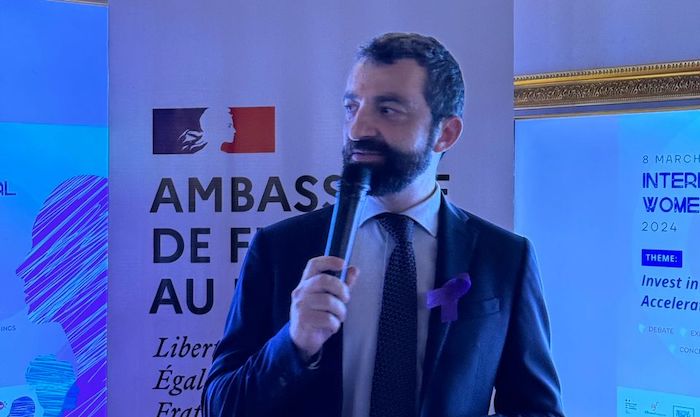
French Deputy Ambassador to Nigeria, Jean-François Hasperue, made this appeal on Wednesday during a plastic waste awareness event held at the French Institute in Abuja.
Hasperue emphasized that plastic waste has become one of the most urgent environmental challenges worldwide, with oceans suffering the most severe consequences. He explained that the impact ranges from floating debris to microplastics embedded in marine life, creating long-lasting damage.
“Our panellists explained how microplastics eaten by fish in Lagos lagoons might eventually be consumed by people in Asia, due to international trade of seafood. This highlights the global nature of the problem,” he said. “One specific issue we’re addressing at the UN Conference in Nice is biodiversity beyond national jurisdictions, which for too long lacked international cooperation. By the end of this week, we expect to reach 60 signatories, which will allow the BBNJ treaty to take effect by January 1, 2026.”
He noted that the French government is raising awareness in Nigeria, particularly among university students, as part of a broader strategy to empower global and local communities in the fight against plastic pollution.
“We are part of a global strategy to act at multiple levels. That’s why we are hosting the UN Ocean Conference in Nice from June 9 to 13. In Nigeria, and specifically Abuja, we wanted to organize a debate—not just a single event, but a month-long series of activities,” Hasperue said.
He added that France had initiated 11 different awareness programmes across six states in Nigeria throughout June to deepen public understanding and local engagement.
The Deputy Ambassador stressed the importance of the UN Ocean Conference in highlighting the threat of plastic waste to marine environments. He reiterated that awareness and innovation are key to finding lasting solutions.
“While plastic once offered practical solutions, its unchecked use has become a global problem. We must rethink how we produce and recycle plastic and reduce its harmful impact on life everywhere,” Hasperue stated. “France is committed to both top-down global engagement and bottom-up community action. We work with governments and civil society organizations in every country to ensure local translation of global commitments.”
He further disclosed that the French government is supporting Nigerian universities in recycling initiatives and providing funding to promote sustainable solutions.
“We currently have a fund of 750,000 euros to support recycling efforts in universities. As part of this, we are donating two micro recycling plants to Nile University and the University of Lagos. We’re also funding additional projects in five other institutions,” he said.
Sebastien Bede, Attaché for Scientific and Higher Education Cooperation at the French Embassy, also spoke about the embassy’s collaboration with Nigerian institutions to develop and implement practical solutions for plastic waste.
“We have a project funded by the French Embassy aimed at combating plastic pollution on university campuses,” Bede said. “This involves equipping UNILAG and Nile University with recycling microplants. It also includes capacity-building training from Plastic Odyssey, covering the full process—from collection to final recycled products.”
He explained that the initiative includes input from Nigerian stakeholders to design solutions tailored to the local context.
As part of the programme, 17 students from Nigerian universities were recognized for their innovative efforts in turning plastic waste into economically viable products.