By Barikui Felix
Victims of hydrocarbon pollution in the Niger Delta have shared harrowing accounts of the devastating health and environmental consequences of hydrocarbon pollution, urging the government and oil companies to take immediate action.
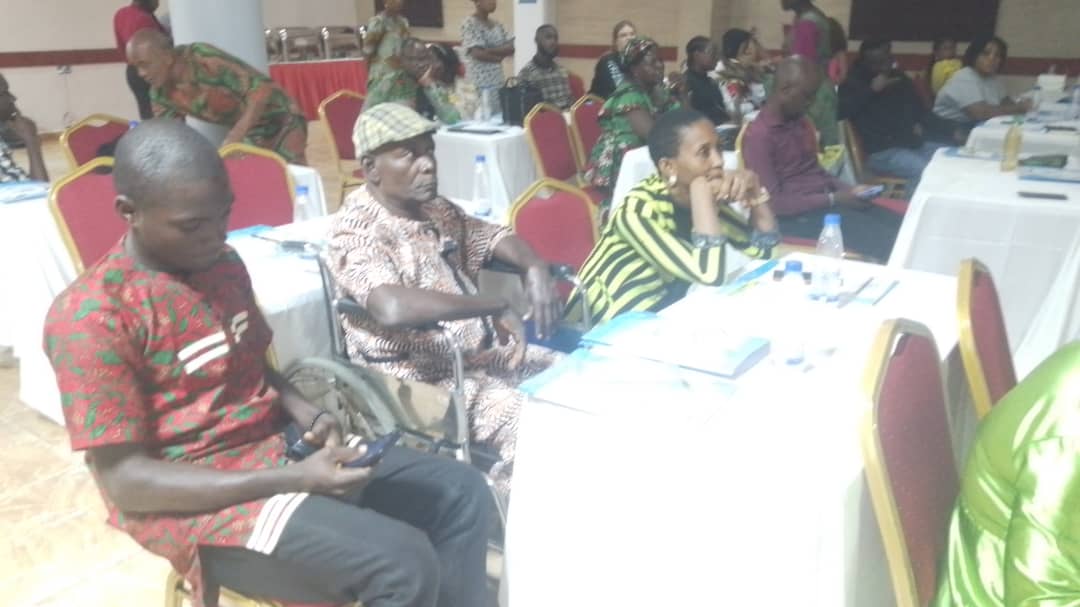
At a one-day multi-sectoral dialogue organized by the civil society group We The People in Port Harcourt, victims from Rivers, Bayelsa, and Cross River States spoke of years of neglect, illness, and death resulting from crude oil contamination allegedly caused by multinational oil corporations operating in the region.
Princewill Chukwure, a resident of Ibaa community in Emohua Local Government Area of Rivers State, recounted the distressing discovery of crude oil in a well within his compound in 2016. According to him, the pollution was later traced to a ruptured underground pipeline linked to a manifold operated by Shell Petroleum Development Company, now operating under the name Renaissance Energy.
“I lost several members of my family due to prolonged exposure to contaminated water,” he said. “My step-sister, who was pregnant with twins, lost one of the babies and later died. I also lost my stepmother and my father within a span of two years. My father’s death certificate cited chronic heart failure, kidney, and liver issues — all of which I believe were linked to the oil contamination.”
Chukwure explained that multiple tests conducted by NGOs and civil society groups confirmed the presence of hydrocarbon compounds, including benzene, in both his family’s bloodstream and their water sources. Despite reaching out to both the National Oil Spill Detection and Response Agency (NOSDRA) and Shell, he said no meaningful remediation efforts have been made.
He called for reparative justice, a comprehensive health audit of his community, environmental clean-up, and adequate compensation for the losses incurred.
Another victim, Mr. Anele Umesie, was brought into the meeting in a wheelchair. He alleged that his health condition was also caused by prolonged exposure to polluted water from a crude oil-contaminated well in his compound.
“I didn’t know we had been drinking poisoned water for years,” Umesie said. “Now I’ve lost my mobility, my crops have all died, and Shell — now Renaissance Energy — has refused to accept responsibility or clean up the environment.”
Women from Otuabagi community in Bayelsa State also shared their plight. They revealed that medical tests confirmed the presence of hydrocarbons in their blood, and complained that farming had become impossible due to poor soil and crop yields, leading to widespread hunger.
Executive Director of We The People, Ken Henshaw, said the dialogue aimed to stimulate national conversation around the health impacts of hydrocarbon pollution in the region and to pursue justice for affected communities.
“Decades of oil extraction have inflicted severe health damage on Niger Delta residents,” Henshaw said. “Yet, neither the government nor the oil companies are taking responsibility. What we want is simple — a health audit, environmental remediation, and restoration of livelihoods.”
He stressed that if the government and oil companies continue to evade accountability, affected communities would be mobilized to seek redress in court.
Public health advocate, Dr. Bieye Briggs, accused the government of deliberate inaction, saying authorities had failed to act because they are both complicit and beneficiaries of the region’s oil wealth.
“The government’s silence on the health crisis in the Niger Delta is unacceptable,” Briggs stated. “With the alarming rate of unexplained deaths and illnesses, there is an urgent need for a comprehensive health audit and swift intervention. Government must live up to its responsibility to protect the wellbeing of its citizens.”
The dialogue urged a unified call for justice, accountability, and urgent remedial action to end the suffering of Niger Delta communities devastated by decades of unchecked oil pollution.