By Katherine Abayomi
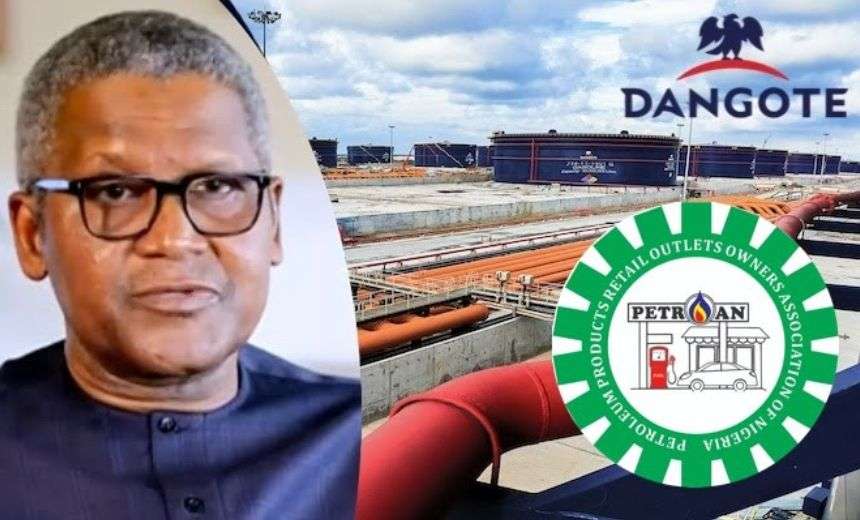
With a production capacity of 650,000 barrels per day, the Petroleum Products Retail Outlets Owners Association of Nigeria (PETROAN) has argued that the Dangote Refinery should focus on competing globally rather than operating as a distributor within Nigeria’s downstream sector.
As one of the largest refineries in sub-Saharan Africa, the Dangote Refinery was initially expected to meet domestic fuel needs and export surplus products. However, PETROAN has raised serious concerns over the refinery’s adoption of a forward integration model, warning that it could pave the way for a disguised monopoly and threaten thousands of jobs across the country.
According to PETROAN, Dangote’s intention to dominate the downstream market could result in anti-competitive behavior, including price-fixing, market manipulation, and the marginalization of smaller operators. The association expressed fears that the company may implement a pricing penetration strategy—lowering prices aggressively to gain market share—ultimately forcing other filling station operators out of business and leading to widespread job losses.
PETROAN also pointed to the recent introduction of 4,000 Compressed Natural Gas (CNG)-powered tankers by Dangote Refinery as a potential disruptor to the existing trucking ecosystem. While the move could reduce transportation costs, the association argues it poses a serious threat to the livelihoods of independent truck owners and drivers whose jobs may be rendered obsolete.
The association highlighted various groups that could be negatively affected by Dangote’s forward integration strategy:
Modular refineries may struggle to compete as their operations and market share are threatened.
Truck owners face potential job losses and declining business opportunities due to direct supply operations and the use of in-house CNG tankers.
Filling station operators may be forced out of the market by Dangote’s pricing power and dominance.
Local petroleum product suppliers could lose business as Dangote increasingly supplies directly to end-users.
Telecom diesel suppliers may also see reduced demand due to Dangote’s market control.
PETROAN believes these developments are indicative of a broader strategy to monopolize the downstream sector, which could result in higher fuel prices, reduced consumer choices, and overall economic inefficiency.
Dr. Billy Gillis Harry, National President of PETROAN, called on the Executive Director of the Nigerian Midstream and Downstream Petroleum Regulatory Authority (NMDPRA) and the Minister of State for Petroleum to establish price control mechanisms and promote a competitive market environment. He stressed that competition is essential to protect consumers and foster innovation and efficiency.
PETROAN insists that without regulatory intervention, Dangote’s strategy could destabilize Nigeria’s downstream sector and undermine the livelihoods of thousands of Nigerians. The association urges the government and regulatory agencies to take proactive steps by promoting a competitive refining and distribution market, strengthening oversight to monitor market behavior, ensuring consistent crude oil supply to local refineries, and developing alternative economic opportunities for workers likely to be displaced. These measures, PETROAN argues, are critical to preserving fair competition, protecting consumers, and maintaining economic stability in the face of growing market dominance.