By Katherine Abayomi
Farmers in Ogoniland are turning to indigenous micro-organic fertilizers to revive degraded soils and reduce the heavy dependence on chemical inputs, following a hands-on agroecology training aimed at restoring the region’s environment and supporting climate-smart agriculture.
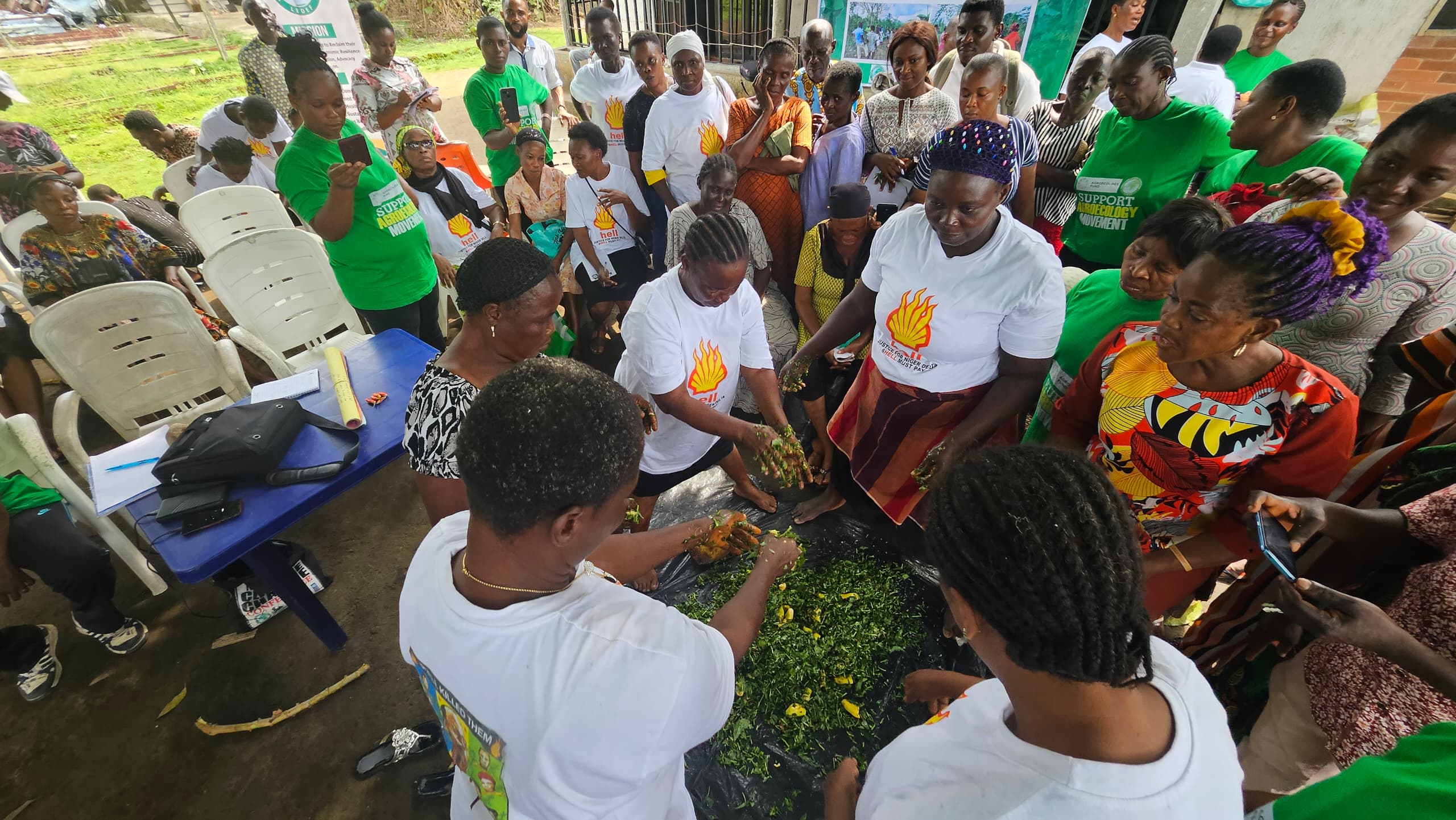
The practical session, organised by the Lekeh Development Foundation with funding support from the Agroecology Fund, held on Monday, December 1, 2025, drew over one hundred farmers from across Ogoni communities. The theme of the training was “Enhancing Soil Health for Climate Action Toward Sustainable Livelihood Support.”
Ugandan agroecology consultant and lead trainer, Samuel Kabuya, explained that the initiative is designed to drastically cut the use of chemical fertilizers and pesticides, which he said have contributed to soil degradation and rising health concerns in farming communities.
“We are not sabotaging any business, but we need healthy people for a healthy nation,” he said. “Chemical inputs are destroying our soils and our bodies. With this practical training, farmers can now produce their own fertilizers and pesticides with zero chemical use.”
Speaking at the event in Bori, Executive Director of the Lekeh Development Foundation, Friday Nbani, said the goal is to empower Ogoni farmers with natural methods of boosting soil fertility and protecting crops without depending on harmful chemicals. He noted that decades of oil spills and pollution have left Ogoni farmland severely depleted.
“For more than three decades, our soil has suffered from extraction, spills and contamination,” Nbani said. “Farmers have been neglected. Agroecology offers us a real solution for restoring soil health and tackling climate challenges.”

He explained that participants were taught how to produce ash-based pesticides and indigenous microorganisms (IMO) using simple, locally available materials like rice, ash, soap and pepper. These organic alternatives, he added, improve soil fertility and protect crops without harming people, animals or beneficial organisms.
Nbani also highlighted that the programme includes a Train-the-Trainer model across sixteen community chapters in Ogoniland, enabling participants to step down the knowledge to thousands more farmers in the coming months.
Many participants described the training as life-changing. Farmer Jacob Gabriel said the practical sessions showed clearly that crops grown with organic fertilizers look healthier and stronger, adding that he now feels confident adopting these methods on his farm.
Another participant, Barinee Lee, said she learned several indigenous techniques for producing manure and organic pesticides and hopes to pass the knowledge on to other women in her community.
“With this training, I believe we will grow healthier food and reduce the diseases linked to chemical fertilizers,” she said.
The organisers say the initiative marks a fresh step toward sustainable agriculture in Ogoniland, where communities continue to push for ecological restoration after decades of environmental damage.