Climate Change: A Chaos in the Delta.
By Katherine Abayomi
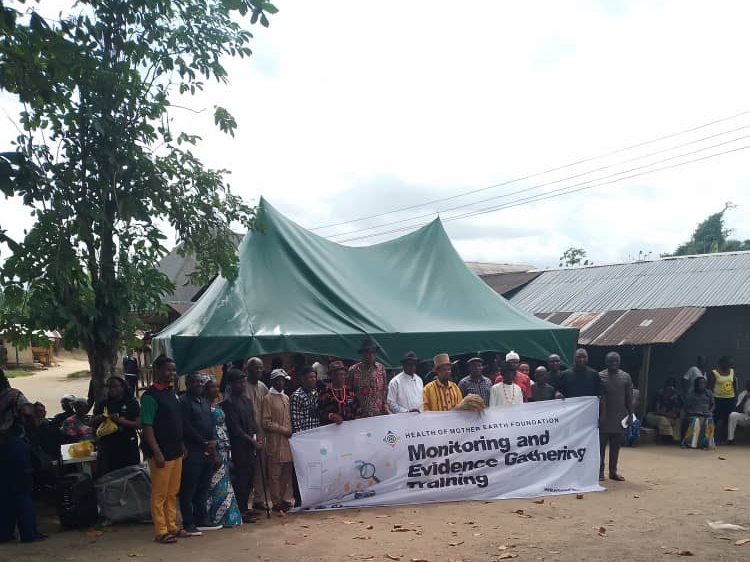
In a quest to unravel the issues surrounding the abysmal sea level rise in the coastal communities in Nigeria’s Niger Delta and West Africa, which has claimed lives and properties and exposed communities to a high degree of insecurity among other forms of communal conflict, which will snowball to National Conflicts. Health of Mother Earth Foundation (HOMEF) and Friedrich Ebert Stiftung held a two-day Experts meeting in Port Harcourt with the theme: CLIMATE CHANGE AS SECURITY THREAT: CLIMATE CHANGE, INSECURITY AND CONFLICTS IN THE NIGER DELTA.
This was necessitated by the research report carried out by Health of Mother Earth Foundation (HOMEF) in communities in Nigeria, Togo, and Senegal on the climate impact in these communities, its looseness, and what needs to be done. This report has given a blueprint for policy making.
Dr. Nnimmo Bassey, the Executive Director of Health of Mother Earth Foundation, speaking during the meeting, stated the need for a comprehensive audit of the environment in the Niger Delta; relevant authorities should begin cleaning up all across the entire Niger Delta to salvage the region from final destruction.
“We need to carry out a comprehensive audit of the environment in the Niger Delta, as it was done for the Bayalsa, just like what the state oil and environment commission did in Bayelsa state. We need to carry it out across the region and also commence the clean-up of the entire Niger Delta. So if we don’t begin now, we are sentencing our children and Grandchildren to very harsh conditions that they will not be able to withstand the onslaught of global warming that is going to come that is much more than we’re experiencing right now.”
Dr Bassey further stated that the report provides a blueprint for policy makers and a template for government and has been presented to both security agencies and research levels for implementation of plans to empower communities to withstand the most pressing issues confronting them.
Dr. Bassey mentioned that Sea level rise and coastal erosion are significant drivers of impacts in these coastal Communities and called on the government to get involved in strategic environmental projects and welfare supports to help the people and save our Ecosystem.
“The Mangrove forest is the best shoreline defense, much more than the ancient shoreline protection. So restoring the Mangrove system will also bring about economic activities for the community because they can do it themselves if they’re trained on how to do it, i.e., if they have the resources to carry out, people are to prepare the nursery and planting.
“Secondly, Communities in Niger Delta have to be supported to do the basic things they know how to do the best, which is fishing, stop the pollution, and people will go back to fishing. People are not lazy in this region; they need to be given the right environment in which to work. And government can do one thing for free, let’s build fish ports across the Niger Delta, places where fishers can easily purchase equipment, nets, boat engines, and hooks. When they return from fishing, they can have storage facilities, and people will come to buy and sell, boosting the economy. Conditions in the region tremendously and very quickly.
“We had severe impacts from flooding over the years and it always begins from around where you mentioned, the water levels will raise in the Benue, Niger,raise at the Conference state and eventually been emptied into the ocean”
“The government needs to invest in the welfare of the people by assisting them to whether the storm literally speaking.
“Then we need to build infrastructure that can withstand flooding the highways in the Niger delta should be such that can withstand flooding.There should be enough drainages, enough flexibility in the construction and the materials been used so that the flood don’t compound the problem,infrastructure compound the problems of the flooding and get destroyed in the process we see in the East/West Road over the years.
“There has to be deliberate community planning sessions and government should sit down with communities. Every community should have development plan just like master plan .Map out the area of flooding prone to flooding so people dot construct buildings there.”
He advised that Citizens should build in a way that will respond to climate change impacts.
The Executive Director for Environmental Conflict Mediation and Women’s Development Initiative, Ijeoma Oladela, who spoke with Newsnowng retorted that it’s a collective approach for all citizens to be on deck and make meaningful impacts that will positively affect the environment.
“Government should take proactive measures to ensure that policies that are already in place are actually implemented. For the citizenry, it’s a collective approach; they, too, have a role to play in making sure their own impact on the environment is also reduced and also ensuring that everyone takes measures,” she stated.
Ambassador Nkoyo Toyo ,a former Nigerian Ambassador to Ethiopia on AU While speaking during an interview session with journalists, stated that the climate change has also resulted to criminality ,and calls for government to step in to salvage the people.
“We are beginning to see an in flock of resources in these coastal communities, fish, sea things, sea resources, a lot of mitigation into the area. Rivers have been controlled by criminals for commercial interest. In this region, we’re seeing ourselves and moving away from what we are talking about, the degradation and around the environment to now seeing the growing privatization and criminality even the very livelihood of ordinary citizens of the coastal communities “.
During her paper presentation on the Gender impacts of Climate Change, Nkoyo stated its differential effect on women and men in society.
“Looking at how it impacts differently on different segments of society, from male or female, there are the implications, and we do have different experiences both in terms of addressing issues of climate change; you tend to see that because women remain in the rural communities do the end jobs like processing of fish and that the implications are very different.
“When they want to recover from that kind of destruction with no help from anywhere you will now turn your children to pretty traders and withdraw them from school they’re multiple implications for us with many engender issues involved in this as well.”