CSO Groups Address COP29 Stance In Climate Issue, Insist On $8trn Climate Reparation.
…advocating for a better climate
…help vulnerable nations and raise hopes.
By Tracy Ohovwore and Katherine Abayomi
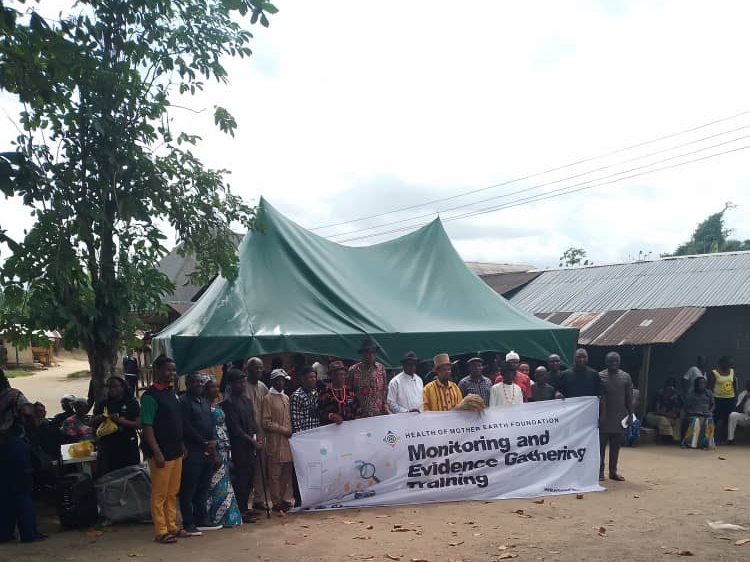
The alarming rate of climate change and the disproportional release of greenhouse gases into the atmosphere has risen to a level of concern. This gave rise to the media parley organized by Health of Mother Earth Foundation (HOMEF), Corporate Accountability and Public Participation (CAPPA), and others to demand up to $ 8 trillion annually as climate change reparations from industrialized nations to the Global South.
Addressing the media in Abuja on December 4, 2024, on the outcome of the recently concluded COP29 climate talks in Baku, Azerbaijan, and the way forward, the CSOs reasoned that the reparations payment would end the disputes over climate finances.
COP29 tagged the Finance COP, which dashed hope for poor and vulnerable nations that it would result in a reasonable climate finance deal, especially because the Loss and Damage mechanism agreed to at COP27 in Egypt was endorsed at COP28 in the United Arab Emirates (UAE).
Disappointed by its outcomes, the group said COP29 “failed spectacularly on the finance note, and the leader of the Nigerian delegation rightly called the minuscule amount offered an insult. We applaud the Director-General of the Nigerian Climate Change Commission (NCCC) for her forthright submission.”
The groups faulted the policy of nationally determined contributions (NDCs) – commitments that countries make to reduce their greenhouse gas emissions as part of climate change mitigation – reached at the Paris talks in 2015. They argued that Emissions Gap reports issued by the United Nations Environment Programme (UNEP) in 2023 and 2024 “clearly show that if nations carry out their NDCs, the world will experience temperature increases far above the 1.5C and 2.0C targets set by the Paris Agreement.”
They said COP 29 came up with “a miserly $300 billion which would come into effect in 2035. The COP ignored the call of vulnerable nations, global civil society and Indigenous peoples for rich and historically responsible nations to Pay Up and to do so in Trillions not Billions.
During the briefings, it was disclosed that the failed financial aspect of the COP 29 and the COP’s inability to prioritize Africa in addressing the issue of climate change. Quoting scientists and researchers, it was announced that 2024 would be the hottest year ever, with extremely high temperatures contributing to global warming. With pollution increasing in vulnerable nations, the briefings addressed how the rich polluting nations would help build resilience to the scourge.
The briefings also revealed the false solutions on the presumption that carbon markets will help in the reduction on the damages whereas it is an escape for diverting funds. In addition is the outplay of interests and politics alongside the COP agenda. The New collective Quantified goals (NCQG) were set up on the disguise to not consider poor countries who are affected by the such polluting countries actions. This implies that both the rich and the poor, the polluter and the polluted would have equal contribution to combating climate change.
In the same vein, it critically addressed the need for fairness and justice in the process of transition such as including the various organizations and unions, such as trade unions, waste management agencies and diversity. Solemnly, the need for Africa to unite in one voice and come up with their collective demands will reduce the level of conflicting arguments and interests and enable a uniformed force towards the achievement of climate goals in the continent.
The group made 14 recommendations, including “community-led solutions to halt pollution at the source, ensure the sovereignty of our peoples over their forests, water bodies and general territories. Their demands include:
“We call for an end to false solutions and demand the halting of emissions at source by urgently phasing out fossil fuels. Communities and nations that have kept fossil fuels in the ground should be recognized as climate champions and duly compensated for such actions. The people of Yasuni in Ecuador, Ogoni in Nigeria, Lofoten in Norway and others have shown the way.
“We demand an urgent clean-up of areas polluted by fossil fuel exploitation and provision of clean renewable energy to energy-poor communities.
“Nigeria and other African countries should ban geoengineering experimentation, including solar radiation management, ocean fertilization, rock weathering, and others.
“We denounce false solutions and market-based mechanisms that include carbon offset schemes, carbon removals and others.
“The energy and other transitions must promote human rights and be inclusive of gender-responsive efforts with communities duly integrated in the decision-making processes.”