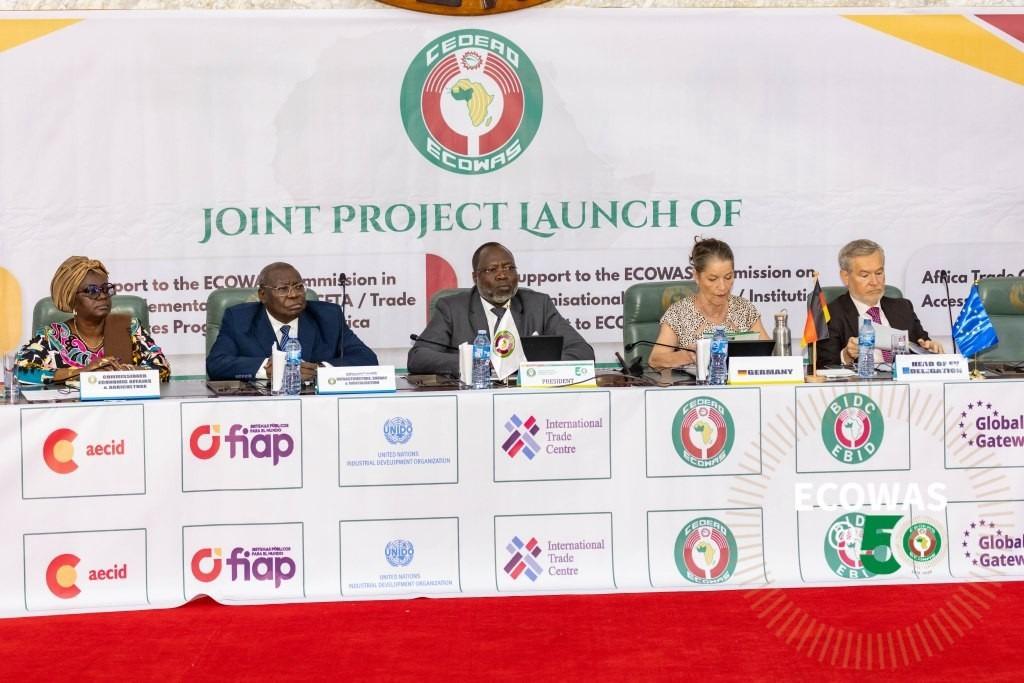
The Economic Community of West African States (ECOWAS) has launched four major projects worth approximately €110 million to strengthen regional peace and stability, support institutional reforms, and promote trade across the subregion.
The projects are funded by the European Union (€82.5 million), Germany (€26 million), and other partners. They include the Support to ECOWAS in Peace, Security and Governance (EPSG) project; implementation support for the African Continental Free Trade Area (AfCFTA)/Trade in Services Programme; institutional development under the Organisational Development/Institutional Support to ECOWAS Phase II; and the Africa Trade Competitiveness and Market Access (ATCMA) Programme.
Speaking at the launch, ECOWAS Commission President, Alieu Touray, said the initiatives are aligned with the strategic priorities of ECOWAS, particularly in enhancing peace and security, strengthening institutional capacity, and promoting sustainable trade across the region. He noted that the ECOWAS Peace Fund requires an estimated $300 million to implement its five-year strategic plan focused on peacebuilding efforts in West Africa.
Touray also addressed the status of ECOWAS’ engagement with member countries that have indicated an intention to exit the organization, stating that trade and free movement will continue under the current arrangements until new agreements are reached. He expressed gratitude to partners for their sustained support and emphasized the importance of accountability and collaborative implementation to achieve tangible results for the people of West Africa.
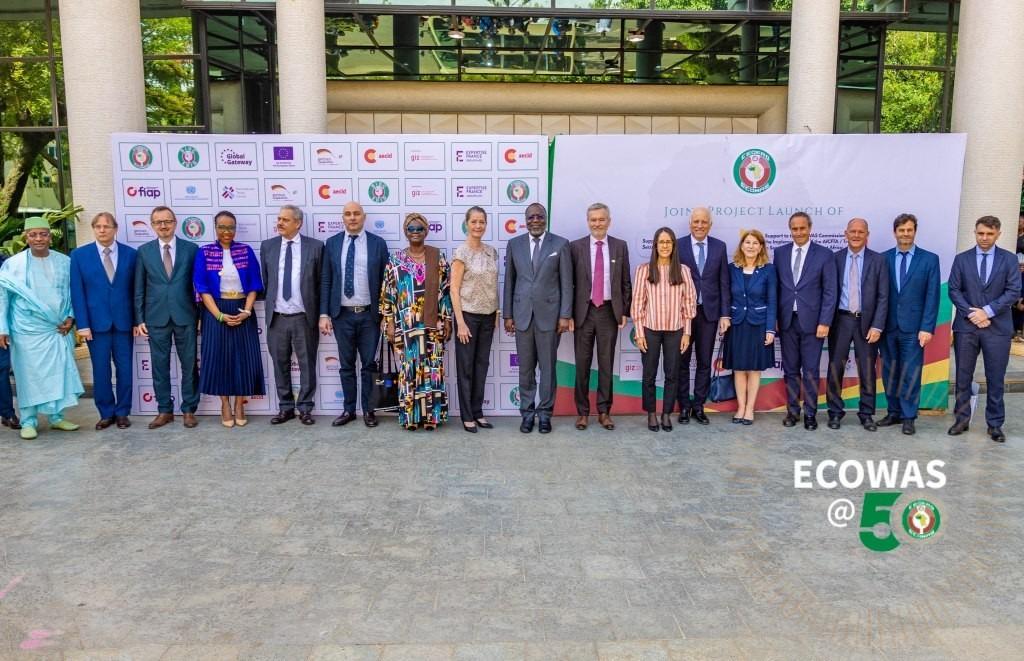
German Ambassador to Nigeria, Ms. Annett Günther, stressed the importance of regional integration and reaffirmed Germany’s commitment to a strong partnership with ECOWAS. She said the launch represents more than new projects, as it reflects shared values of peace, good governance, and economic cooperation. Günther emphasized that trade in services is a key driver of employment, innovation, and conflict prevention, adding that Germany is committed to a stable, democratic, and prosperous West Africa.
European Union Ambassador to Nigeria and ECOWAS, Gautier Mignot, described the projects as part of a unified strategic vision that links peace, regional integration, and economic opportunity. He said the initiatives address both immediate needs and long-term development, including support for the private sector, modernization of cross-border trade, and coordinated responses to security challenges. Mignot acknowledged the commitment of ECOWAS leadership, the German and Spanish embassies, and other partners involved.
Deputy Head of Mission at the Spanish Embassy in Nigeria, Mrs. María Higón Velasco, reiterated Spain’s long-standing commitment to ECOWAS, highlighting over two decades of partnership. She said the projects align with ECOWAS’ core goals, including enhanced trade competitiveness, peace and security, regional integration, and institutional development. Spain is contributing €984,000 to strengthen the ECOWAS Commission, with co-financing from the EU and Germany’s KfW Development Bank, totaling €7.4 million.
Velasco noted the involvement of the Spanish Fiat Foundation in implementing the EPSG project, which aims to combat disinformation and political violence during electoral processes by fostering innovative solutions and stronger engagement between regional institutions and civil society. She emphasized that these projects go beyond financial commitments—they represent expanded cooperation and deeper regional unity aimed at building a resilient, inclusive, and prosperous West Africa.