By Barikui Felix
As preparations for the 2027 general elections in Nigeria intensify, civil society organisations such as the International Press Centre (IPC) and the Centre for Media and Society (CEMESO) have stressed the importance of amplifying the voices of women, youths, and persons living with disabilities in the electoral process.
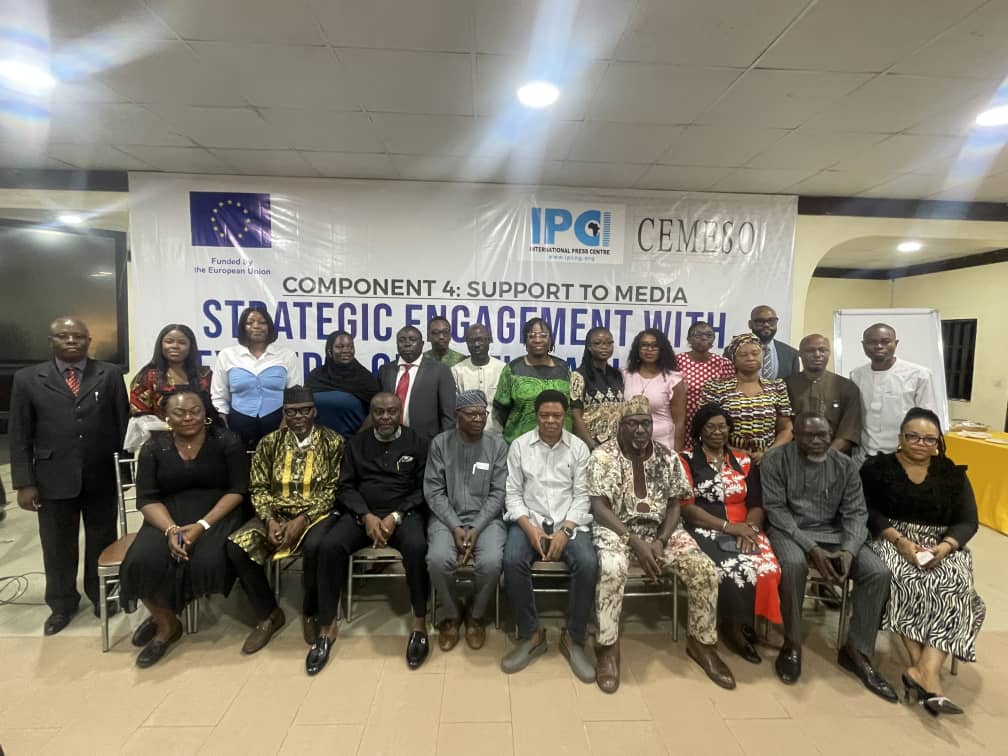
This formed the core of discussions during a one-day stakeholders’ engagement between IPC, CEMESO, and top media managers in Port Harcourt. Convened under the European Union’s Support to Democratic Governance in Nigeria Phase II Programme (EU-SDGN II), the meeting emphasized the media’s role in ensuring fair and inclusive coverage, especially during election periods.
Executive Director of IPC, Lanre Arogundade, told media executives that the EU-SDGN II programme places a significant focus on the media’s contribution to fostering pluralistic, participatory, and representative democracy. He highlighted the five components of the programme, which include support for INEC, the National Assembly and Judiciary, political parties, civil society, the media, and marginalized groups including women, youths, and persons with disabilities.
Arogundade noted that under Component 4 of the programme, being implemented by IPC and CEMESO, the goal is to promote ethical, accurate, and inclusive election reporting. He listed the expected results to include enhanced professionalism among journalists—especially women—improved media capacity to counter electoral misinformation, and expanded coverage of the electoral process with a focus on civic and voter education.
He also noted the need to improve media awareness and use of the Freedom of Information Act for accountability, strengthen the National Broadcasting Commission, and promote inclusive political participation. Arogundade emphasized that the engagement with media executives was necessary due to the difficulty many trained journalists face in applying their skills in their newsrooms.
He said the objective was to brainstorm with media leaders on how to create enabling environments for solution-driven electoral reporting. “While it is important to train journalists, they must also be empowered to apply that knowledge meaningfully within their organisations,” Arogundade stated.
Also speaking, Dr. Akin Akingbulu, Executive Director of CEMESO, called on media organisations to re-engineer their programming to elevate women’s voices, amplify youth perspectives, and reposition the narratives of persons with disabilities from charity cases to change agents. He stressed that civic education should not be limited to election seasons but made part of daily programming.
Acknowledging the challenging conditions faced by journalists, Akingbulu said significant progress has been made through interventions under Component 4 of the EU-SDGN II programme. He urged media houses to integrate the skills acquired from past training sessions into their editorial practices.
“We are hopeful that operational leaders—editors, programme managers, and content decision-makers—will actively support journalists trained under this component by reflecting their skills in newsroom policies, programming, and editorial direction,” he said.
Akingbulu concluded that the success of the intervention depends on the media’s commitment to implement improvements through revised guidelines, dedicated slots for verified electoral coverage, and internal peer-review systems.
Media executives at the meeting pledged to review their editorial policies to provide greater visibility for women, youths, and persons with disabilities in their coverage.