By Katherine Abayomi
Civil society groups in Rivers State have called on the Federal Government to fully implement the provisions of the Ogoni Bill of Rights before any move to resume oil production in Ogoniland.
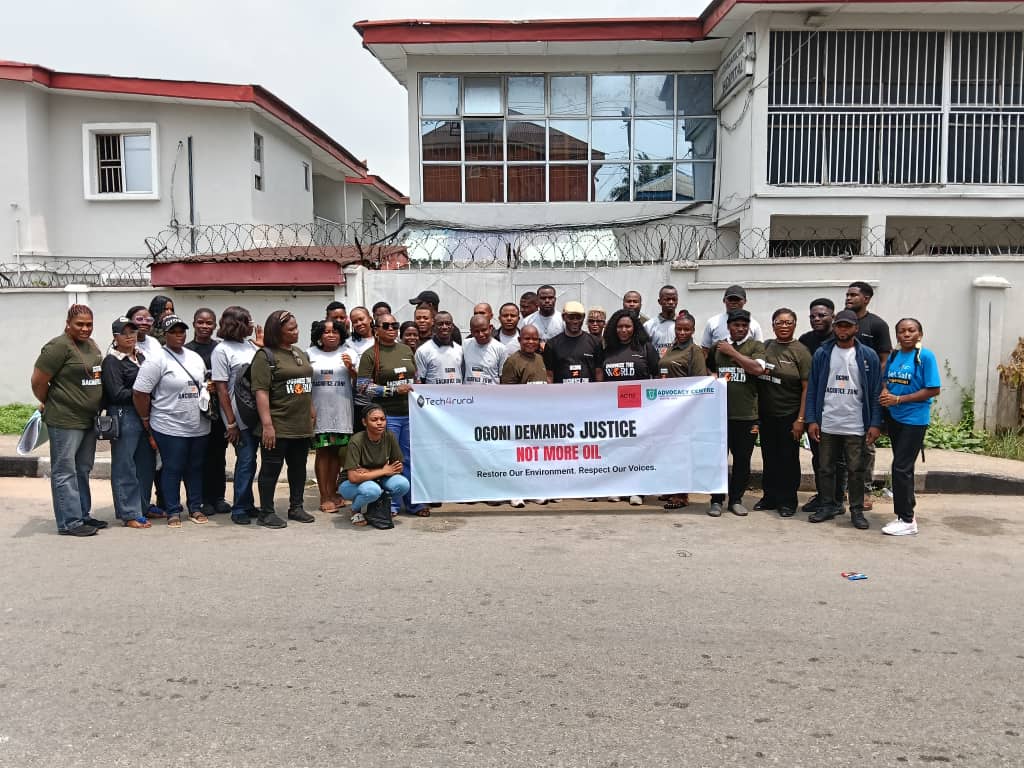
The demand was made during a one-day workshop and solidarity peace walk tagged “Project Ogonize,” held in Port Harcourt on Thursday. The event was organised by Tech4Rural in collaboration with the Youths and Environmental Advocacy Centre (YEAC-Nigeria).
Participants insisted that key issues contained in the Ogoni Bill of Rights, presented to the Federal Government in 1990, remain unresolved. They maintained that these concerns must be addressed as a matter of justice and reconciliation before oil activities can return to the area.
The groups called for the full and holistic implementation of the recommendations of the United Nations Environment Programme on Ogoniland. They also demanded the quashing of the murder charges against the late environmental rights activist, Ken Saro-Wiwa, and other Ogoni leaders, as well as the release of the Ken Saro-Wiwa Memorial Bus seized by the Federal Government.
Executive Director of YEAC-Nigeria, Dr. Fyneface Dumnamene, said the Federal Government must first address the root causes of the Ogoni crisis and ensure full environmental restoration.
According to him, issues relating to environmental degradation, human rights abuses and other injustices must be resolved to heal the wounds of the Ogoni people before contemplating the resumption of oil production.
He recalled that the Ogoni Bill of Rights outlined demands directed at both Shell and the Nigerian government. The situation escalated in 1993 when Shell was declared persona non grata in Ogoniland, leading to the suspension of oil production. The subsequent military crackdown, he said, resulted in the destruction of communities and loss of lives, culminating in the execution of Saro-Wiwa and eight other Ogoni leaders in 1995.
Founder of Tech4Rural, Jethro Christopher, said the initiative uses technology to advocate environmental justice. He explained that “Project Ogonize” seeks to amplify the concerns of affected communities both offline and online.
Christopher, who hails from an oil-producing community in Bayelsa State, recounted how pollution and gas flaring have negatively impacted livelihoods in the Niger Delta, stressing that many young people are unaware of the long-term environmental consequences of oil exploration.
He urged youths to take up advocacy efforts and amplify the voices of impacted communities beyond academic discussions.
Participants at the event shared personal experiences from oil-affected areas. Executive Director of Lighthope Succour Worldwide Initiative, Evelyn Williams, narrated her experience in Goi community, where women reportedly cross oil-polluted waters to access their farms. She expressed concerns about the health implications of such exposure and called for full remediation of polluted communities.
Williams also urged lawmakers to push for policies that would ensure meaningful change and promote a gradual transition to renewable energy.
Another participant, Gift Patience, who grew up in Andoni, recalled a major oil spill in 2009 that led to fire outbreaks and massive destruction of aquatic life, leaving fishermen and residents without means of livelihood.
State Secretary-General of the Joint National Association of Persons with Disabilities and founder of the Ogoni Persons Living with Disabilities, Comrade Isaac Baridapdoo, decried what he described as the marginalisation of Ogoni people, particularly persons living with disabilities. He called on the Federal Government to ensure inclusiveness in decision-making processes.
Placards displayed during the peace walk bore inscriptions such as “Restore Ogoni First Before Oil Resumption,” “Stop Oil Pollution,” “Pollution Is Not Development,” and “No Consent, No Oil.”
The groups maintained that environmental justice, inclusion and genuine community participation must precede any fresh oil deal in Ogoniland.