HOMEF Trains Environmentally Impacted Communities on Just Transition.
….educates community members on just energy transition
….restrategizes measures to build community resistance
By Tracy Ohovwore
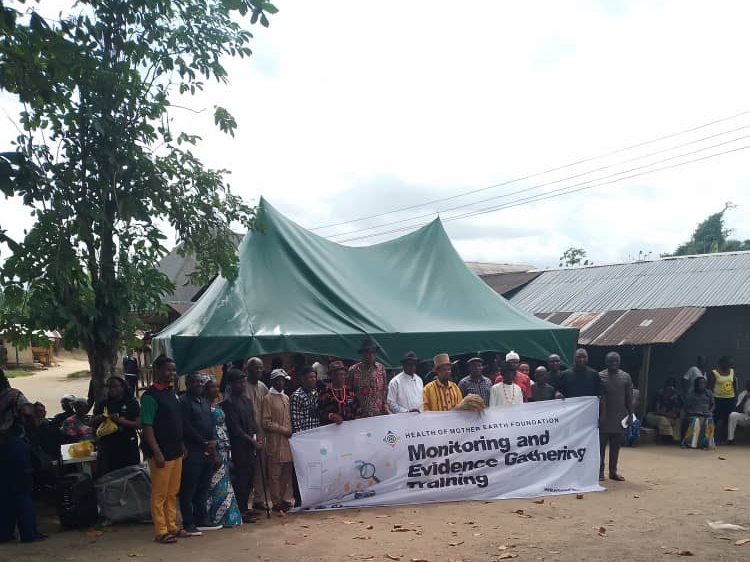
Igobiaye and Gelegele community members in Edo state were educated on just energy transition. The training is titled“Community Dialogue on Just Energy Transition and the Use of Cultural Tools to Build Resistance.” The training, which was held in Benin City, had community leaders, youths, and women from the oil-producing communities in the Niger Delta learn how to transit from fossil fuels to renewable energy sources.
HOMEF Programme manager for Community and Culture Cadmus Atake-Enade stated the need for a just energy transition.
According to him, climate change requires a just energy transition. He also informed that most of the solutions proffered are profit-based without consideration of the host communities or the people affected.
“There is the transition from the era of fossil fuels to renewables. The need for a just transition is to ensure that people are being considered. Hence, just energy transition involves fairness, oneness, justice, and equity in extraction activities and how they affect the environment.
Atake-Enade further gave insights into how community members can build resistance through cultural escape tools like music, food, dance, social norms, and behaviors. He centered his lecture on using artistic tools for resistance while underscoring the importance of cultural heritage in the struggle for environmental justice.
“Cultural tools, such as traditional music, dance, and art, can be effective instruments for resistance against environmental degradation and injustice. Participants are encouraged to harness their cultural heritage to mobilize their communities against environmental threats without resorting to violence.”
Babawale Obayanju, an environmental activist with Environmental Rights Actions (ERA), spoke on the need for communities to be involved in important decisions that affect them and a clear documentation of their community needs. He added that the need to transition to a renewable energy source should be implemented.
According to him, the transition to just energy will reduce pollution, health hazards, environmental degradation, ecosystem damage, and biodiversity hazards.
“Just energy transition is how we transform our energy to another energy fairly and morally. Just energy transition is about defunding fossil fuel.”
He further urged community members to take up responsibilities to campaign against illegal activities in their society that are endangering the environment and to spread awareness in their respective communities.
Obayanju emphasized that a just energy transition was crucial for addressing climate change and ensuring energy justice for all.
“The current energy system, which relies heavily on fossil fuels, was unsustainable and has devastating impacts on the environment and local communities. Transitioning to renewable energy sources was necessary to mitigate climate change and ensure a sustainable future.
“Just energy transition is not just about ending the era of fossil fuels. It is about doing it in a fair way that benefits the community. As communities, you will need to build your knowledge. If any energy project is brought to your communities and you need to donate land, you must first assess what can be the environmental impact of such. Position yourself in the right place and ask good questions. Access necessary knowledge before deciding on such a project,” he said.
One of the community leaders, Mr Stanley Aladdin, expressed the effect of climate change in his community, showing the severity of the issue.
“When I was young, I would take the hook, go to the corner of the river, and catch fish before 30 minutes, which would be enough for my entire family to eat. But now, I’ll toil night to daybreak and nothing.
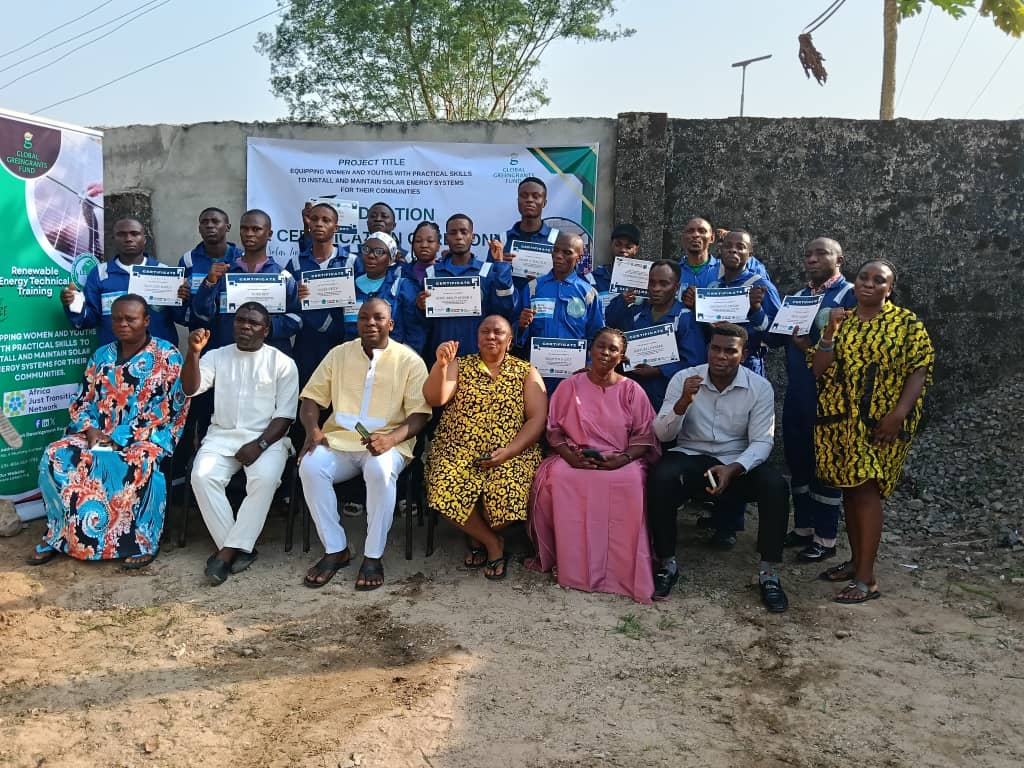
The training, which focused on understanding the concept of just energy transition and the need to defund fossil fuels in favor of renewable energy, enlightened participants to always consider their means of livelihood, their women and children, and to be more cautious. It encouraged the participants to demand inclusive and participatory approaches to energy transition and to ensure their rights and interests are respected. The need to transition to a just energy transition has become a crucial solution to these communities’ preceding crisis.