Lekeh Development Foundation Demads A Just Equitable and Culture- Based Transition
Katherine Abayomi – Port Harcourt
In 1993, Ogoni communities shut down oil wells in response to economic exploitation, environmental degradation and repression of Ogoni people caused by Shell and the Nigerian military government. This non-violent struggle tragically resulted in massacres and bloodshed. The Ogoni struggle for justice against environmental degradation, political marginalization and economic strangulation can be traced to the early 1990s. The discovery of oil in Ogoniland in 1958 marked the beginning of an era of massive environmental degradation―Ecocide.
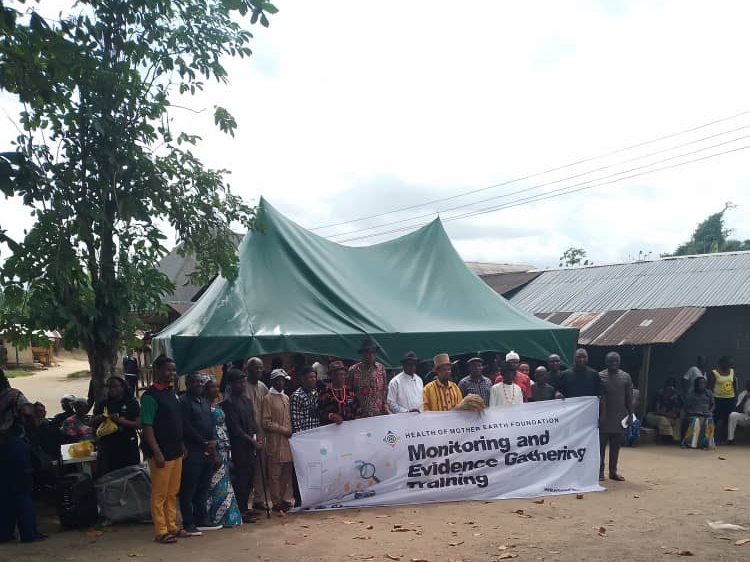
In a one day press conference organised by Lekeh Development Foundation to mark 32nd Ogoni Day Anniversary and to mobilize Ogoni communities to resist the resumption of oil exploration and exploitation in Ogoniland and to demand a just, equitable and culture-based transition from fossil fuels to renewable energy sources that are affordable and accessible to the Ogoni people, with the goal to ensure a safe and healthy environment for future generation and society at large.
The foundation raised a five point demand calling for the political autonomy to manage Ogoni affairs, with a fair share of Ogoni’s economic resources for development given to them. While calling for a representation in national Institution and the protection of Ogoni’s environment and ecology, as well as the provision of basic amenities, including potable water, healthcare, roads, and electricity.
The coordinator of Lekeh development foundation (LEDEF) Friday Nbani, who read the statement on behalf of the group stated that “We strongly oppose the planned divestment of Shell’s onshore assets without addressing the liabilities caused by decades of pollution in the Niger Delta. Shell must clean up its mess, compensate affected communities, and ensure environmental restoration before any divestment takes place.”
“We also seize this opportunity to state that the Petroleum Industry Act (PIA) is an affront to oil bearing communities in the Niger Delta. The Act is another means of using legislative powers to further impoverish and imprison oil bearing communities in Nigeria. It is so unfortunate. “
He also stated that the Hydrocarbon Pollution Remediation project(HYPREP) has made limited progress despite significant funds allocated.
“We commend the initiative of postgraduates scholarship, and all but we call HYPREP to focus on its core mandate of environmental remediation and restoration.
Nbani further calls on all Ogonis to vehemently resist any form of dialogue or negotiations for possible oil resumption and insist that environmental restoration, political inclusion, and economic justice must first be addressed. While calling on the Federal government to impose fossil fuel taxation, phase out fossil fuels in order to make a just and equitable transition to renewable energy.
The group also seek the Federal Government attention to fast-track the establishment of the proposed Federal University of Environment to drive development in Ogoniland and strengthen institutions to hold oil companies accountable and ensure justice for affected communities stating that the Ogoni struggle represents the resilience and determination of a people seeking justice, equity, and environmental sustainability.