Minister Calls for Proportionate Representation of Women in Security Agencies
Minister of Women Affairs Imaan Sulaiman-Ibrahim has called for proportionate representation of women in senior command positions in the country’s military and security institutions, describing the present under-representation as unacceptable.
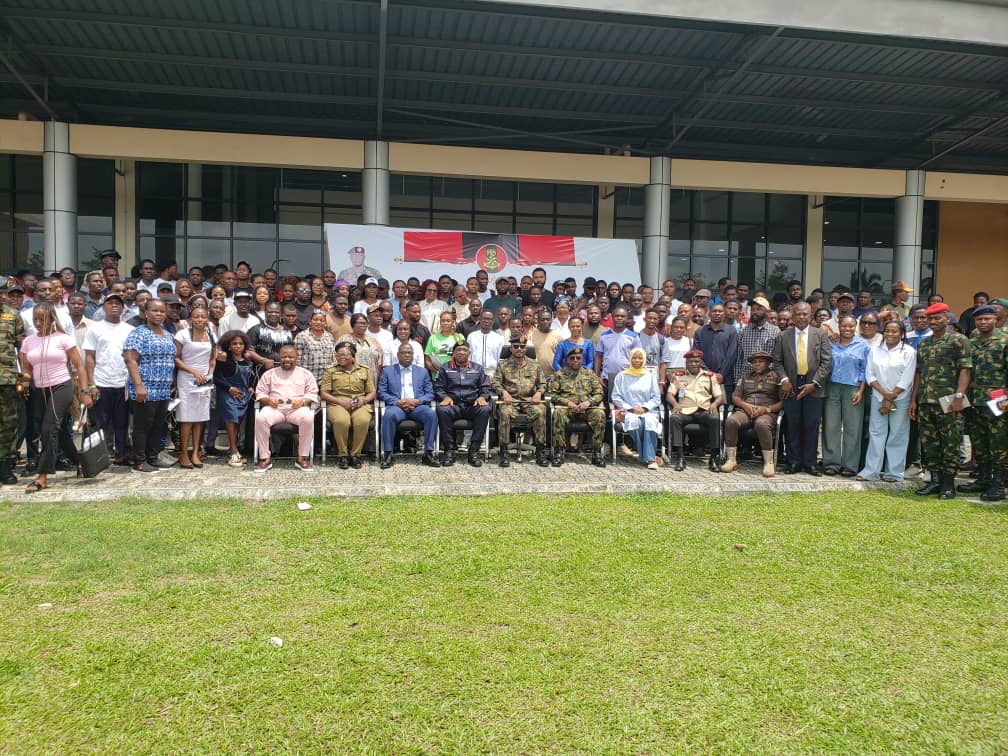
The Minister called on Tuesday in Abuja at the 5th Annual Forum of Women, Peace and Security Sector Reference Group in Nigeria.
She said that women are grossly under-represented in operational roles and strategic decision-making positions in security institutions despite their demonstrable competencies and qualifications, calling for the breakdown of institutional barriers and structural inhibitions in the security sector.
The Ministeracknowledged that some progress has been made in the appointment of women to strategic positions in the Nigeria Police Force and other paramilitary institutions such as the Nigerian Immigration Service, but she said she was not satisfied with the achievements recorded so far.
She said: “While we have made progress, the reality is that women continue to bear the brunt of insecurity in Nigeria whether as victims of gender-based violence, internally displaced persons or those facing structural barriers within our security institutions.”
Sulaiman-Ibrahim called on key stakeholders to work assiduously to close the gaps between commitment and execution, between dialogue and measurable impact, in implementing Women, Peace, and Security.
Earlier, in her remarks, the UN Women Representative to Nigeria and ECOWAS, Beatrice Eyong, pointed out that the theme of this year’s forum, “Enhancing Implementation: The Role of the Security Sector in Nigeria’s 3rd National Action Plan on Women, Peace and Security,” reflected the collective commitment of the security sector and other stakeholders towards advancing the Women, Peace, and Security agenda in Nigeria.
Eyong explained that the Forum served as a testament to Nigeria’s unwavering commitment to the Women’s, Peace, and Security agenda, which was borne out of the landmark adoption of United Nations Security Council Resolution (UNSCR) 1325 in October 2000.
She said: “This historic Resolution shifted the global understanding of peace-building and reconstruction, recognising women not only as victims of conflict but as peacebuilders and agents of change.”
She announced that Nigeria would soon launch her 3rd National Action Plan (NAP) on UNSCR 1325, a roadmap for advancing gender equality and enhancing women’s meaningful participation in peace and security processes, including within the security sector.
Eyong while explaining the importance of the policy document, said: “This policy document will reaffirm Nigeria’s leadership in addressing the unique needs of women and girls in conflict and post-conflict settings while also promoting their vital roles in preventing conflict and building sustainable peace.
“The security sector has a pivotal role to play in translating the 3rd NAP into actionable outcomes, hence the decision to prioritise this during this forum, which avails us the opportunity to share experiences, showcase best practices, and strategise on how to strengthen coordination between security institutions, government MDAs, and community-based WPS structures to accelerate the implementation of the 3rd National Action Plan.”
The UN Women Representative, while recounting some notable progress made in Nigeria’s security institutions, noted that “Gender Policies have been adopted by the Armed Forces, the Nigeria Police Force, the Nigeria Security and Civil Defense Corps, and the Department of State Services, among others, which continues to set a benchmark for institutionalising gender equality.
“The need to strengthen institutional support for the full operationalization of these policies cannot be over emphasised.
“The recent approval for the integration of the Standard Training Manual on Gender into the training curricular of Nigeria Police Force, Nigeria Security and Civil Defence Corps, and Nigerian Navy exemplifies a strategic step toward sustainable impact. I encourage other security institutions to follow suit.
“Nigeria’s Armed Forces achieved 27.9% female participation in peace-keeping operations in 2023, surpassing the UN-recommended benchmark of 17%.
“And Civil Defense reached 35% of women among all its staff. These are remarkable milestones worthy of commendation.
“In collaboration with the National Defence College (NDC) and security sector institutions, UN Women rolled out a Leadership and Mentoring Programme for Women in the Security Sector at the last quarter of 2024.
“I call on heads of security sector institutions to institutionalise this initiative for sustainable impact.”