By Israel Adebiyi
Nigeria is drifting into dangerous territory, and the drift is happening in plain sight. Every week brings fresh reports of villages sacked, highways taken over, commuters kidnapped, security patrols attacked, and communities left to bury their dead with no clarity on when the cycle will end. What the country faces is not a cluster of isolated crimes, but a sustained erosion of state authority. It is the gradual acceptance of abnormality as routine, the blurring of lines between criminals, their sponsors, their negotiators, and even those in positions that ought to defend the republic. At some point, a nation must admit a hard truth. We cannot defeat what we tolerate. And the time has come for the President to bell the cat.
The first step is honesty. Nigeria’s security challenges are not emerging. They are exploding. What used to be flare-ups have matured into entrenched patterns. What was once limited to a handful of states now spreads like a web. Communities in the North West and North Central have practically become laboratories for criminal enterprise. Yet these attacks are not random. They follow a logic. They follow money, protection, informants, and networks. Every one of those networks has financiers, negotiators, and sympathisers who operate confidently because the Nigerian system has not shown the courage to name them publicly, much less prosecute them.
Take the recent case in Kebbi State on 17 November 2025. Gunmen stormed the Government Girls Comprehensive Secondary School in Maga, Danko-Wasagu Local Government Area, and abducted 25 students. The horror deepened when it emerged that military personnel assigned to guard the school reportedly withdrew at 3:00 a.m., just 45 minutes before the bandits struck. This alleged withdrawal triggered public outcry and prompted an official investigation by the Defence Ministry. This episode epitomises the systemic failure warned against, not a reactive botched operation, but a complete breakdown, or possibly a deliberate pull-out, at a critical moment. It gives the broader call for accountability, clarity, and refusal to retreat urgent and current relevance.
This is why the example set by the United Arab Emirates is an indictment on us. In 2021, the UAE Federal Court of Appeals in Abu Dhabi convicted a group of Nigerian nationals for channelling funds to Boko Haram. These were not guesses or allegations. They were legal convictions backed by evidence. Abdurrahman Ado Musa, Salihu Yusuf Adamu, Bashir Ali Yusuf, Muhammed Ibrahim Isa, Ibrahim Ali Alhassan, and Surajo Abubakar Muhammad were found guilty of transferring seven hundred and eighty-two thousand dollars from Dubai to Boko Haram operatives in Nigeria. Two of them were sentenced to life imprisonment. The others received ten-year sentences and were slated for deportation. It took a foreign country to expose and punish people who sponsored terror within Nigeria. That alone should trouble every citizen. It should shame the Nigerian state into decisive action. This is why the President must deploy all lawful power at his disposal to publish the names of terrorism financiers, negotiators, and sympathisers. Name them, shame them, arrest them, prosecute them. It is the most basic responsibility of a state that claims to be fighting insecurity.
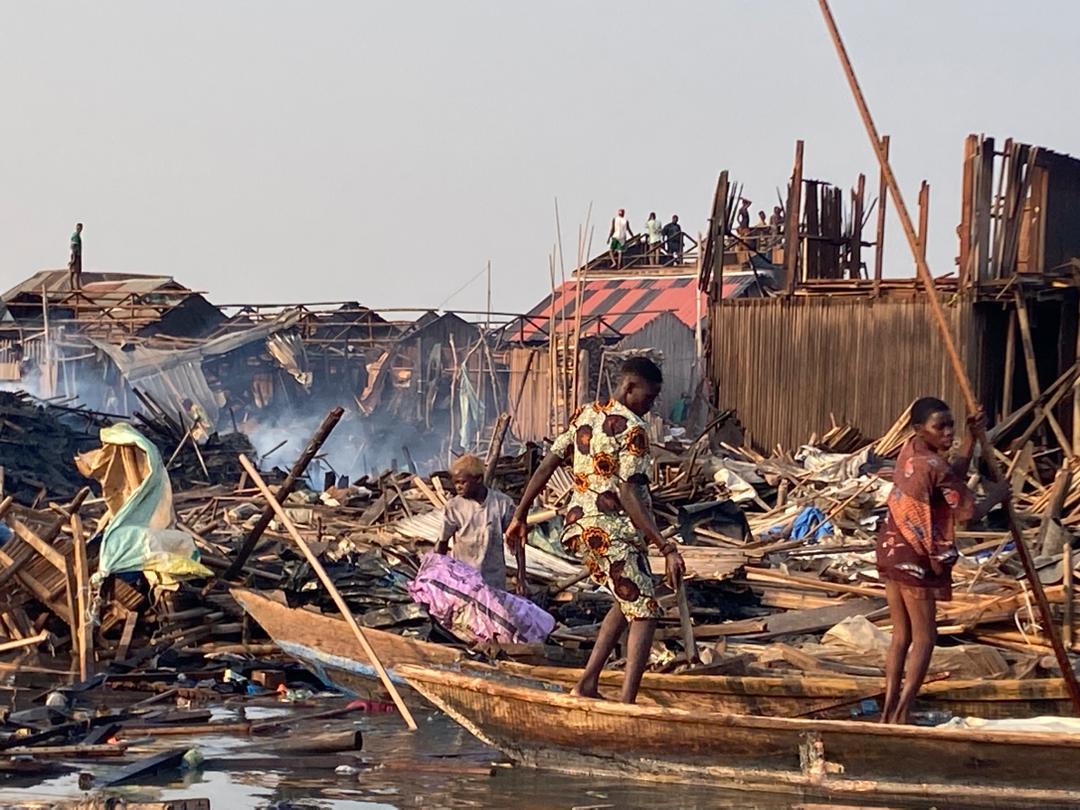
There is also the matter of expansionist aggression occurring in agrarian communities. Villages that have existed for generations are being uprooted. Farmlands are abandoned because terrorists have taken over with the confidence of conquerors. It is no longer unusual to hear entire communities talk about how they were ordered to leave or watch their homes burn. What is happening is not just criminality. It is displacement. It is territorial ambition. It is an assault on the country’s social and economic foundation. And while state officials often respond with sympathy and promises, the attackers are not waiting for meetings. They are expanding in real time.
Across the North-West and North-Central regions, this is starkly evident. Plateau State has seen about 30 villages in Mangu Local Government Area sacked following repeated attacks on farming communities. Zamfara State tells an even grimmer story, with hundreds of villages reported sacked and 725 under bandit control across 13 local governments. In Bukkuyum Local Government Area, the village of Ganar Kiyawa was attacked in March 2022; at least 37 people were killed, many kidnapped, and survivors fled, leaving some villages deserted. Kaduna State’s Sabon Layi in Birnin Gwari LGA and Ungwan Wakili in Zangon Kataf LGA have also faced deadly raids causing fatalities and displacement. These are not old, isolated incidents, they are part of a continuing pattern of displacement, loss of farmland, and destruction of lives. This ongoing expansionist agenda, where terrorists turn rural areas into no-man’s land, must be confronted head-on.
The country cannot keep responding with analogue strategies to digital threats. There is no real security architecture without technology. Any nation that relies mainly on human patrols in 2025 is building its safety on wishful thinking. Nigeria must invest heavily in surveillance systems that cover highways, borders, vulnerable communities, forests, and ungoverned spaces. Drones should not be a luxury. They should be routine. Satellite monitoring, motion sensors, automated alerts, smart data tools, and real-time intelligence integration must become the backbone of national security. Technology does not feel fear. It does not collect bribes. It does not fall asleep on duty. It sees what human eyes miss. If the country keeps spending billions on security without investing in tools that make modern policing possible, we will continue operating in the dark.
The same energy must go into reclaiming ungoverned spaces. Criminals thrive where the state is absent. Forests and border communities have become sanctuaries because they are poorly manned or not manned at all. Nigeria’s borders are vast, porous, and exploited by arms dealers, human traffickers, insurgent groups, and cross-border criminals. These gaps have turned remote communities into operational bases for violence. Closing those gaps is not optional. Any country that leaves its borders open is simply inviting trouble to walk in.
None of this will work if the morale of the security agencies remains weak. Police officers and soldiers must trust the state they serve. Trust grows when they are well equipped, backed by clear orders, and assured that they will not be abandoned during operations. Too many officers have lost their lives because they were sent into battle with either inferior equipment or confusing directives. Nothing destroys confidence like being ordered to retreat in situations where offensive action is needed. Nothing frustrates a trained officer like seeing criminals treated with more caution than they receive. A country cannot ask its security personnel to give their lives for a system that treats them as expendable.
Cleaning up the security agencies must be part of the reform. Saboteurs within the system are as dangerous as external attackers. Inside leaks compromise operations, endanger officers, and make victory difficult. The President must insist on a thorough, continuous internal audit. Loyalty to the nation is non-negotiable. Anyone found fraternising with criminals or leaking classified information must face consequences. Security agencies cannot fight an enemy they are secretly feeding.
Recruitment is another urgent matter. The number of personnel in both the police and military is far below what is needed for a country of over two hundred million people. Just days ago, the federal government declared a nationwide security emergency and ordered mass recruitment into the police and military, redirecting officers from VIP duties to conflict zones. This move implicitly acknowledges the shortage of boots on the ground, a fact long flagged. Massive recruitment is not only necessary, it is overdue. But recruitment only makes sense if the system inspires confidence. Young Nigerians will join and commit themselves if they see that the government values those who already serve. Better welfare, better insurance, better accommodation, better training, and better operational support will attract capable men and women who otherwise avoid uniformed service because the risks outweigh the rewards.
A major obstacle to progress is the culture of reaction. Nigeria reacts to crises instead of preventing them. It negotiates with criminals instead of neutralising them. It sends delegations to victims after the ashes have cooled instead of sending forces early enough to stop the attack. Criminals have become emboldened by a pattern of inconsistency. They kidnap, collect ransom, release victims, and return to the business as if they were running a normal enterprise. Sometimes victims are even released in batches. That alone suggests that negotiated settlements have become more common than decisive force. The President must break this cycle. No serious nation negotiates repeatedly with groups that target its citizens. Stopping terrorists requires confronting them, not pacifying them.
There is also a legislative dimension. There are governors who glamorise those who should be in prison. Some subnational governments hand out chieftaincy titles to criminal elements. Others host ceremonies, arrange marriages for violent actors, or package them as repentant fighters. A country must draw a line. There are no repentant terrorists just as there are no repentant armed robbers paraded with honour. Crime is crime. Murder is murder. There should be no double standard that elevates one set of criminals while condemning others.
Recent events expose the depth of this rot. In Katsina State, communities and local authorities in several LGAs, including Faskari, have reportedly held peace talks with armed bandits, with leading figures involved in kidnappings present. As recently as September 2025, Kurfi LGA signed a peace agreement with bandits, formally recognising them in the negotiation process. Possibly the most shocking: in 2022, a bandit kingpin in Zamfara, Ado Aleru (also known as Adamu Aleru), was reportedly conferred a chieftaincy title, “Sarkin Fulani of Tsafe Emirate,” by a traditional ruler. Though the Emir was suspended after public backlash, this symbolic validation of violent offenders undermines justice and encourages impunity.
Traditional rulers must also be held accountable. Some are complicit either through silence or through quiet cooperation with violent actors in their domains. The throne cannot be above the republic. If a traditional ruler is found aiding aggression or protecting those who menace their community, the state must act. A title cannot be allowed to undermine national security.
Another critical step is withdrawing weapons from non-state actors. No matter how well intentioned they appear, arming them is a gamble that always ends badly. Countries survive on institutional security, not freelance militias. When non-state actors hold weapons, they eventually begin to challenge the authority of the state. It is a slippery slope that Nigeria must get off immediately.
The debate over state police is long overdue. Governors who dismiss state policing often turn around to fund informal security outfits that operate outside proper legal frameworks. If the country will have decentralised policing, it should be formalised, regulated, and woven into the national security architecture. What is dangerous is the halfway approach where states empower quasi-security formations without the full structure, training, and oversight that real policing requires.
Nigeria is at a crossroads. The longer we delay, the more entrenched the threats become. The President has the authority, the mandate, and the historic responsibility to change the trajectory. A nation cannot keep losing territory, losing confidence, and losing citizens while hoping that things will fix themselves. They will not. Criminals do not retire voluntarily. Terrorists do not stop because we plead. Bandits do not pause because the government is holding a meeting. National security requires boldness, clarity, and courage.
Now is the moment to confront the menace with full resolve. Name the financiers. Crush the networks. Empower the forces. Clean up the system. Reclaim the land. Protect the citizens. Restore the dignity of the republic. Mr. President, the eyes of every Nigerian are fixed on you. The unrest, the fear, and the countless lives disrupted cannot be ignored any longer. It is time to summon the courage to bell the cat, to confront insecurity head-on with decisive action, clear strategy, and unwavering commitment. The nation demands not promises but results. History will judge your leadership by how boldly you rise to this challenge. The time to act is now.