Tracy Ohovwore
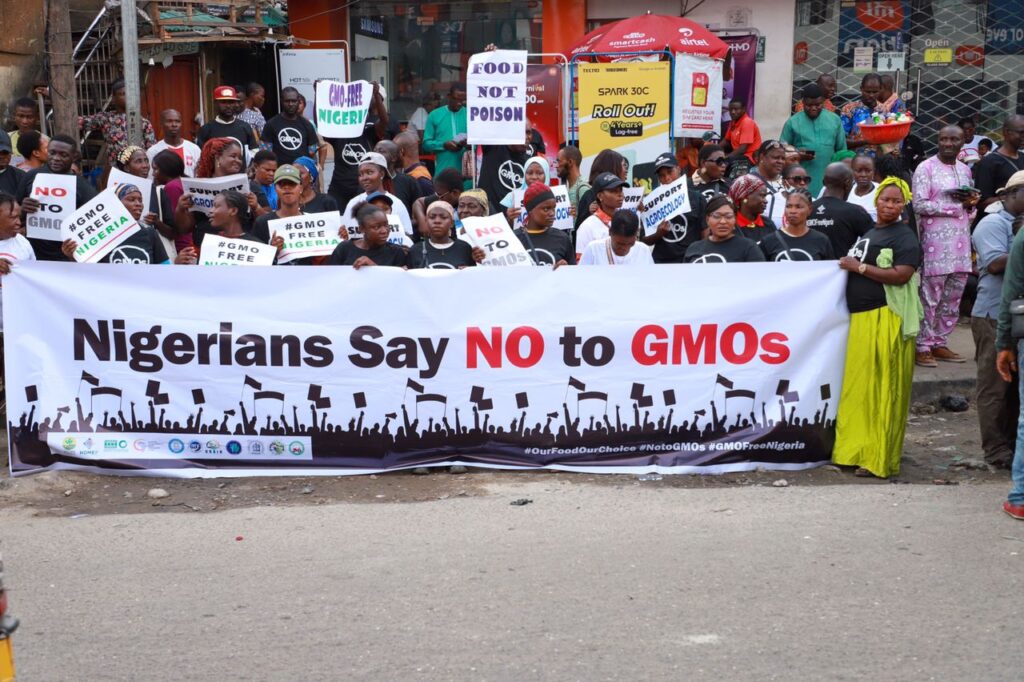
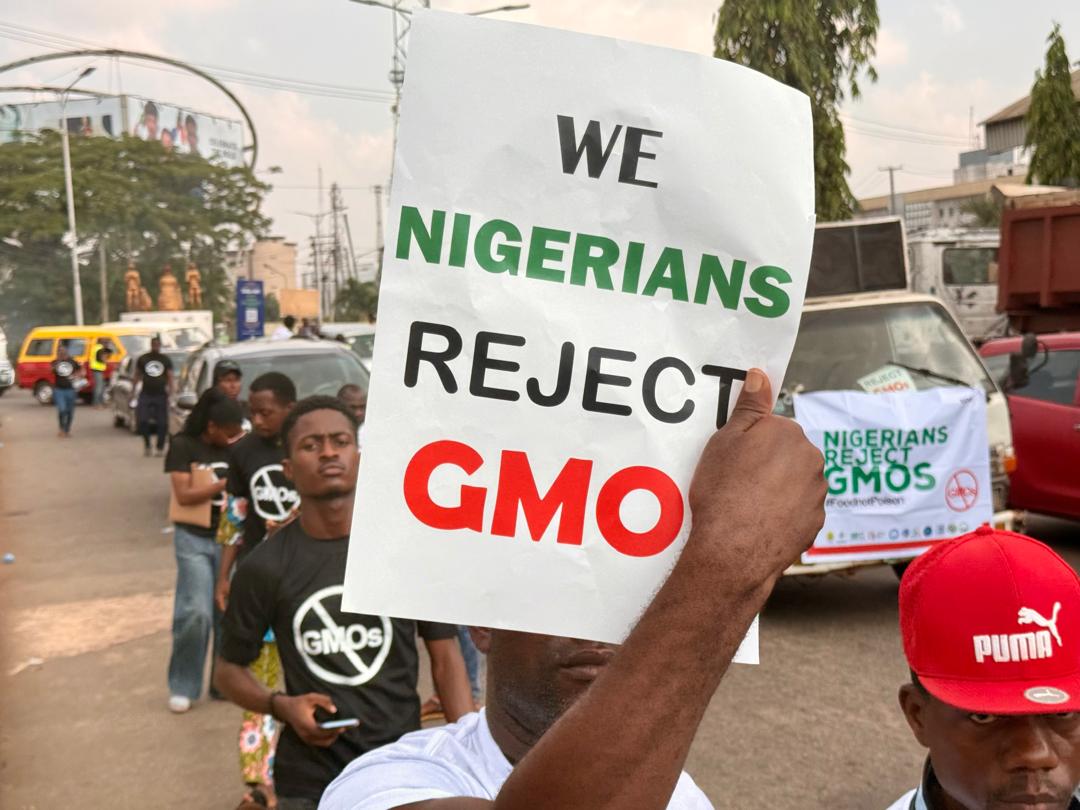
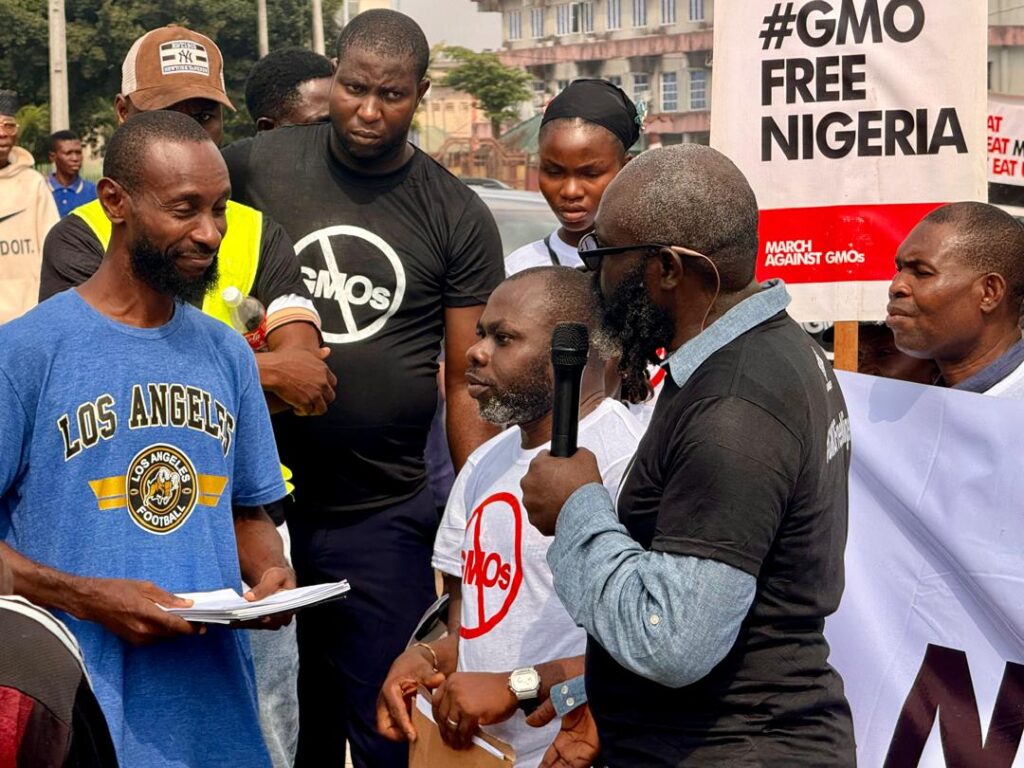
Many Nigerians took to the streets in ten major states on Friday, demanding a nationwide ban on genetically modified organisms (GMOs) and a shift towards agroecological farming practices to cite support for smallholder farmers.
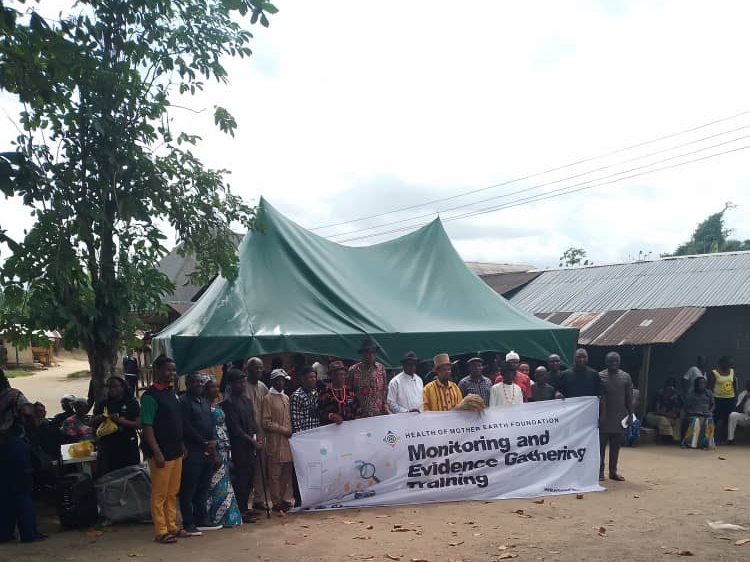
The rally, organised by the Health of Mother Earth Foundation (HOMEF) and the GMO-Free Nigeria Alliance, had farmers, civil society organizations (CSOs), scientists, nutritionists, legal and medical professionals, women’s groups, and youth converged in Rivers, Edo, Katsina, Plateau, Oyo, Lagos, Cross River, Enugu, Jigawa states, and the Federal Capital Territory (FCT).
The rallies involved advocacy visits to state government houses and relevant ministries, expressing deep concerns over the deployment of GMOs in Nigeria.
Executive Director of HOMEF, Dr Nnimmo Bassey, argued that GMOs are not the solution to food insecurity, claiming they hinder local economic growth by fostering dependence on corporate seed suppliers.
He cited a report from the National Cotton Association of Nigeria (NACOTAN), stating that GM cotton yields have not significantly increased over the past four years and that using GM seeds has led to soil degradation and loss of biodiversity. Farmers reported that no other plants would grow in the soil where GM cotton had been planted.
Bassey further criticized farmers’ inability to replant GM seeds, forcing them to continuously purchase them from corporations—a practice he labeled neocolonialism.
Ifeanyi Nwankwere, National Coordinator of the GMO-Free Nigeria Alliance, highlighted Nigeria’s lack of GMO labeling, arguing that the current socio-economic context makes adequate labeling impossible. He also criticized the National Biosafety Management Agency (NBMA), citing flaws in its regulatory system, including a lack of strict liability provisions, inadequate consideration of the precautionary principle, and insufficient public participation in decision-making.
Nwankwere pointed to the NBMA board’s composition, which includes key GMO promoters, creating a potential conflict of interest.
Mariann Bassey-Orovwuje, Deputy Director at Environmental Rights Action, drew attention to international examples of GMO bans, including Russia, Mexico, Uganda, and over 20 other countries.
She referenced Mexico’s recent ban on GMO corn, citing environmental concerns, and highlighted a South African Supreme Court ruling criticizing the approval of Monsanto’s drought-resistant maize due to insufficient safety assessments.
HOMEF’s Director of Programmes revealed a survey conducted in 2018, 2019, and 2023 that revealed over 50 imported packaged food products containing GM ingredients in Nigerian markets.
She also expressed concern over potential health risks associated with GMOs, citing a study showing organ damage in rats fed GMO soy and noting the NBMA’s lack of comprehensive long-term safety testing.
The coalition’s unified demands include a complete ban on GMOs – in food, food processing, and packaged foods – the nullification of existing permits due to inadequate risk assessments and substantial investment in agroecology to ensure food security, sovereignty, and economic strengthening.