By Barikui Felix
Following the perceived lack of inclusion for persons with disabilities in the benefit structures of the Petroleum Industry Act (PIA), a group, Centre for Citizens with Disabilities (CCD), has called on host communities in the Niger Delta region, particularly Rivers State, to consider persons living with disabilities (PWDs) in the implementation of relevant sections of the Act.
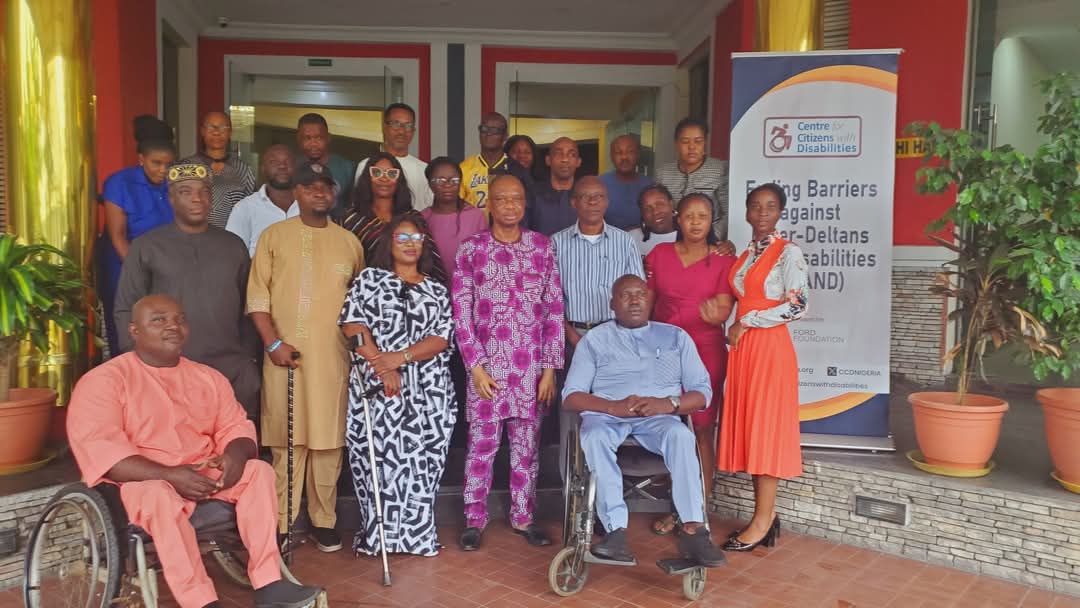
The group made the call at a workshop on the Petroleum Industry Act (PIA) 2021 and the development of a demand charter for the inclusion of PWDs in the PIA benefit structures in Rivers State, held in Port Harcourt.
The advocacy group noted that persons with disabilities are often excluded from benefit interventions in Rivers State and the wider Niger Delta region. It faulted several provisions of the PIA for neglecting persons with disabilities while explicitly providing for women, youths, and others.
Executive Director of the Centre, David Anyaele, speaking at the workshop, emphasized that PWDs must be considered during needs assessments by host communities as part of the implementation process of the PIA.
He said persons with disabilities are typically excluded from oil benefit interventions in the Niger Delta. According to him, when included at all, it is treated as charity, which he argued is not sustainable. He stressed the need to use the PIA as a tool to encourage host communities to adopt inclusive practices that do not marginalize PWDs.
Anyaele advocated for the inclusion of persons with disabilities in the selection of members of the management and advisory boards of host community trust funds, as provided by the Act, to ensure their interests are represented in project planning and needs assessments.
He noted that while the PIA makes provision for host community trusts and their management and advisory structures, it highlights the needs of women and youths but is silent on the concerns of persons with disabilities. He argued that since oil spills and related damages affect everyone equally, there is a need for inclusive intervention frameworks.
The group also called for the creation of a Disability Commission in Rivers State, as is already established at the national level and in some states, to coordinate government responses to issues affecting PWDs.
Anyaele urged the disability community in Rivers State to deepen their understanding of the PIA in order to effectively leverage the opportunities it presents.
Also speaking, a disability advocate and Executive Director of FAECARE Foundation, Ambassador Ndifreke Andrew-Essien, stressed the need to amend the 2021 Act to specifically include persons with disabilities, noting that while the Act mentions women and youths, it conspicuously omits PWDs.
She said the amendment would eliminate ambiguity regarding inclusiveness in the implementation of the Act. According to her, since the PIA allows for funding of community structures and projects, it should be clearly stated that such projects must be accessible to all, including persons with disabilities.
Andrew-Essien urged the Nigerian Upstream Petroleum Regulatory Commission (NUPRC) to ensure its regulatory reforms also reflect inclusion of PWDs. She further called on think tanks and research institutions to collaborate with the disability community to recommend more inclusive measures in the PIA.
She also supported the call for a Disability Commission in Rivers State, noting that the existing 2012 Discrimination Against Persons With Disabilities Prohibition Act in the state is outdated and focused more on welfare than rights. She expressed optimism that once political stability returns to the state, a proposed disability commission bill would receive swift legislative approval.
On his part, a participant and former Rivers State Secretary of the Joint Association of Persons With Disabilities, Nwosu Justice, decried the state government’s historically poor response to the concerns of PWDs. He called on the government to make Rivers State more inclusive by domesticating the 2018 National Disability Law.