By Katherine Abayomi
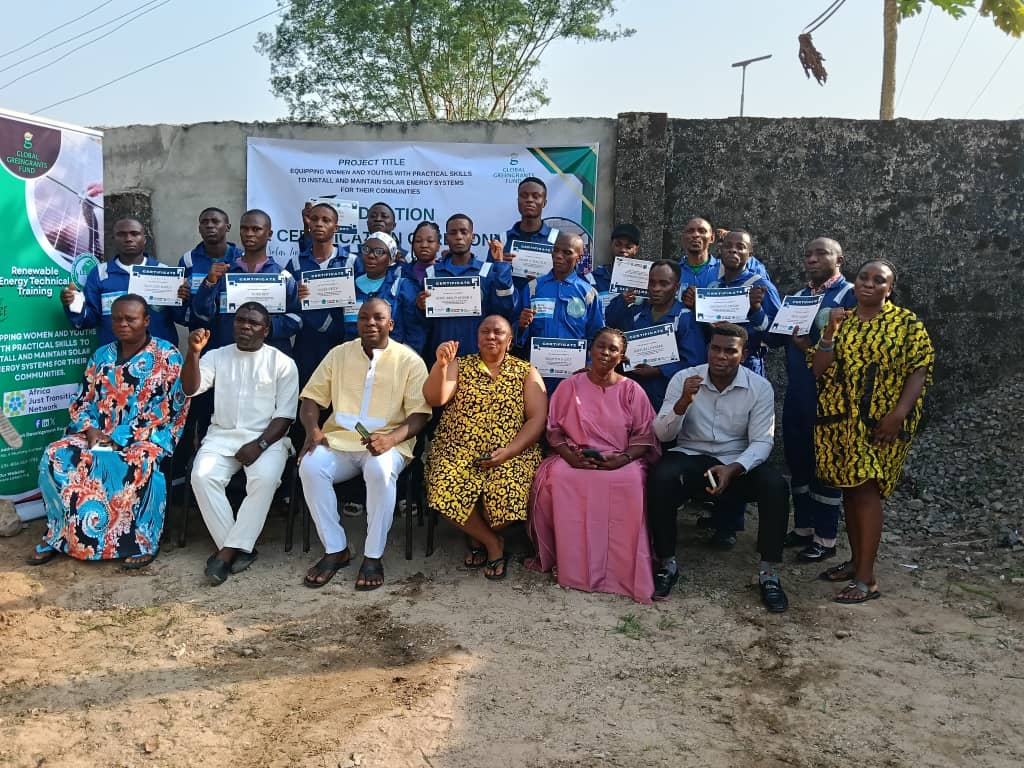
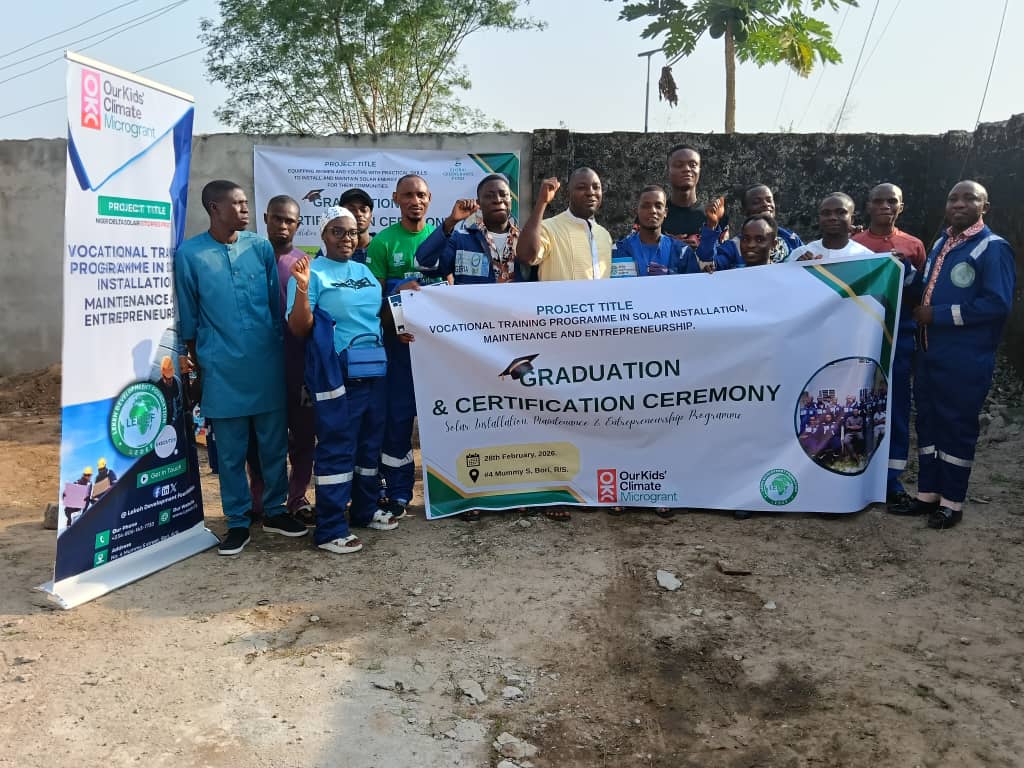
Youths in Ogoni have been equipped with practical skills in solar installation and entrepreneurship following a two-week vocational training organised by the Lekeh Development Foundation in partnership with Our Kids Climate Microgrant (OKS).
The training, which focused on solar installation, maintenance and repair, is part of efforts to improve livelihoods in oil-impacted communities and promote a gradual shift from fossil fuels to renewable energy sources.
Speaking at the graduation ceremony over the weekend, the Executive Director of the Lekeh Development Foundation, Friday Nbain, said the initiative was designed to position women and young people for opportunities in the emerging green economy.
According to him, the programme, now in its second edition, aims to empower participants with hands-on technical knowledge that will enable them to establish independent businesses and secure sustainable income.
“This is the second time we are organising this solarpreneurship training. We are equipping women and youths with practical skills in installing, maintaining and repairing solar panels. We are positioning them for green jobs and livelihood support so they can run their own businesses and earn a living,” Nbain said.
He noted that renewable energy offers a practical solution to the environmental challenges facing Ogoni communities, which have endured decades of fossil fuel exploration and its attendant impacts.
Nbain explained that adopting renewable technologies would help reduce carbon emissions and decrease dependence on petrol and diesel, while restoring environmental sustainability in the region.
At the end of the training, the graduates are expected to provide solar services within their communities, offering installation, maintenance and repair services based on the skills acquired.
The second batch of the programme received support from the Africa Just Transition Network in partnership with the Global Green Grant Fund and Kids for Climate.
Nbain assured the graduates of continued mentorship and career support, urging them to make effective use of the knowledge gained.
“We expect them to set up their own solar technician centres and put the knowledge to use. Wherever they encounter difficulties, they should return to us. We are ready to offer the support within our capacity,” he added.
One of the facilitators, Frank Joel, an electrical engineer, said participants were exposed to the energy audit process to help them properly assess clients’ needs before installing solar systems in residential and commercial buildings.
He emphasised that transitioning to renewable energy was no longer optional, citing the environmental and health risks associated with fossil fuel use.
“The threats to our farmland, seas and overall health from carbon emissions are significant. Renewable energy is a necessary path, and it also connects these youths to wider economic opportunities,” Joel said.
A graduate of the programme, Francis Ejelikwu, said he initially enrolled to learn a new skill but discovered the broader relevance of solar technology.
“I joined to acquire a skill, and I have learned a lot. Now I can install solar panels, batteries and related components. It will be very useful for me, even as a corps member,” he said.