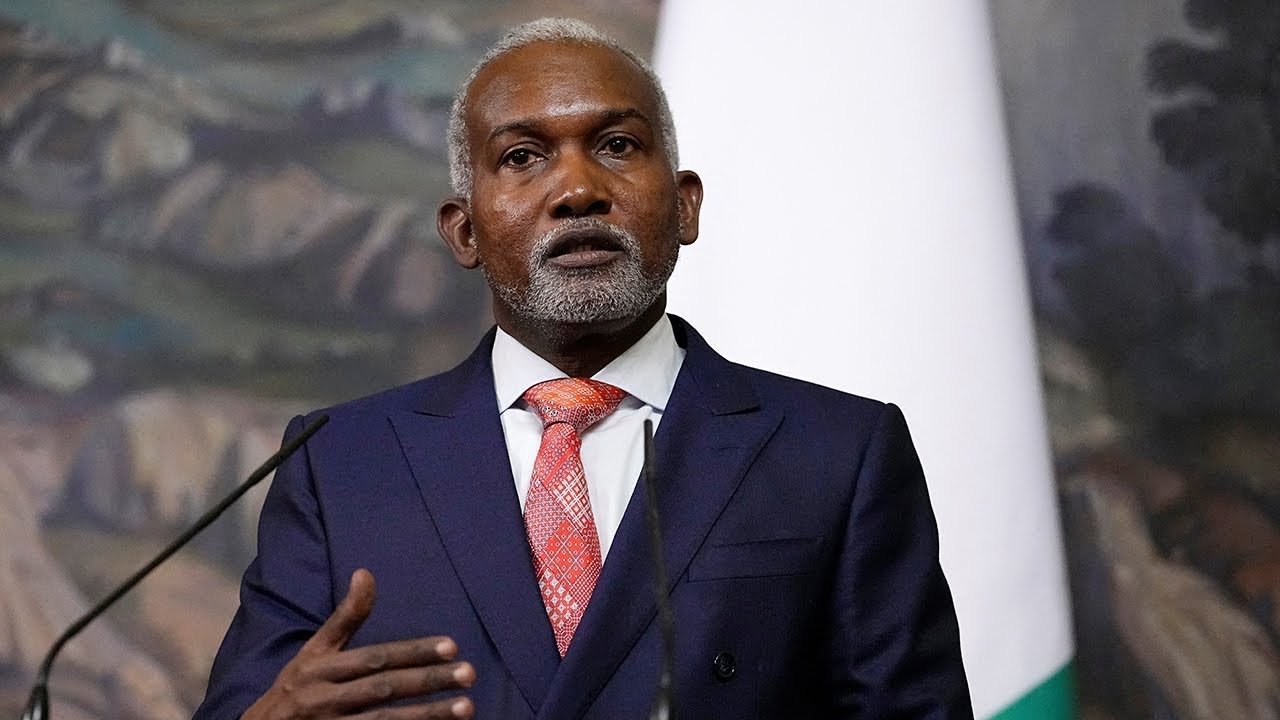
The recent reported plan by the United States Government to impose visa restrictions on West African states, including Nigeria, has been described as unfortunate by Nigeria’s Minister of Foreign Affairs, Ambassador Yusuf Tuggar.
Tuggar made this known on Wednesday while delivering his opening remarks at the 54th Ordinary Session of the Mediation and Security Council of the Economic Community of West African States (ECOWAS) at the ministerial level in Abuja.
The Minister, who also chairs the ECOWAS Mediation and Security Council, decried the apparent inclusion of all ECOWAS member states in a new wave of US visa restrictions. He described the policy as a significant barrier to trade, diplomacy, and regional prosperity, stressing that the sub-region has a lot to offer and should not be sidelined.
He urged the US and other superpowers to focus on engaging in mutually beneficial deals with West African nations.
“It would therefore be remiss of me if I did not mention the apparent recent decision by the Government of the United States to include all ECOWAS countries in its visa restrictions (Togo was on an earlier list). This would be most unfortunate if it comes to pass, because we are a region of opportunities ready to do deals. We possess critical minerals and even rare earths such as Samarium from the Monazite found in my home state of Bauchi. We would like to do deals with the US, but visa restrictions are non-tariff barriers to deals. We in this part of the world are students of the art of the deal and have been part of the international trading system even before the modern state system,” he said.
Tuggar added that ECOWAS countries and the US have a unique opportunity to create partnerships based on mutual needs. He noted that the region is a strategic alternative to more distant and politically divergent energy producers and emphasised that only those who allow free travel for officials and entrepreneurs would be able to take advantage of the opportunities in West Africa.
He further highlighted the importance of peace and stability in the region, saying, “In these challenging times, our ability to come together to consult, collaborate and take decisive action remains vital to advancing peace, security and good governance across our region.”
Tuggar said the meeting would deliberate on key issues affecting regional stability, cohesion and resilience. These include updates on the transition process in Guinea, preparations for upcoming elections in two other member states, as well as developments in maritime security, terrorism, and transnational organised crime.
He added that the Council would also review measures to ensure the operational readiness and sustainability of ECOWAS’s regional peace support architecture, as well as consider issues related to humanitarian needs and early warning systems.
Also speaking, President of the ECOWAS Commission, Dr. Alieu Touray, said the regional body is making progress in enhancing regional peace and security. He highlighted initiatives such as the ECOWAS Standby Force Logistics Concept, the ECOWAS Logistics Depot Policies, and the Supplementary Act relating to the West African Police Information System (WAPIS) Regional Platform.
Touray said the meeting would share updates on the establishment of National Early Warning and Response Centres, efforts to address the humanitarian situation, and the implementation of anti-money laundering and counter-terrorism financing measures.
He noted that ECOWAS had also been able to reshape the narrative around the exit of Burkina Faso, Mali, and Niger, stating, “We have successfully changed the narrative, after some difficult times over the last two years. We have started direct talks towards safeguarding community achievements and building realistic, fruitful future cooperation in various areas, including security and development. We have improved our communication to mitigate the effects of mis- and disinformation and have put in place mechanisms to project our views to the world. This is significant, as fake news has contributed to the complications of our security and political environment in recent years.”