

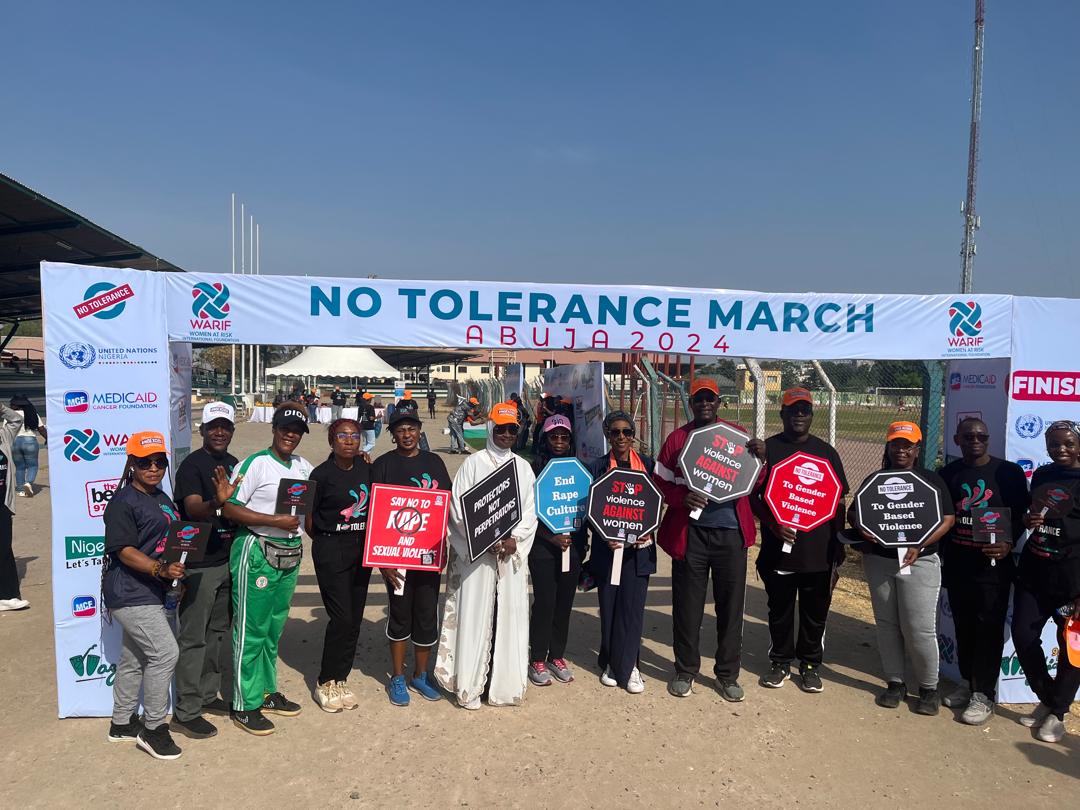
UN Coordinator Leads March Against Violence on Women
Stella Peters
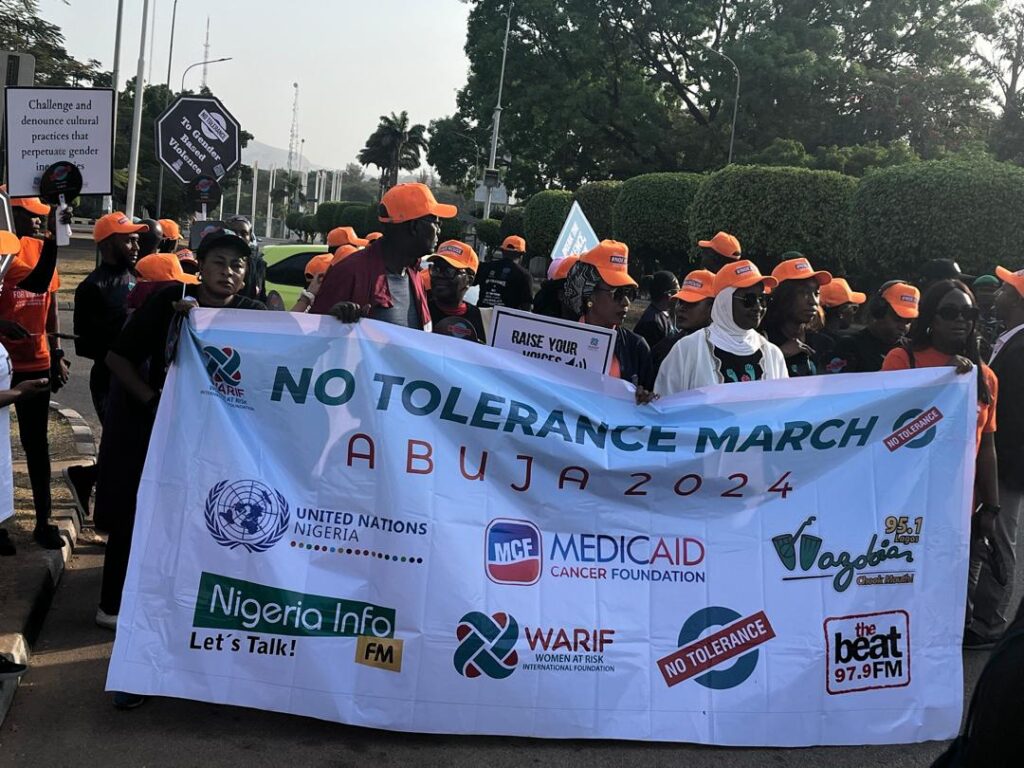
The United Nations Resident Coordinator, Mohammed Fall, led some prominent women activists in a march on the major streets of the Nigerian capital city of Abuja on Saturday to demand the end of violence against women. The march was part of activities marking the 16 Days of Activism against Gender-Based Violence (GBV), which are celebrated worldwide.
During the march, the UN Women, in conjunction with the Women at Risk International Foundation (WARIF), Medicaid Cancer Foundation, and the UN Resident Coordinator, carried placards demanding an end to violence against women and spoke against what they termed crime not only against women but humanity.
Addressing the media after the long walk, Mr. Fall said there was an urgent need for an end to violence against women, girls, and boys, insisting that everyone needs to be involved in the campaign as it affects the entire human race.
He lamented that the statistics of violence against women are still very alarming and showed that it needed to be approached with all-around strategies that would make people know its harm and get offenders no hiding place.
Fall said there is still much to be done by the government, law enforcement agencies, and leaders in all sectors to build awareness against violence against women and to expose it for what it is: crime against humanity.
Speaking on the need to put an end to the crime, the former First Lady of Kebbi State and Founder of Medicaid Cancer Foundation, Dr. Zainab Bagudu, said with the law against violence against women in place, there is still a need to fight until the society shows it does not tolerate violence against women.
She said after the law, “the next step becomes the implementation and general awareness; the mindset of the average person from our environment is that they don’t even understand what constitutes abuse. So we need to educate them, make them aware, and, most importantly, combine the facilities they need if abuse occurs. We focus on women and young adolescent girls, but boys are also victims of abuse, and they can turn out to be perpetrators once they have been abused.”
She said, “There is a continuous need to organize educational classes in schools and different places so that we can educate our boys and they can prompt be supportive.”
She noted that there is a need for much more efforts at ending the violence against women, insisting that:
“Well, it’s (campaign) never enough. We’re a vast country. The population is high, so we know the challenges that we have and different conflicting priorities. So it’s essential that we don’t get tired, and one of our advocacies is to call on the government to provide more resources and donor partners to help us. The task can be pretty big, and the police can sometimes not be as responsive as we would like them to be for other reasons. Still, we hope that they will be more acute to the trauma that this causes to women, children, and some men when it happens, and that’s why we keep on advocating, so it’s not enough. We need to have more.
We need to take more action. We need to have more understanding. Some programmes focus on educating our security forces to understand how they should react. Every police station should have a desk against gender-based violence, and women should have confidence, or abused victims should have the confidence to approach these desks and make their point without fear of stigmatization.”
For her part, the Mandate Secretary of the Federal Capital Territory, Dr. Adedayo Benjamins-Laniyi, said the campaign was on in all parts of the Territory to drive the message to the grassroots.
She noted, “We need to keep aggregating and scaling like what is happening today. We need to have more of this advocacy. We need to have more intentionality of collaborations between governments and private and public individuals, people who can invest and engage not just the interest but in terms of the action and bringing interventions from messaging to the place of invested empowerment, of the mindsets of cultural traditional practices.”
WARIF project Manager Adeola Potts-Johnson, for her part, said the campaign has been a success so far because it has grown from being held in one city to many important cities in Nigeria and prominent cities across the globe.
She said WARIF would continue to push the bar until violence against women becomes history.