


By Katherine Abayomi
An environmental advocate and Director of the Centre for Environment Media and Development Communications, Constance Meju, has called on governors of Niger Delta states to domesticate and implement the National Gender Policy and the National Climate Action Plan to tackle the worsening effects of climate change and conflict on women and children in the region.
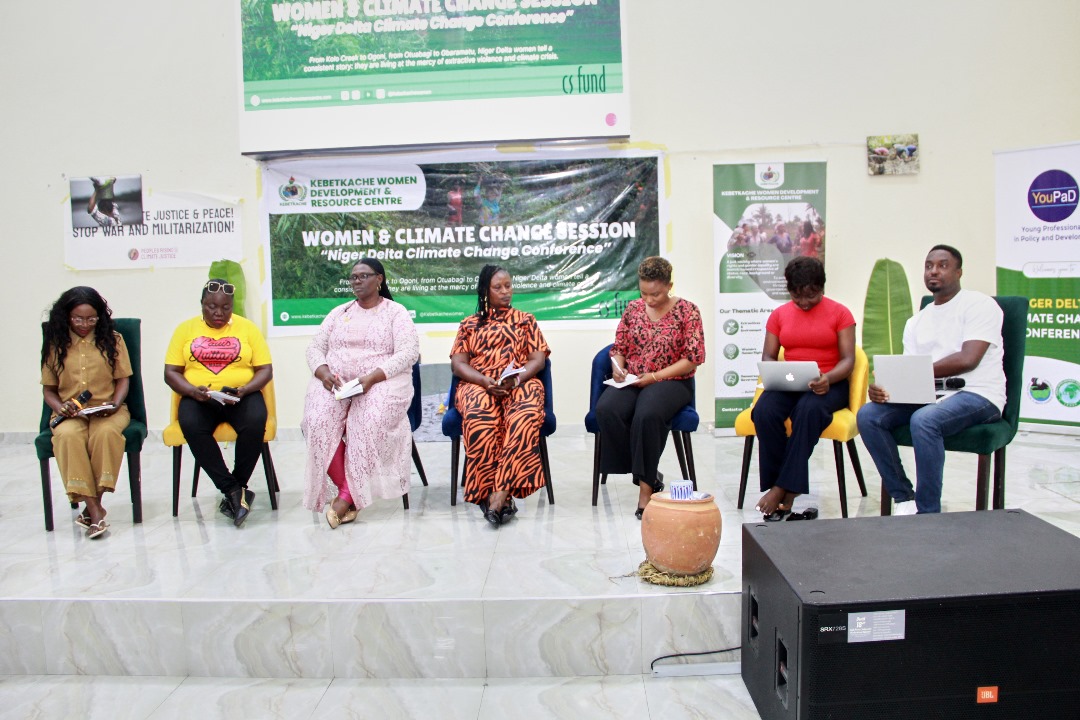
Speaking during the Women and Climate Change Session at the 3rd Niger Delta Climate Change Conference, held in Port Harcourt and organised by Kebetkache Women Development and Resource Centre, Meju highlighted how hunger, insecurity, and environmental degradation have intensified anxiety and vulnerability among women. She linked these challenges to climate change, herders’ attacks, and long-standing resource-based conflicts.
According to her, gender-based violence in the Niger Delta is not only widespread but deeply rooted in historical tensions over oil resources. She noted that many women suffer sexual violence, targeted killings, and economic hardship, worsened by poverty and a failing security structure.
Meju, who also chairs the Centre for Environment, Human Rights and Development (CEHRD), lamented that the resulting hunger and poverty have led to a breakdown in social structures, leaving many women unable to control their children, especially sons who have turned to violent and illicit means of survival in the face of widespread unemployment.
Citing specific communities like Erema, Ibaa, Obelle, Rumuekpe, and Ke, she said women there live in fear due to the threat posed by hoodlums and herders. She recounted multiple incidents of rape, kidnapping, and destruction of farmland by armed herders, which have made farming an increasingly dangerous and sometimes abandoned practice for many women.
She recalled cases such as the May 2024 kidnapping and rape of a woman in Eleme after months of unheeded complaints and another case of a young woman who was abducted and held for over three weeks. She pointed to the growing frustration among communities, including a vigilante response in Edo State, where locals reportedly confronted and killed armed herders following repeated attacks.
Meju said similar incidents have been recorded in Bayelsa, Delta, and other states, with no real enforcement of anti-open grazing laws. “Although some states have promulgated laws against open grazing, no one is making an effort to enforce them. The women keep losing on all sides,” she said.
She also lamented the severe impact of pollution on livelihoods, noting that oil spills have degraded once-productive lands and waterways, wiping out sources of food and income. Once-abundant local delicacies made from seafood are now threatened by pollution, and formerly fertile farmlands are overrun by invasive plants like water hyacinth.
Meju said the economic and environmental collapse is pushing many youths into criminality—illegal oil refining, kidnapping, cybercrime, ritual killings, and drug abuse—while girls increasingly turn to prostitution. She warned that these dangerous trends are accelerating gender-based violence and destabilising families.
On climate variability, Meju noted that erratic rainfall and flooding have distorted farming calendars, causing widespread crop losses and further driving food insecurity. She pointed out that some families affected by the 2012 and 2021 floods remain displaced, with limited resources to rebuild their lives.
“Without reliable knowledge of planting and harvesting seasons, farming is a gamble. For poor families still reeling from the economic shock of COVID-19, this is a triple tragedy,” she said, adding that many now live on handouts from relatives or churches.
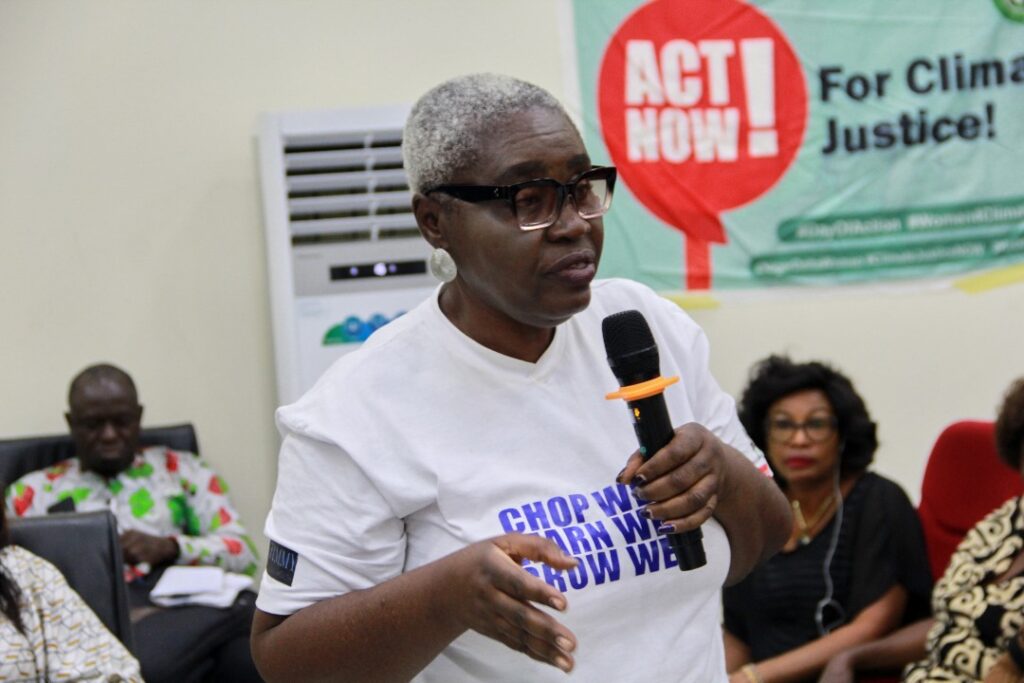
She urged the government to declare a state of emergency on security in the region to facilitate a return to farming and safe trade, particularly for women traders who rely on the waterways. “Until the lot of women changes, sustainable development in the region will not be feasible,” she asserted.
Also speaking, Princess Umoh Ayi, an environmentalist and volunteer at The Neo Child Initiative, said the health of plants and humans is interconnected and advised that people consume foods beneficial to their health, especially in the face of changing climate conditions.
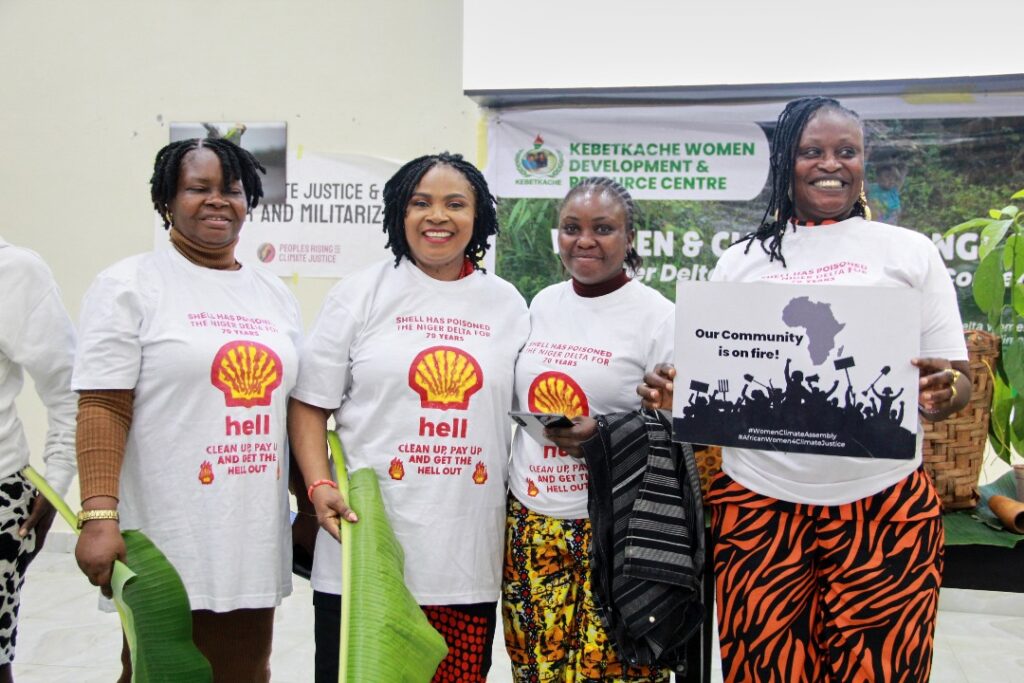
The conference climaxed with a march and presentation calling for agro-forestry and an end to fossil fuel pollution in the Niger Delta.