

By Emamuzo Iboma
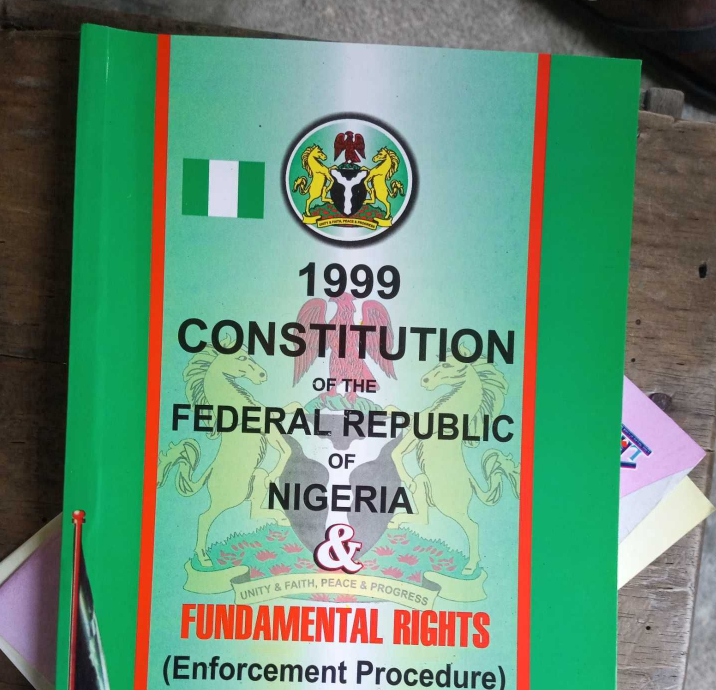
Prominent Nigerians, including former President Olusegun Obasanjo, former Commonwealth Secretary-General Emeka Anyaoku, former Speaker of the House of Representatives Aminu Tambuwal, ex-Governor of Akwa Ibom State Victor Attah, and the Obi of Onitsha, Igwe Alfred Achebe, have called for an urgent and complete overhaul of Nigeria’s 1999 Constitution. They argued that the existing document, inherited from military rule, no longer serves the needs of a diverse and democratic Nigeria.
Speaking at the National Constitution Summit in Abuja, organized by The Patriots, participants unanimously declared that the 1999 Constitution is responsible for the country’s prolonged underdevelopment, insecurity, and political instability. They advocated for a fresh, inclusive, and democratic constitution—either through a national conference or a referendum—that would better reflect the pluralistic identity of Nigeria.
Chief Emeka Anyaoku stressed that Nigeria’s strength lies in its diversity, and for the nation to progress, its constitution must be democratically constructed by elected representatives of the people. He described the 1999 Constitution as undemocratically imposed and one that promotes inefficiency and waste. He warned that without a foundational document that embraces Nigeria’s plurality, the country would continue to face challenges such as insecurity, poverty, and declining youth confidence.
In his goodwill message, former President Olusegun Obasanjo noted that while constitutional reform is vital, the responsibility also lies with those who operate the laws. He cautioned that even a perfect constitution could be undermined by poor leadership, emphasizing the need for leaders committed to justice, accountability, and the public good.
Victor Attah described the current constitution as a military decree that stripped the people of their sovereignty. He advocated for a return to the principles of the 1963 Constitution or the development of a new federal structure based on fairness and justice. He warned that national unity cannot be sustained by force, but only through equity, urging urgent action to avoid irreversible disintegration.
General Ike Nwachukwu recalled the formation of The Patriots in 1998 to campaign for constitutional reforms during Nigeria’s transition from military rule. Other speakers, including the Obi of Onitsha and Senator Gbenga Daniel, also underscored the need for a constitution that ensures equal rights for all citizens and protects the interests of Nigeria’s diverse groups.
Senator Daniel, who co-chaired the summit’s organizing committee and currently chairs the Senate Committee on Navy, said the summit was a critical step toward building a stronger and more united country. He identified key areas for reform, including the federal structure, resource control, electoral systems, national security, and the role of traditional institutions. He called on all Nigerians—especially youths, women, civil society organizations, and religious and traditional leaders—to take active roles in shaping the country’s constitutional future.
The summit is expected to produce concrete recommendations for a new constitutional framework, which will be submitted to the Presidency and the National Assembly. The ultimate aim, according to the organizers, is to build a Nigeria founded on justice, fairness, equity, and true federalism.