

By Katherine Abayomi
Women living in frontline communities across Africa are bearing the brunt of climate change and environmental degradation, as they struggle daily to sustain their families amid dwindling natural resources.
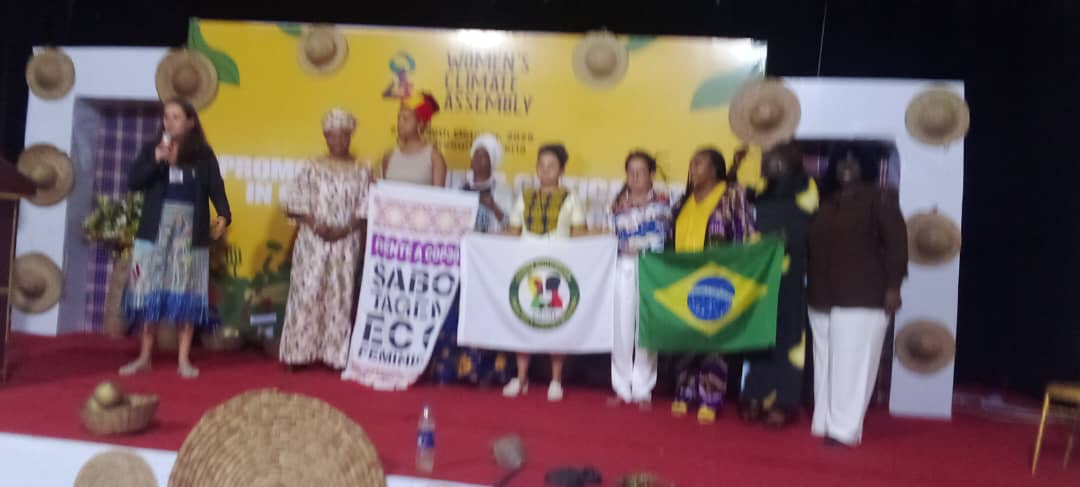
This concern was at the heart of discussions at the 4th African Women Climate Assembly, themed “Promoting Women’s Critical Role in Climate Change Mitigation Initiatives,” held in Port Harcourt.
The event was organized by the Kebetkache Women Development and Resource Centre in collaboration with Womin, and brought together participants from government agencies, civil society organizations, academia, and women-led groups, including delegates from Brazil.
Executive Director of Kebetkache Women Development and Resource Centre, Emem Okon, called on women across the continent to raise their voices and demand an end to climate injustice.
She emphasized that the interests of grassroots and community women must be prioritized in global decision-making spaces such as the United Nations Climate Conference (COP) scheduled for November 2025.
Okon highlighted the need for urgent attention to issues such as flooding, pollution, oil spills, access to clean drinking water, affordable healthcare, and remediation of contaminated farmlands.
“This is why it is important for us to meet, discuss, identify these challenges, make our demands, and disseminate our solutions to stakeholders,” she stated.
She noted that women in frontline communities face disproportionate risks from environmental degradation caused largely by industrialized nations, stressing that the Assembly serves to build solidarity, share experiences, and advocate for inclusive climate policies.
Okon further encouraged women to speak out, remain resilient, and adopt locally driven solutions to promote environmental sustainability.
In her remarks, Nkemdirim Odoya, Director of Forestry at the Rivers State Ministry of Agriculture, underscored women’s vital role in environmental protection.
She warned against indiscriminate tree felling and urged participants to report offenders, emphasizing that sustainable environmental practices must begin within communities.
Publisher of Amazon Magazine, Chief Constance Meju, also called for increased female representation in policymaking spaces, particularly at the state and national levels.
According to her, “When women are empowered with resources, knowledge, and leadership opportunities, communities become stronger in responding to environmental challenges.”
Similarly, women’s rights advocate Bridget Osakwe declared that no woman can escape the impact of climate change, stressing that “we must confront it,” as environmental degradation directly affects food security, health, and livelihoods.
Delivering the keynote address titled “Women as Architects of Climate Action,” Professor Engobo Emeseh, Head of the Department of Law and Criminology at the University of Aberystwyth, United Kingdom, recognized women’s pivotal role in environmental management and sustainable development.
She urged the creation of grassroots pathways for climate action, including tree planting, oil spill response, sustainable livelihoods such as solar fish drying, and climate education to mentor and mobilize women.
Professor Emeseh also advocated empowering women as climate solution designers, strengthening transnational networks, and promoting gender equality in environmental governance.
The Assembly ended with a renewed commitment among participants to strengthen collaboration for inclusive climate action that prioritizes the voices and concerns of women in frontline communities.