Foremost journalist and lawyer, Richard Akinnola, has called on the Nigerian judiciary to reclaim its independence and credibility, warning that declining public confidence poses a threat to justice delivery under the current democratic system.
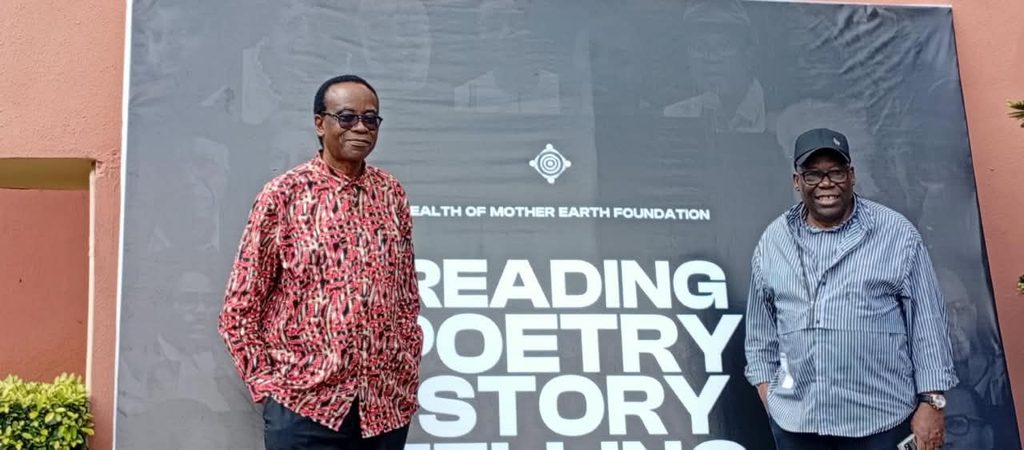
Akinnola made the call on the sidelines of a Book Day event organised by the Health of Mother Earth Foundation (HOMEF), where he expressed concern that the judiciary under military rule appeared more independent and fearless than it is perceived to be under democracy.
He stressed that public perception was critical to the administration of justice, noting that justice must not only be done but must also be seen to have been done.
According to him, the perception that some judicial institutions are politically influenced could undermine the credibility of the entire judiciary, regardless of the integrity and competence of individual judges.
“Perception is critical, because justice is rooted in public confidence and when you have a situation in which the public have the impression that certain judicial institutions are politically motivated, it brings the whole institution into ridicule,” Akinnola said.

Akinnola acknowledged that many brilliant and independent-minded judges remain on the bench but lamented that the actions of a few judges allegedly susceptible to political influence appear to be shaping public opinion about the judiciary.
He urged the Chief Justice of Nigeria and Chairman of the National Judicial Council, Justice Kudirat Kekere-Ekun, to take steps to sanitise the judicial system and restore public confidence.
“When you talk to people on the street, even lawyers, the kind of statements that they make about the judiciary is nothing to write home about, which is not good and undermines the efforts of the hardworking, independent judges on the bench,” he said.
The lawyer also expressed concern over the assignment of politically sensitive cases to a limited number of judges in Abuja, saying such practices could generate suspicion and undermine confidence in judicial decisions, even when rulings are based on facts and the law.
Akinnola noted that negative public perceptions of the judiciary were not limited to ordinary citizens but were also evident among legal practitioners, adding that the situation could diminish the efforts of hardworking and independent judges.
“For example, when there is a perception that a public officer that seems to have control over the judiciary and cases are assigned in a particular judicial division in Abuja to a certain number of judges when you have about 12 judges, when you begin to assign such cases to about three or four such judges, it engenders suspicion.
“Why should one particular judge be assigned with about four major cases by DSS? It couldn’t have been by happenstance. Even if the judge rules by facts and by law in favour of the government, people will say what do you expect. So it is a matter of perception which has to change,” Akinnola said.

He further advocated greater use of public interest litigation, citing the late human rights lawyer, Gani Fawehinmi, as a prominent example of how litigation could be deployed to challenge injustice, promote advocacy and test the provisions of the law.
On environmental issues, Akinnola expressed concern that Nigeria was not paying sufficient attention to climate change, particularly in view of recurring floods across the country and the potential consequences for communities in the coming years.
He called for greater commitment to environmental protection, emphasising that the environment remains central to human existence and sustainable development.
Also speaking, HOMEF Executive Director, Dr Nnimmo Bassey, described the organisation’s Book Day initiative as a strategic platform for promoting environmental consciousness and encouraging participants to reassess their relationship with the environment.
Bassey explained that the event, organised through the organisation’s culture desk, was designed to stimulate critical thinking, promote knowledge sharing and encourage greater public involvement in environmental protection and human rights advocacy.
He said the initiative explored different perspectives to ensure that participants remained informed and actively engaged in conversations around the environment and the rights of people affected by environmental degradation.
According to him, environmental protection requires collective responsibility and cannot be achieved solely through the efforts of an individual or a particular group. “It’s not something that one person does, or a group of people do, but for national consciousness,” Bassey said.
He emphasised the importance of building national consciousness around environmental issues, noting that sustained awareness and public participation were necessary to promote lasting change.
Bassey’s position highlighted the role of knowledge-sharing platforms, cultural engagement and public discussions in encouraging citizens to take greater responsibility for protecting the environment and defending human rights.
In his contribution, the Dean of the Faculty of Communication and Media Studies at the University of Benin, Professor Marcel Okhakhu, stressed that every human action had consequences for the environment, warning that seemingly routine activities could contribute to long-term environmental degradation.
Okhakhu identified indiscriminate waste disposal, indiscriminate felling of trees and other forms of environmental degradation as practices capable of adversely affecting society over time.
He explained that environmental protection should not be viewed as the exclusive responsibility of government agencies or environmental organisations, as the everyday actions of individuals and communities also play a significant role in determining environmental outcomes.