Communities in Southern Ijaw Local Government Area of Bayelsa State have raised concerns over declining livelihoods, loss of biodiversity and restricted access to traditional sources of food and income, saying oil pollution and conservation measures have progressively deprived them of the natural resources on which they depend.
The communities, namely, Apoi, Gbanraun and Kokolo Ama who are host to the Apoi Creek forest reserve in Southern Ijaw LGA have questioned whether conservation can succeed without protecting the livelihoods of people who have historically depended on the forest.
The communities said restrictions on access to the reserve, combined with oil pollution and declining biodiversity, have progressively reduced their sources of food and income, particularly for women who depend on fishing, farming and forest products.
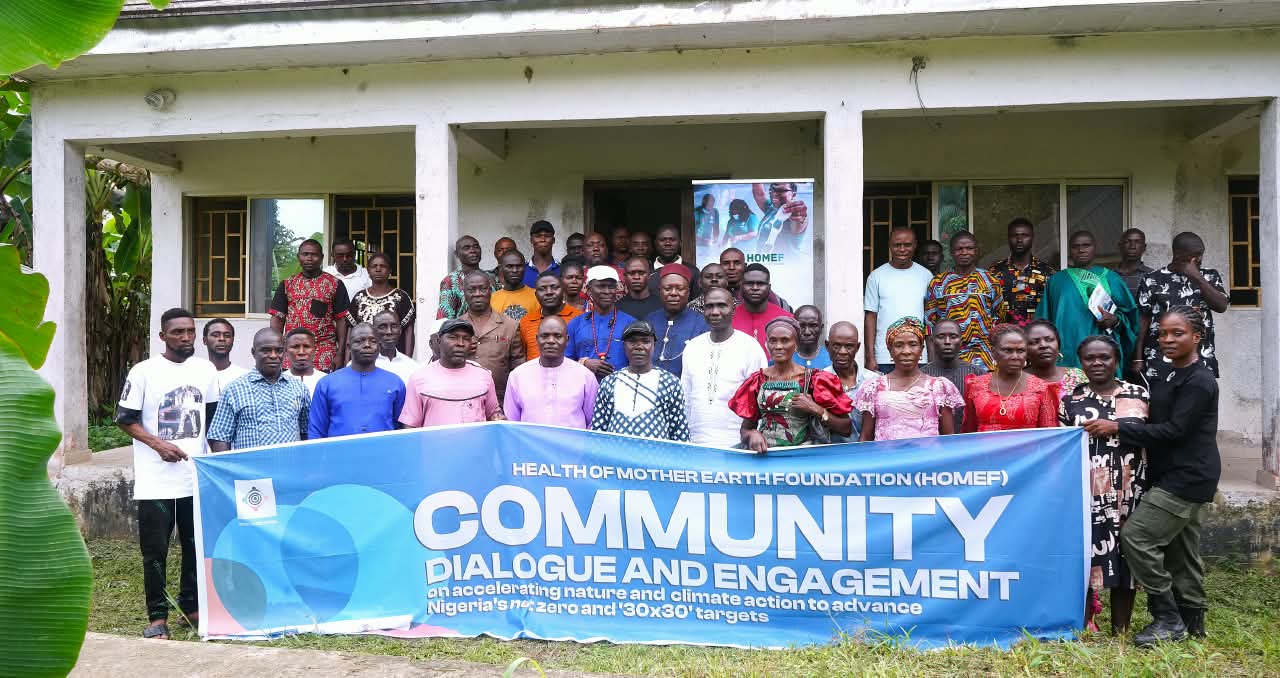
The concerns were raised during a two-day engagement in Apoi, organised by the Health of Mother Earth Foundation (HOMEF) in partnership with the United Nations Development Programme (UNDP), the Federal Ministry of Environment and the Bayelsa State Ministry of Environment.
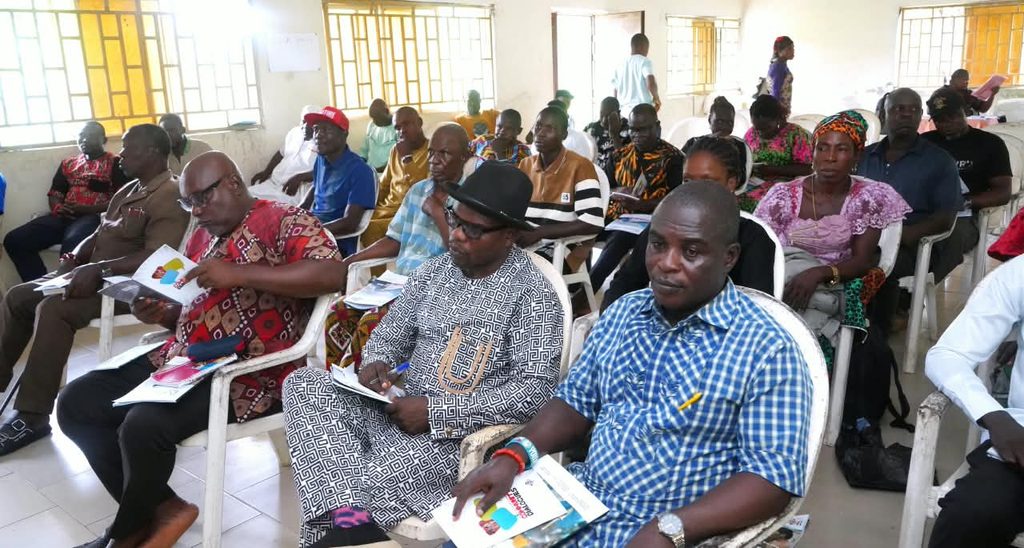
The first day featured a community dialogue involving residents of Apoi, Gbanraun and Kokolo Ama, the three communities that own the Apoi nature reserve, while the second day focused on training women from the communities on issues relating to the environment, livelihoods and the project.
The engagement is part of the UNDP-supported project, Accelerating Nature and Climate Action to Advance Nigeria’s Net Zero and “30×30” Targets, under the Global Net Zero Nature Positive Accelerator Integrated Programme funded by the Global Environment Facility.
The project seeks to strengthen institutions and catalyse investments for nature-positive and net-zero pathways in Nigeria, including ecosystem conservation and restoration, community engagement and clean-energy investments.
Community members alleged that a group known as South West Niger Delta Forest Project manages the forest reserve and has forest rangers who patrol the area and prevent residents from accessing parts of the forest they traditionally relied on for fishing, hunting and gathering forest products.
The restriction, they said, has created a difficult trade-off for communities being encouraged to participate in conservation while losing access to resources that previously supported their livelihoods.
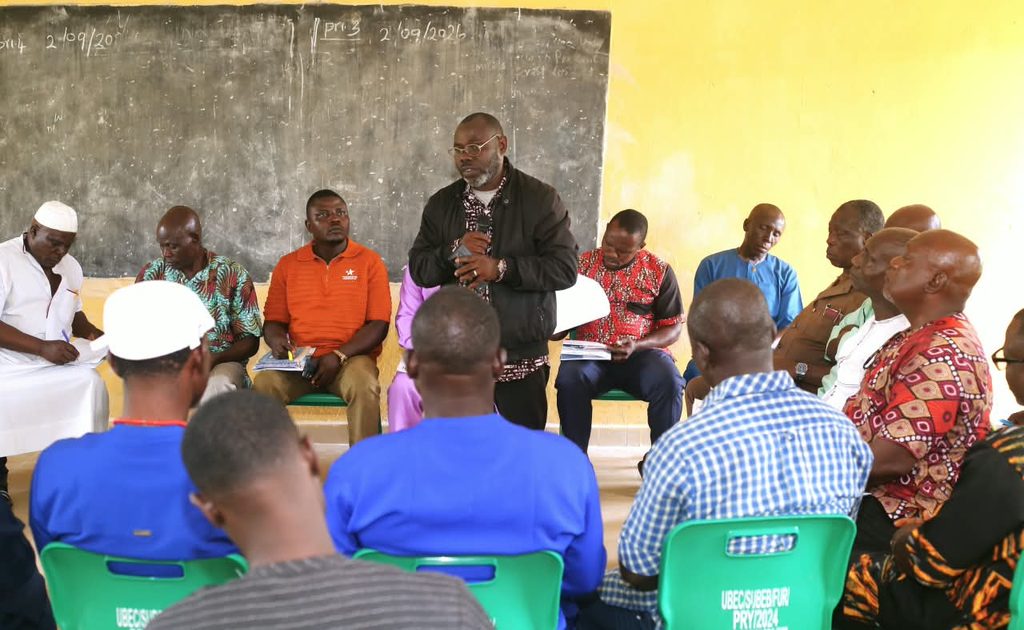
Speaking during the dialogue, Secretary of the Apoi Community Development Committee, Mr Michael Edu, said the community had suffered extensive biodiversity loss, with several species no longer commonly seen.
“Cedar, mahogany and iroko trees have gone extinct due to exploitation,” he said, adding that animals including antelopes, grass cutters, bush pigs and other wildlife that were once found in the area had also become scarce.
Gbanraun Secretary, Chief Bibeledei Ebikeseye, said environmental degradation had also affected the productivity of the land and aquatic resources on which the communities depend.
“The soil used to be fertile, not anymore,” he said, noting that pollution had affected crops and accelerated the deterioration of roofing materials in the community.
He added that many fish species had disappeared but said the communities were also taking steps to protect what remained of their natural environment.
“We don’t want animals to go extinct. We are aware that some have gone extinct. The ones that are available, we are conserving them,” Ebikeseye said.
He said the communities had begun planting trees in different areas to regenerate the forest.
“We want it to be greener. We are bringing back the green life back to its normalcy as it was when we were young,” he said.
But for women in the communities, conservation has come with a difficult livelihood trade-off.
One of the women explained that areas where they previously caught the most fish had become part of the reserve, limiting their access to traditional sources of food.
Another participant from Kokolo Ama said the shrinking space available for farming had also affected household incomes.
“Before now, we used to practise bush fallowing, but we can’t practise that anymore. The farming space used to be larger, but due to the forest reserve, the farming space is now smaller, which has affected our income,” she said.
Emomotimi Duabo, another female participant from Gbanraun described the impact of the restrictions on forest-dependent livelihoods.
“The problem is now we cannot go to the forest anymore, so we are hungry. Now there is nothing like entering forest, nothing like setting trap, nothing like getting snail,” she said.
The women also linked declining agricultural productivity and access to clean water to oil pollution.
Participants said crops that previously grew without fertiliser no longer produced as expected, while rainwater that was once clear had become visibly polluted.
“Our lands are no more fertile due to pollution, and we still eat from the same lands because we have no option. The rain water used to be clear and clean, but it’s dark now and we still drink it that way,” they said.
Residents attributed some of the environmental problems to recurring oil spills in the area, including a major incident in 2017 and a more recent spill at Ogboinbiri in 2025, which they said spread with the tide towards Apoi, Gbanraun, Kokolo Ama and surrounding communities.

Chief Jacob Korobo, the incoming traditional ruler of Apoi Kingdom, said the forest had historically served as a readily accessible economic resource for the people.
“That forest is the centre of everything. You don’t go and find snails, fish, etc. You just go there, you pack them and come back. But because of the reserve, our people have been extracted from that environment,” he said.
He said the communities were willing to support conservation but expected meaningful benefits in return, including improved infrastructure.
“We need a lot, social amenities, roads, linked to the national grid for power supply, pipe-borne water,” Korobo said.
Women leaders also called for livelihood support, skills training, employment opportunities and tools for fishing and farming. Mrs Ebifaghe Kemela, Women Leader in Apoi, said women needed access to sustainable means of earning a living as conservation measures expanded.
“Our women here don’t have access to the reserved area. We need that. We should have access to that very place to look for our livelihood,” she said.
She also called for support for poultry and other small businesses, scholarships and assistance for elderly residents.
Another Apoi resident, recalled the importance of forest products such as snails and Ogbono to household incomes.
“People were packing these snails in bags. If you are smart, you can get up to 200 in a day,” she said, adding that the remaining farmland was insufficient for the growing population.
Beyond livelihoods, residents raised concerns about the lack of basic services, including healthcare, potable water, electricity, roads, telecommunications and qualified teachers.

Stella Oyege from Kokolo Ama community said the dialogue had helped communities better understand the relationship between environmental conservation, pollution and their livelihoods.
“I’m happy because the gathering here has enabled us to know our problems in the environment and the way the conservation is affecting our women, the youth and children, and also the spillages of oil,” she said.
“There are no facilities in our hospital. There are no qualified teachers to teach our children here. So please, let the federal government hear our cry and come to our aid.”
For HOMEF, the engagement was intended to ensure that conservation planning does not overlook the people living around the ecosystems being protected.
Cadmus Atake-Enade, Programmes Manager, Fossil Politics at HOMEF, said the organisation was focused on ensuring that community concerns became part of the project’s implementation, as well as strengthening communities to speak up on the ecological challenges facing them.
“We’ve been able to harness a lot of information, the people’s interest in the forest, their benefits and as well as their challenges,” he said. “We are here to amplify the community voices. That’s our core.”
Atake-Enade said the next phases of the intervention would consider livelihood support training and other components based on information gathered from the communities.
“The first thing we need to do is to amplify the women’s voices to ensure that their voices and their challenges are heard,” he said.