With less than four years left to achieve the 2030 Sustainable Development Goals (SDGs), the Federal Government and the United Nations on Monday warned that Nigeria cannot meet the ambitious global targets through public funding alone, calling for an urgent mobilisation of private capital and innovative financing to avert a widening development gap.
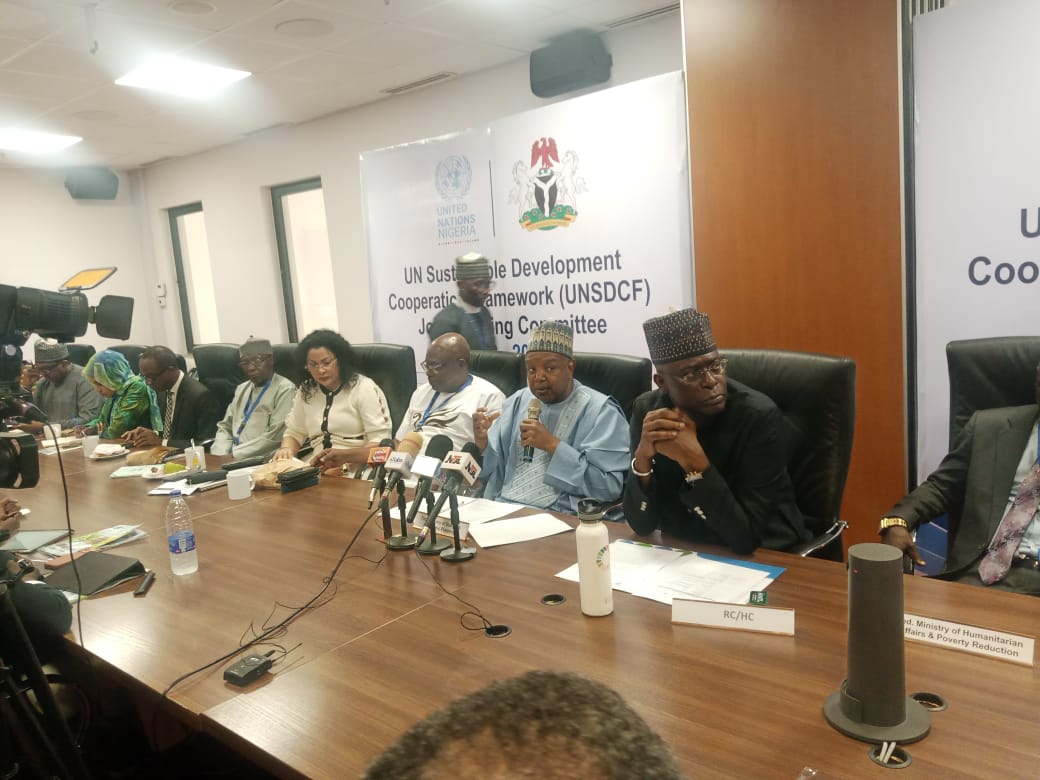
The warning came on Monday at the United Nations Sustainable Development Cooperation Framework (UNSDCF) Joint Steering Committee Meeting in Abuja, where top government officials, heads of UN agencies, development partners, labour unions, civil society organisations and the private sector reviewed Nigeria’s progress and mapped out strategies to accelerate implementation of the SDGs.
At the heart of the discussions was the growing concern that dwindling public resources, rising humanitarian needs, climate shocks and persistent poverty could derail Nigeria’s commitment to ending extreme poverty, improving healthcare, expanding education and building resilient communities before the 2030 deadline.
United Nations Resident Coordinator in Nigeria, Mohamed Fall, said the country had reached a defining moment that demands stronger partnerships, greater policy coherence and alternative financing mechanisms capable of unlocking large-scale investments.
He described the United Nations Sustainable Development Cooperation Framework (2023–2027) as the blueprint guiding collaboration between the UN and Nigeria in implementing the SDGs, the National Development Plan and President Bola Tinubu’s Renewed Hope Agenda.
“The framework is anchored on four interconnected pillars—people, prosperity, peace and planet. Prosperity cannot happen without peace, and peace cannot endure without development. Opportunities must be accessible to all, while protecting vulnerable populations and the environment remains essential,” Fall said.
Despite mounting challenges, Fall said the partnership had delivered measurable results across critical sectors.
According to him, more than two million vulnerable Nigerians received humanitarian assistance, including cash transfers during lean seasons, while about 2.6 million people benefited from disaster risk reduction programmes aimed at strengthening resilience against emergencies and climate-related shocks.
He disclosed that nearly one million children suffering from severe acute malnutrition received life-saving treatment in 2025, with cure rates approaching 90 per cent.
The UN official also revealed that about 40 million children benefited from Vitamin A supplementation, while regional preparedness plans were strengthened to improve responses to Ebola and Mpox outbreaks.
Fall further stated that approximately 190 million children were reached through polio vaccination campaigns, describing the Presidential Declaration on National Health Insurance as a major milestone towards expanding healthcare access and guaranteeing sustainable financing for vulnerable citizens.
In the education sector, he said 6.8 million children were reached through school-based programmes across 18 states, while over 66,000 out-of-school children were successfully returned to classrooms.
He added that more than nine million Nigerians gained access to improved water, sanitation and hygiene services, with another 4.2 million benefiting from initiatives promoting healthier and safer communities.
However, despite these gains, Minister of Budget and Economic Planning, Senator Atiku Bagudu, warned that the scale of financing required to achieve the SDGs had outgrown governments’ fiscal capacity.
“The reality is that the Sustainable Development Goals require more resources than governments alone can provide. We must unlock private capital and mobilise innovative financing mechanisms that can support development at scale,” Bagudu said.
He noted that Nigeria’s ongoing macroeconomic reforms had released resources previously consumed by inefficient subsidy regimes, creating additional fiscal space for investments in health, education and social development.
Bagudu stressed that sustainable poverty reduction would depend on expanding access to finance, skills and economic opportunities.
“There is no reason why hardworking Nigerians should remain poor if they have access to the right skills, financing and opportunities. Together with development partners, we can create the scale required to transform livelihoods and communities,” he added.
Also speaking, the Minister of Humanitarian Affairs and Poverty Reduction, Dr. Bernard Doro said the Federal Government had strengthened coordination of poverty reduction efforts through the One Humanitarian, One Poverty Response System (OHOPRS), a national platform designed to harmonise humanitarian interventions, social protection programmes and poverty alleviation initiatives across all levels of government and development partners.
He also highlighted the National Poverty Intelligence Lab, which provides real-time multidimensional poverty data to support evidence-based policy decisions and improve the targeting of interventions.
“The Renewed Hope Agenda and the 2030 Agenda share the same vision—ending poverty, expanding access to healthcare and education, strengthening food security, empowering women and youth, and building resilient communities,” the minister said.
Minister of State for Budget and Economic Planning, Dr. Doris Uzoka-Anite, called for stronger institutional coordination, better project preparation and innovative financing models capable of bridging Nigeria’s widening development financing gap.
She also urged the media to sustain public awareness of ongoing efforts to achieve the SDGs and promote accountability in the implementation of development programmes.
Adopted by all United Nations member states in 2015, the Sustainable Development Goals comprise 17 interconnected global targets aimed at ending poverty, eliminating hunger, improving healthcare and education, promoting gender equality, combating climate change and fostering sustainable economic growth by 2030.
Nigeria has integrated the SDGs into its National Development Plan and the Renewed Hope Agenda. However, implementation has been hampered by funding shortages, insecurity, inflation, climate-related disasters and growing humanitarian needs.
The United Nations Sustainable Development Cooperation Framework (2023–2027) serves as the primary platform through which the UN system supports Nigeria’s development priorities. As the countdown to 2030 enters its final phase, policymakers are increasingly turning to blended finance, private-sector investment and innovative funding mechanisms to close what experts describe as a multi-billion-dollar financing gap threatening the attainment of the SDGs.