

SI AL YASUNI – Durban Declaration 2024
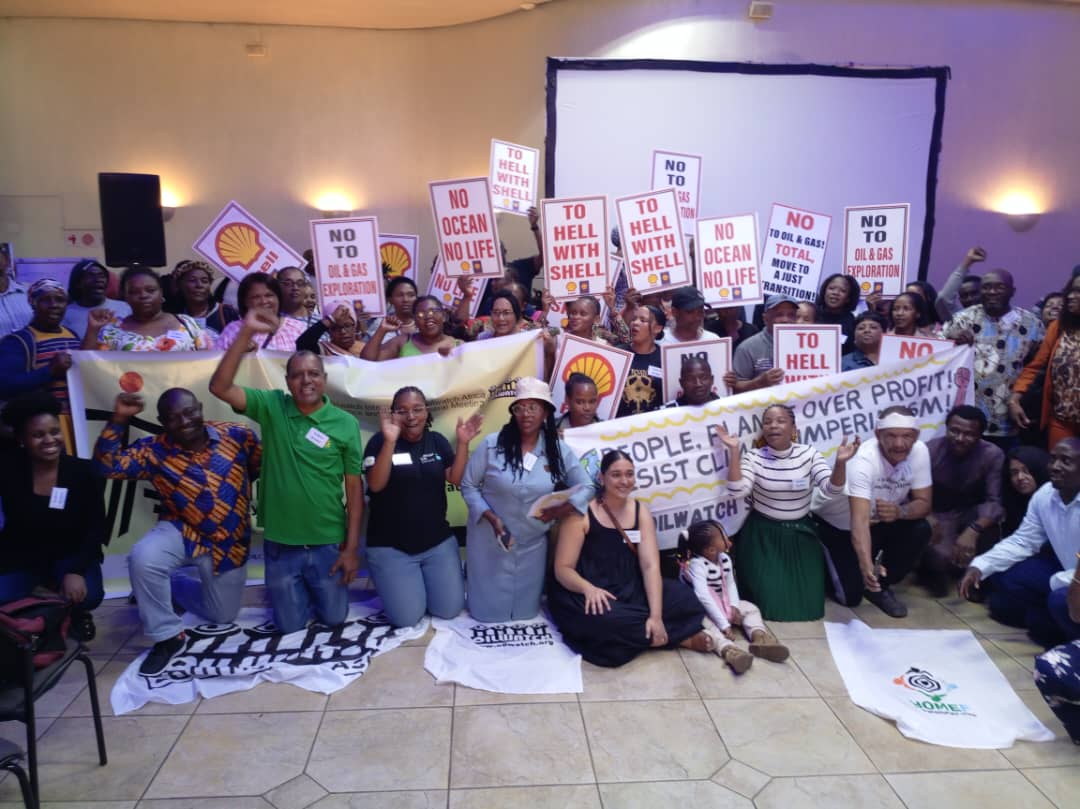
Oilwatch International held a Retreat on Friday, 23rd, and Saturday, 24th August 2024, in Durban, South Africa, around the theme Beyond Colonialism and Extractivism: Energy Democracy and the Imperatives of a Just Transition. The meeting had the Oilwatch International country members from Latin America, Southeast Asia, Ghana, Mozambique, South Africa, Nigeria, and allies (US, Norway).
The Retreat critically analyzed current trends in extractivism and the systemic push for hydrogen amidst the energy transition discourse. The convening was an opportunity to learn from struggles and enhance synergies to co-create pathways to a future that promotes life and halts fossil-driven dispossession, impoverishment, and accumulation. The fight for the protection of Yasuni National Park has been going on for the last thirty years.
During the first 20 years, it was a campaign pushed by local communities and Oilwatch members that put effort into protecting the environment and livelihoods. Victory in the fight to protect Yasuní has been the result of the unwavering dedication and resilience of the Ecuadorians. Their ‘yes’ vote, a decision made in consultation with the people and the Indigenous nations of the world, is a beacon of hope. It is time to ‘Yasunize the world’.
- We recognize the struggles of the KZN fishers in Durban as well as
other fisherfolks and other struggles around the world - The Retreat underscored that the historical context of colonialism
and extractivism has profoundly shaped not only local but also global
energy systems. These practices have led to widespread environmental
degradation, social inequalities, and economic dependencies, affecting
us all on a global scale. - The Retreat also highlighted the need to protect communities and
territories in the global south from being used as testing grounds.
There is an intentional push to promote all forms of false solutions and
coercive collusion of the respective governments, and it is crucial to
resist these practices and promote ethical energy solutions. - Neocolonial exploitation of natural resources in Africa, Latin
America, and Southeast Asia, has led to the creation of economic systems
based on extractivism, with far-reaching negative global implications. - The persistence of fossil fuel dependence, centralized energy
systems, and inequitable access to energy resources continues to
exacerbate social and environmental injustices. The global shift towards
renewable energy presents a challenge. While it offers the potential to
reduce carbon emissions and climate change, there is a risk that new
forms of extractivism (e.g., mining for rare earth minerals and hyping
hydrogen) could replicate old patterns of inequality and environmental
harm. It is therefore imperative that we collaborate to ensure that this
transition is just for peoples and nature.
As a people united against neocolonial, colonial, and the corporate
captured system, Oilwatch International makes the following urgent call:
a. That we must resist every form of environmental racism and climate
imperialism in any way they present themselves.
b. Stop any further fossil fuel exploration and exploitation – no new
fossil fuel infrastructure.
c. We oppose all forms of false solutions, including REDD+, carbon
offsets and markets, geoengineering, deployment of GMOs, and other
forms.
d. The rights of communities and nature must be respected, including the
right to say no to projects. The well-being of our people, communities
and all forms of life must be put over profit.
e. When considering energy access and transition, we must move beyond
the paradigm of corporate capture and towards more equitable and just
frameworks.
f. Gas and nuclear are neither clean nor renewable.
g. The pattern of commodification and extraction of natural resources
with minimal regard for local ecosystems or communities that lead to
long-term socio-economic and environmental consequences must stop.
h. Oilwatch views democratizing and decolonizing energy frameworks as
keys to achieving equitable and socialized access to energy,
prioritization of the people’s needs, and the planet’s integrity.
i. No to every form of apartheid and the war on the people of Palestine.
This Communique is endorsed by the following organisations:
- South Durban Community Environmental Alliance (SDCEA) – South Africa
- Centre de Recherche et d’Action sur les Droits Économique Sociaux et
Culturels (CRADESC) – Senegal - Centre pour la Justice Environnementale (CJE) – Togo
- FishNet Alliance -Togo
- Health of Mother Earth Foundation (HOMEF)- Nigeria
- KZN Subsistence Fisherfolks Forum – South Africa
- FishNet Alliance, Mozambique
- FishNet Alliance, Nigeria
- Oilwatch Africa
- Oilwatch International
- Oil Change International
- Green Connection – South Africa
- The Young Environmentalist Network (TYEN) – Nigeria
- Earth Life – South Africa
- Oilwatch Ghana
- Environmental Rights Action – Nigeria
- JVE – Côte d’Ivoire
- Peace Point Development Foundation- Nigeria
- Centro para Desenvolvimento Alternativo- Mozambique
- Accion Ecologica – Ecuador
- FASE- Brazil
- AGHAM- Philippines
- Oilwatch Latin America
- groundWork- South Africa
- International Oil working groups (Allies)