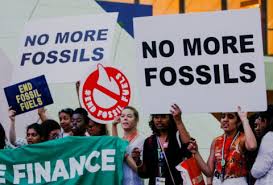
For three decades, Oilwatch International and its affiliates have maintained a consistent position: fossil fuels should remain in the ground. The organisation argues that reducing dependence on oil, gas and coal remains one of the most practical pathways for slowing the worsening global climate crisis driven by extraction and consumption.
That longstanding position framed expectations ahead of the recent Conference for Territories Free of Fossil Fuels held in Santa Marta on April 24 and 25. For many campaigners, the gathering represented an opportunity to confront questions that more than three decades of negotiations under the United Nations Framework Convention on Climate Change have only partially addressed.
Oilwatch acknowledged that the conference created an important platform for exchanges among frontline communities, indigenous peoples, social movements and grassroots organisations. Participants shared practical experiences on protecting territories from extraction and building alternatives to current energy systems.
A major outcome of the conference was the launch of the Science Panel for the Global Energy Transition, designed to support countries in developing pathways consistent with the 1.5 degrees Celsius target. Yet Oilwatch expressed concern that such initiatives could overlook the knowledge, experience and political agency of communities already living with the consequences of extraction.
According to the organisation, a truly just transition must be led by people in affected territories rather than by governments, corporations or external experts. It warned that climate policy risks reproducing old patterns of exclusion if local voices are treated as secondary.
Oilwatch also linked fossil fuel dependence to conflict, militarisation and social instability. It argued that extraction in many parts of the Global South has produced environmental destruction, displacement and long-term social harm. On that basis, the organisation called for a permanent ceasefire in regions affected by resource conflicts and demanded an end to what it described as environmental violence in extraction zones.
The group said halting extraction should be followed by clean-up, remediation, ecological restoration and reparations. It also called for the decommissioning of abandoned and hazardous fossil fuel infrastructure.
Despite the broad participation in Santa Marta, Oilwatch said the official outcomes did not match the urgency of the crisis. It argued that the conference stopped short of setting out concrete and immediate measures to end fossil fuel dependence, instead emphasising dialogue, financial mechanisms and benefit-sharing frameworks.
The organisation also criticised the language of “phase down,” describing it as weaker than the more decisive goal of phasing out fossil fuels. In its view, continued alignment with the processes of the Paris Agreement and national climate pledges has not produced action at the scale required to confront global warming.
Another concern raised by Oilwatch was the reported visa restrictions that limited the participation of grassroots and impacted groups from parts of Africa, Asia and other regions. The organisation said a gathering intended as a safe space loses credibility if those most affected by extraction are unable to be present and heard.
Oilwatch argued that climate debates often remain focused on carbon emissions while insufficient attention is given to the realities faced by communities living with oil spills, gas flaring, ecosystem destruction and social dislocation. It said these communities continue to bear the direct human and environmental cost of extractive systems.
The organisation pointed to recent and historic examples of community resistance, including the decision by citizens in Ecuador to reject oil extraction in the Yasuni Ishpingo-Tambococha-Tiputini area, and the continued opposition by the people of Ogoni to the resumption of oil extraction since operations were halted in 1993. It also cited the protests at Standing Rock as evidence of growing global resistance.
For Oilwatch, these struggles strengthen the case for what it calls “Annex Zero,” a proposal that certain territories, ecosystems and communities should be permanently placed beyond the reach of fossil fuel extraction. Under that principle, there would be no transitional licences, no phased-down timelines and no negotiated exemptions.
The organisation also reaffirmed that climate action must be rooted in the principle of Common But Differentiated Responsibilities, a core pillar of the United Nations Framework Convention on Climate Change. It argued that countries that keep fossil fuels in the ground should be recognised as climate leaders and compensated for helping to prevent catastrophic climate change.
For Oilwatch, the Santa Marta meeting was both an important gathering and a missed opportunity. After thirty years of advocacy, the organisation says the demand remains unchanged: the world must move beyond gradual reduction and commit to a full phase-out of fossil fuels if a just and equitable transition is to be achieved.